

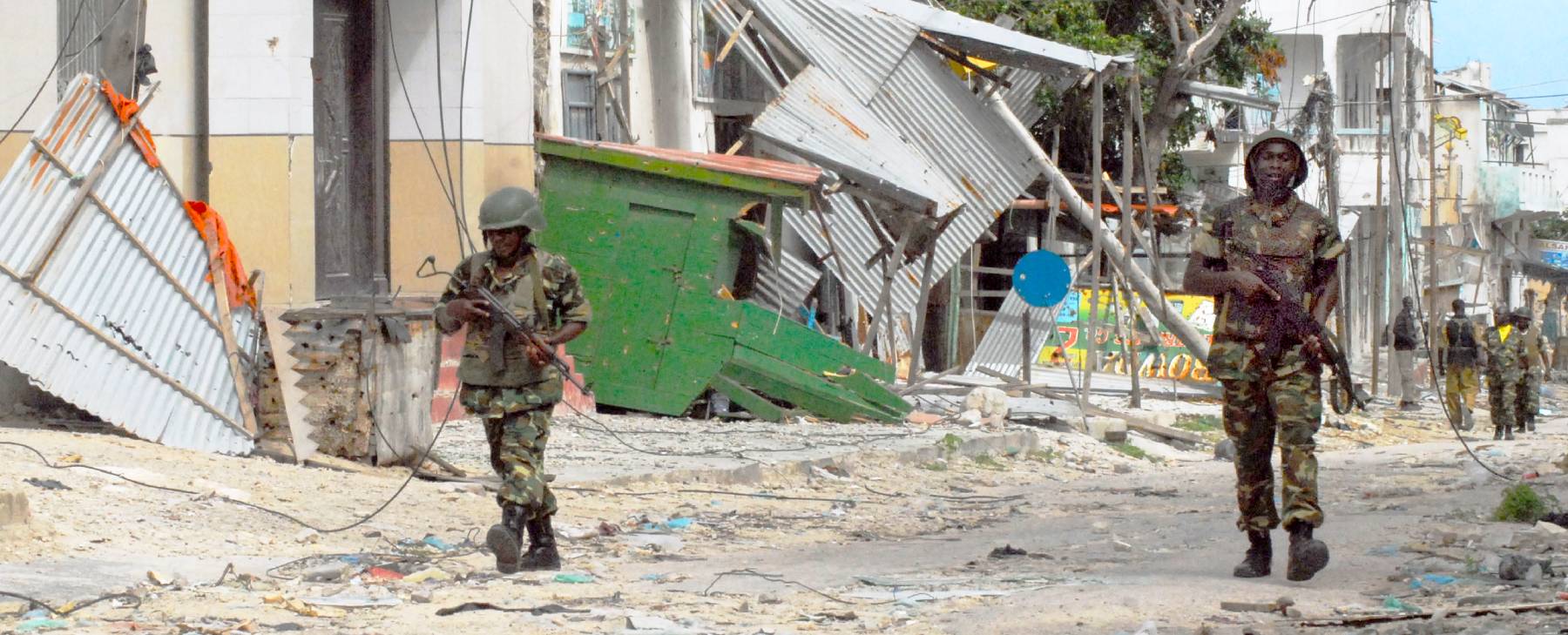
African union peacekeepers from Burundi patrol a Mogadishu street. (Photo: AFP/Mustafa Abdi)
The international security architecture is facing many strains.
Dozens of countries worldwide face armed conflict. Global terrorist networks continue to adapt and draw on emerging technologies to expand their capacity to generate revenue, coordinate, and recruit.
African actors play vital roles in strengthening the resiliency of the international security architecture.
Maritime traffic and trade face severe disruptions as efforts to restrict access to key waterways, such as the Strait of Hormuz and the Bab al Mandab Strait, intensify. This is exacerbated by the resurgence of piracy in the Gulf of Aden. These constrictions to maritime traffic have increased global fuel and fertilizer prices by roughly 30 percent. This is causing global economic strain, food insecurity, job losses, and risks of political unrest.
Illegal, Unreported, and Unregulated (IUU) fishing by foreign commercial trawlers globally continues to exploit valuable natural resources worth an estimated $12 billion in annual revenues.
Transnational organized criminal networks—trafficking narcotics, pharmaceuticals, and people—continue to grow more sophisticated and destabilizing.
Given its strategic location connecting continents and waterways, Africa is at the crossroads of many of these transnational threats. While often a target of these forces of global instability, African actors also play vital roles in strengthening the resiliency of the international security architecture.
African Contributions to International Security Take Many Forms
Diversification of Economic Supply Chains
In response to repeated closures of the Strait of Hormuz, African oil producers, which represent roughly 10 percent of global output, have increased their exports and supply outputs to international buyers. Nigeria and Angola have led this effort.
The recently operationalized Dangote oil refinery in Lagos, Nigeria, the world’s largest, has helped reduce global supply constraints. The refinery has become one of the world’s largest exporters of jet fuel, including shipments to Europe and the United States.
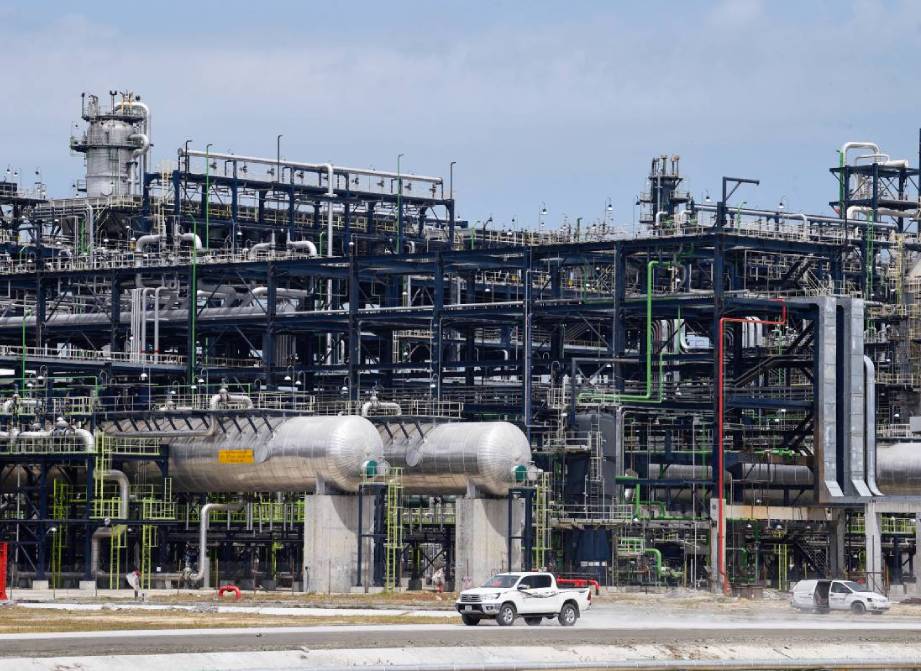
Nigeria’s Dangote refinery, the largest oil refinery in the world. (Photo: AFP/Pius Utomi Ekpei)
Outputs from the Dangote refinery have also boosted the production and export of urea—a widely used fertilizer—reducing the strain on fertilizer markets also sharply impacted by the shutdown of oil exports from the Persian Gulf.
The African Export-Import Bank (AfreximBank), Africa’s main multilateral trade-finance lender, rolled out a $10-billion emergency fund for African countries to pay for fuel, fertilizer, and medicines to further ease budgetary pressures.
The Dangote Group has meanwhile concluded talks with Kenya and Uganda to build a $16 billion oil refinery in Lamu, Kenya, to supply refined fuel across the East African Community. The new investments in refining capacity mark a strategic step toward a more integrated and resilient African hydrocarbon market, which would reduce vulnerability to shocks from Middle Eastern fuel supply disruptions.
Counterterrorism
With militant Islamist insurgencies concentrated in the Sahel, Somalia, and the Lake Chad Basin, Africa is a focal point of the global terrorist threat with nearly 24,000 annual fatalities linked to these groups.
African forces have been instrumental in pushing back against attempts by global terrorist networks, such as the Islamic State and al Qaeda, to establish coordination and financing hubs on the continent. In 2025, Puntland authorities mobilized 3,000 security forces as part of Operation Hilaac (meaning lightning) to dislodge the Islamic State from a base it had established in the al Miskaad mountains in the Bari region of northern Somalia. Supported by air strikes from international partners, including the United States and the United Arab Emirates, the Puntland forces led the ground offensive in the rugged terrain to cut off supply lines and flush out the militants from their cave complexes.
Uganda first deployed to Somalia in 2007 when few countries were willing to take the risk, as most of Somalia and large parts of the capital Mogadishu were controlled or heavily contested by al Shabaab insurgents. Burundian forces arrived at the end of 2007, Djibouti in 2011, then Kenya (2012), Sierra Leone (2013), Ethiopia (2014), and Egypt (2026). Somalia’s relative stabilization, albeit tentative, is due in large part to the efforts by African troops to recover territory and weaken al Shabaab.
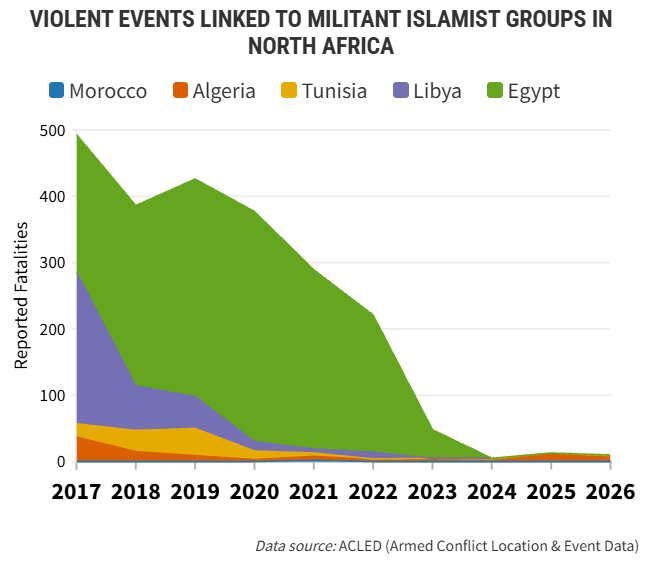
Sustained military actions from Egypt, Algeria, Tunisia, and Libya have also been vital in preventing the Islamic State from gaining a stronghold in North Africa after the terrorist group was defeated in Iraq and Syria in the late 2010s. From roughly 3,700 annual deaths linked to the Islamic State and affiliated groups in North Africa in 2015 and 2016, sustained pressure has reduced the fatality count to double digits in recent years.
Eighteen African countries are members of the Global Coalition to Defeat ISIS.
Peacekeeping Operations
African countries collectively are the largest troop contributors to regional and international peace operations, averaging roughly 70,000 troops annually over the past decade. African countries also take a significantly higher share of combat casualties than any other part of the world.
This includes service in some of the toughest missions around the world. In 2024, Kenya sent police units to Haiti under the UN Security Council-backed Multinational Security Support Mission, widely regarded as one of the most dangerous and complex international assignments due to entrenched armed gangs controlling about 90 percent of the capital, Port-au-Prince. Chad took over from the departing Kenyans in 2026.
African countries are also on the frontlines of confronting security threats on the continent by assembling peacekeeping and peace enforcement operations under the African Union (AU) and subregional security arrangements. The AU has deployed 27 peacekeeping and enforcement operations since the Africa Standby Force was established in 2004. This includes to Mozambique in 2021 to fight Islamist insurgents in the north and the Democratic Republic of the Congo (DRC) in 2024 to stabilize the eastern provinces.
Maritime Security
Africa’s geographic position overlays African maritime security challenges with global maritime priorities.
Maritime challenges are global. Constricted maritime passage, piracy, narcotics and arms trafficking, collapsing fisheries, and illicit resource extraction transcend borders and regions. Sitting between the Atlantic, Mediterranean, and Indian Oceans, Africa’s geographic position overlays African maritime security challenges with global maritime priorities. Africa anchors global shipping lanes, undersea cables, and chokepoints essential to world commerce and communication.
The transnational nature of maritime threats places a premium on regional cooperation. The maritime security efforts of a single African country are limited if malign actors can simply evade these restrictions and exploit another of Africa’s 38 littoral countries. This is especially vital in resource‑constrained environments where information sharing, coordination, and collaborative surveillance are indispensable.
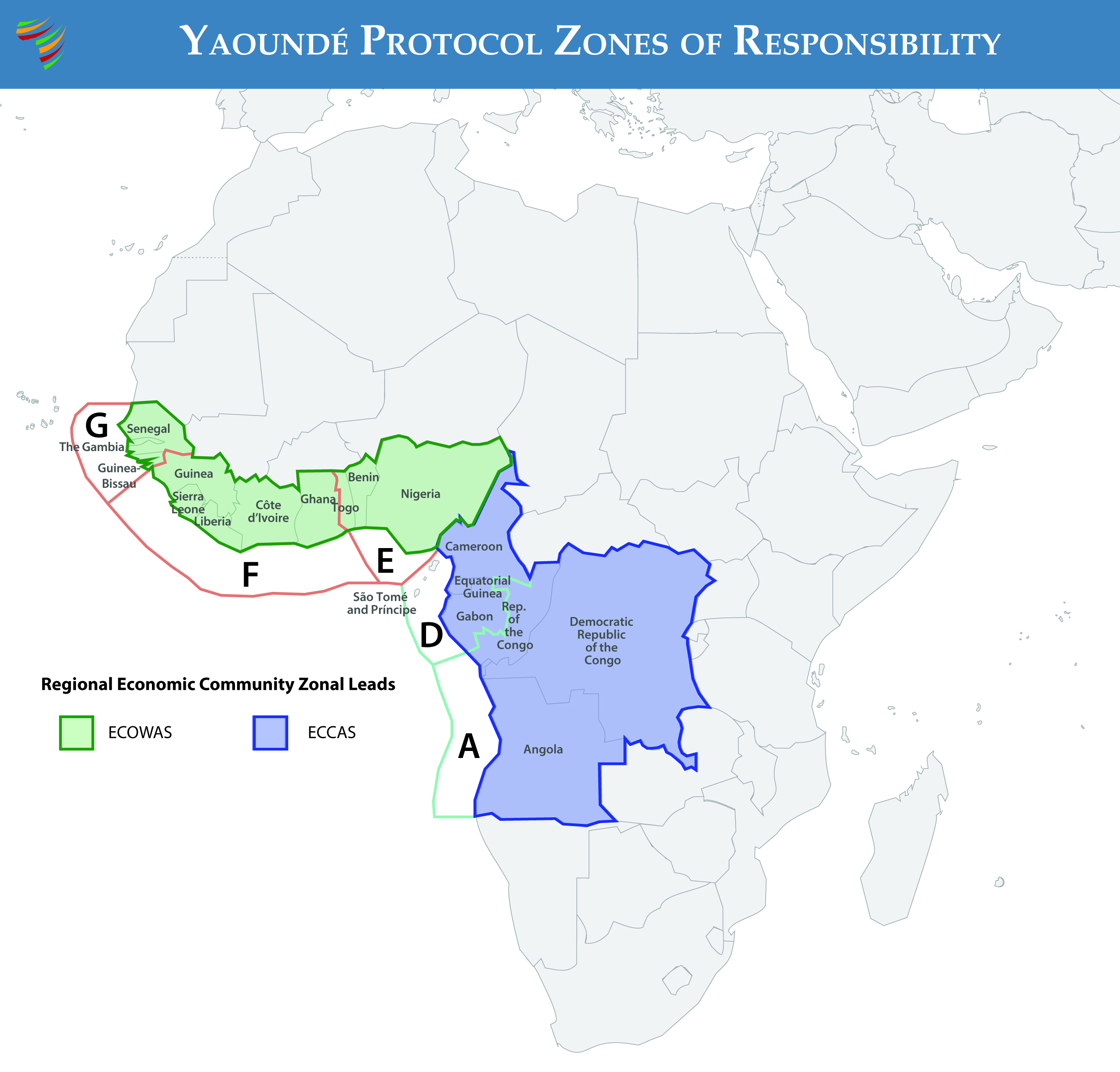
Established in 2013, the Yaoundé Protocol brought together 25 West and Central African countries to forge a common front against a host of maritime security threats in the Gulf of Guinea. This contributed to a dramatic decline in piracy along the West African coast.
The Djibouti Code of Conduct, comprising 14 African countries as well as the Gulf states, has similarly been central to combatting piracy and armed robbery at sea along Africa’s east coast.
The importance of both regional maritime coordination bodies has become increasingly critical as growing levels of maritime freight are traversing Africa’s eastern and western coasts to avoid threats in the Persian Gulf and Red Sea. Daily maritime transits around the Cape of Good Hope have risen to 78 vessels from roughly 40 in 2023, prior to the first Houthi attacks on commercial vessels in the Red Sea. These transits include 9.1 million barrels of oil, a 50 percent increase over the same timeframe.
Maritime security, furthermore, depends on the cooperation of nonstate actors. Fishing cooperatives, port authorities, private security, civil society, and coastal communities all play critical roles. Africa’s collaborative approach to maritime security has enabled this multi‑actor ecosystem to deepen the continent’s maritime domain awareness and governance.
Experiences from around the continent have also reinforced the importance of legal harmonization. Mismatched national laws undermine enforcement. Harmonizing definitions of piracy, IUU fishing, trafficking, and maritime crime are foundational for interdiction and prosecution of criminal actors.
Mediation
Often working behind the scenes, African countries and regional bodies have played vital mediating roles in ending conflicts.
The AU, Southern African Development Community, and East African Community have worked jointly to support international negotiations to end the conflict between the DRC and the Rwanda-backed M23 rebels. Given the complex underlying drivers of instability in the eastern DRC, sustaining any agreement will require ongoing dialogue, monitoring, and implementation of reforms.
African-mediated settlements are far more likely to be durable.
With the support of international partners, the AU also spearheaded the peace process ending the 2020-2022 conflict between Ethiopia and Tigray. The AU High-Level Panel led by former Nigeria President Olusegun Obasanjo, former Kenyan President Uhuru Kenyatta, and former South African Deputy President Phumzile Mlambo-Ngcuka brought the diplomatic weight of the AU to bear to facilitate the Cessation of Hostilities Agreement.
These illustrations are reflective of a broader pattern. Of the African conflicts resolved through mediation between 1960 and 2017, only 12 percent did not involve African third-party actors. Most successful mediation efforts involved a combination of African and international actors. African-mediated settlements, moreover, are far more likely to be durable.
Controlling Pandemic Outbreaks
African countries are helping strengthen global public health security against future pandemics.
Uganda has been proactive in sending medical personnel, equipment, and expertise to help mitigate the spread of the latest Ebola outbreak in the eastern DRC. Working with international and Congolese authorities, Ugandan health workers continue to be active in supporting surveillance, testing, and care.
Through the Partnership for African Vaccine Manufacturing, the Africa Centres for Disease Control (Africa CDC) is building local production hubs—led by pilots in South Africa—while investing in infrastructure, skills, and regulation. The goal is to raise Africa’s vaccine output from one percent at the outset of the COVID pandemic to 60 percent by 2040. This effort serves not only Africa but the global public good, as pandemics know no borders.
A further illustration of African countries’ commitment to global public health is the pledge of over $45 million by 14 African countries to the World Health Organization’s Investment Round to generate sustainable financing for the global health architecture.
Building African Stabilization Capacity
African countries have also played key roles in helping conflict-affected African countries navigate the often complicated and prolonged transition to stability.
Nigeria’s role in rebuilding Liberia’s Armed Forces from 2005–2014 after a brutal 14-year civil war that led to the collapse of political authority and the military is an example. Nigerian officers assisted in recruiting and mentoring new soldiers and officers, building new units, establishing command and control, and instituting new guidelines for training and doctrine. The effort, backed by international partners, was overseen by a Nigerian general appointed as Commander in Charge and Chief of Staff of the reconstituted Armed Forces of Liberia. Today, Liberians have among the strongest commitments to democracy and freedom on the continent.
African officers receive more foreign training through fellow African countries’ PME schools than through institutions outside the continent
Similar hands-on African military institution-building occurred in Burundi, where the South African-led African Mission in Burundi (AMIB)—the AU’s first multidimensional mission with contributors from 8 African countries—helped reintegrate the armed forces after a 12-year civil war. The AMIB later transitioned into the United Nations (UN) Operation in Burundi, which further consolidated stabilization efforts and helped prepare the Burundi military for subsequent peace enforcement roles, including in Somalia, 7 years after the Arusha Peace Agreement of 2000.
African countries also pull their weight when it comes to building one another’s professional military education (PME) competencies. The continent is home to over 188 officer-level academic educational institutions, spread across 54 countries. African officers receive more foreign training through fellow African countries’ PME schools than through institutions outside the continent.
Several PMEs have gained prominence over several decades. Illustratively, these include:
- Kenya’s Joint Command and Staff College, which awards the highly coveted “psc” (Passed Staff College) designation upon completion
- Tanzania’s Military Academy, which has prepared several thousand African cadets and junior officers since the 1960s
- Nigeria’s Armed Forces Command and Staff College, which counts among its alumni a long list of African military leaders and former heads of state
- South Africa’s National Defense College, which offers advanced training in national security attended by officers from all over the world.
African multilateral efforts also regularly provide governance assistance in crisis settings. AU instruments like the African Solidarity Initiative, African Capacity Building Foundation, and African Standby Capacity formalized deployment of civilian experts to strengthen governance institutions, the rule of law, policing, and public administration across African countries.
Since 2011, the Intergovernmental Authority on Development (IGAD) Regional Capacity Enhancement Initiative deployed over 300 African civil servants to South Sudan to support state and local governance and revenue management, supported by the UN Development Programme. The program was later scaled up with African Development Bank funding and technical support through regional institutions.
In Somalia, working through the African Centre for the Constructive Resolution of Disputes (ACCORD), South Africa has provided technical assistance across key recovery sectors—including governance, security, and reconciliation—via mentoring, training, and institutional exchanges with other African states. This program was supported by several international partners, including Norway.
African countries also provide direct support to global partners to confront international security threats by offering them access and maneuver on African soil, including military bases, overflight, access to security facilities, and interdiction requests.
Further Priorities
While African countries make important contributions to international security, further progress is needed to strengthen the continent’s conflict prevention, mitigation, and stabilization capabilities.
African and global terrorist organizations are becoming increasingly sophisticated at generating revenue from illicit trade, smuggling and trafficking, and money laundering, among other criminal enterprises—with implications for international security. Nowhere is this more apparent than with al Shabaab, which is estimated to secure $200 million in annual revenues. Its growing cooperation with the Houthis in Yemen poses direct challenges to maritime traffic through the Bab al Mandab Strait as well as enabling violent extremism on both sides of the Red Sea. Strengthening African anti-money laundering and countering terrorism financing capacity is needed to further facilitate regional and international interdiction efforts.
Illicit financial flows are estimated to cost Africa roughly $90 billion annually. This erodes a revenue base that can mitigate conflict and support national and regional stabilization efforts. Intensified efforts to strengthen financial regulatory frameworks, tax systems, and financial transparency around public procurement are needed.
Intra-African trade remains low, around 15 percent, which is far below levels in Asia at 60 percent and the European Union at 70 percent. Greater intra-African trade can generate more economic growth, jobs, and regional stability. This underscores the need to prioritize reducing nontariff barriers, harmonizing customs regimes, and investing in cross-border infrastructure. Uneven implementation of the African Continental Free Trade Area (AfCFTA), potentially the world’s largest free trade area, calls for aligning domestic legislation with its protocols, accelerating industrial policy reforms, and enabling stronger private sector participation.
Building stronger maritime security environments requires sustained political, educational, and institutional investments.
Africa’s creation of maritime security architectures is important but insufficient. Sea blindness remains a challenge for the continent. Effective maritime security ultimately requires greater operational capability, including naval and coast guard vessels at sea to project presence, conduct interdictions, and enforce maritime law. Many governments underestimate the maritime domain. Building stronger maritime security environments require sustained political, educational, and institutional investments.
Limited progress on AU reform constrains the regional body’s effectiveness in its peace and security agenda. Empowering the African Union Commission, the secretariat responsible for implementing the AU’s agenda on a day-to-day basis, would enable more timely and decisive collective action, facilitating coordination.
Despite commitments such as the 2001 Abuja Declaration that require countries to allocate a percentage of their budgets to health and education, few African countries meet these benchmarks. Doing so can help create the investments in human capital that will attract more investment, jobs, and stability.
African countries have made notable contributions to the rapidly evolving international security environment. Many African governments, furthermore, have embraced their regional and international responsibilities for security. Still, more must be done to strengthen African capacity and security partnerships to facilitate the international cooperation needed to combat the increasingly transnational nature of contemporary security threats.
Additional Resources
- Daisy Muibu and Nicole Mazurova, “Countering Terrorism Financing in East Africa,” Spotlight, Africa Center for Strategic Studies, August 6, 2026.
- Africa Center for Strategic Studies, “Assessing Progress on Africa’s Agenda 2063,” Spotlight, Africa Center for Strategic Studies, November 24, 2025.
- Martha Bakwesegha, “Overcoming Challenges to Reform the African Union,” Spotlight, Africa Center for Strategic Studies, July 15, 2025.
- Africa Center for Strategic Studies, “Expanding Al Shabaab–Houthi Ties Escalate Security Threats to Red Sea Region,” Spotlight, May 28, 2025.
- Paul-Simon Handy and Félicité Djilo, “The African Union Commission at a Crossroads,” ISS Today, Institute for Security Studies, November 20, 2024.
- Hubert Kinkoh, “A New Champion Could Drive Home African Union Reforms,” ISS Today, Institute for Security Studies, March 20, 2024.
- Paul Nantulya, “Africa’s Interests in Strengthening the United Nations System,” Spotlight, Africa Center for Strategic Studies, August 14, 2023.
- Lynsey Chutel, “The African Union Has a Brilliant Plan for Africa, if it Could Get it Right,” Quartz Africa, February 16, 2019 (updated July 21, 2022).
- Paul Nantulya, “The African Union at 20: Much Accomplished, More Challenges Ahead,” Spotlight, Africa Center for Strategic Studies, February 22, 2022.