


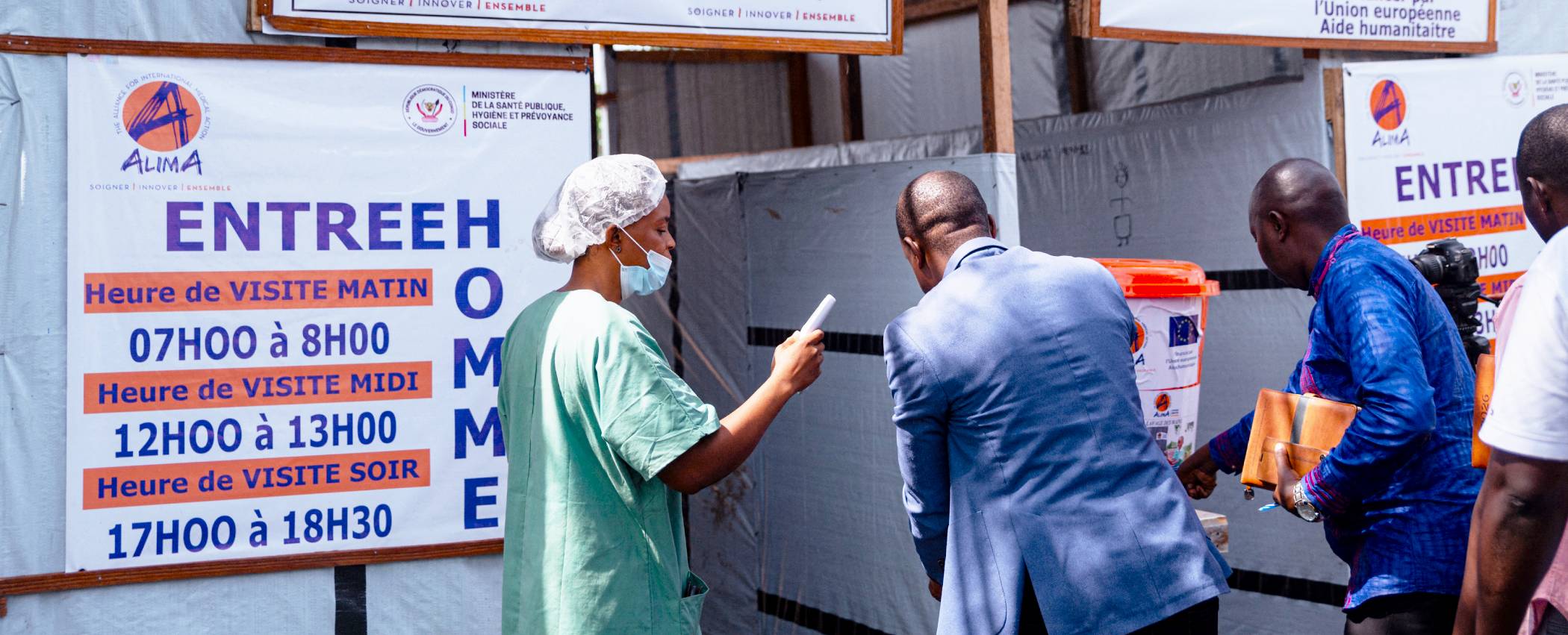
Health officials and humanitarian workers undergo temperature screening and handwashing before entering an Ebola treatment center in Rwampara, Ituri. (Photo: AFP/Jospin Mwisha)
The latest outbreak of the Ebola virus in the eastern Democratic Republic of the Congo (DRC)—the country’s 17th since 1976—has resulted in more than 4,700 confirmed cases and over 2,700 deaths. The number of cases has risen faster for this outbreak than any other Ebola outbreak to date, and the Red Cross says that the epidemic has not yet peaked. The United States Centers for Disease Control projected the outbreak could reach at least 20,000 cases in a worst-case scenario without intervention. Areas at greatest risk are nearby provinces in eastern DRC, neighboring South Sudan, and the border regions of Uganda.
Response is particularly challenging because of the region’s remoteness and the ongoing insecurity.
The outbreak is concentrated in northeastern DRC, with more than 97 percent of all cases in Ituri, North Kivu, and South Kivu Provinces. Only 20 cases have been reported in neighboring Uganda, and they are largely associated with individuals who traveled from the affected regions in the DRC. Uganda’s public health system has actively responded to the outbreak—both in Uganda and across the border in the DRC—by supporting surveillance, testing, and care. On August 27, the World Health Organization (WHO) and the Africa Centres for Disease Control and Prevention (Africa CDC) announced the end of the outbreak in Uganda following 42 consecutive days without a new case, the internationally established monitoring period.
In addition to the lack of a proven vaccine for the Bundibugyo variant, the current Ebola response is particularly challenging because of the region’s remoteness and the ongoing insecurity caused by dozens of armed groups operating in the area. The outbreak is estimated to have circulated within the community for weeks—and possibly months–before it was detected and confirmed on May 15, 2026. Now, public health officials are racing to contain the spread, provide care, trace and monitor contacts, and deploy public health messaging campaigns throughout the region and neighboring countries.
The following is an overview of what is known so far.
How far has the outbreak spread?
Six of the DRC’s 26 provinces (all in the northeast of the country) have reported cases of Ebola since May. Ituri Province is the center of this outbreak, accounting for around 90 percent of all confirmed cases. The rest of the cases in the DRC have appeared in: North Kivu, Haut-Uélé, Tshopo, South Kivu, and Bas Uélé.
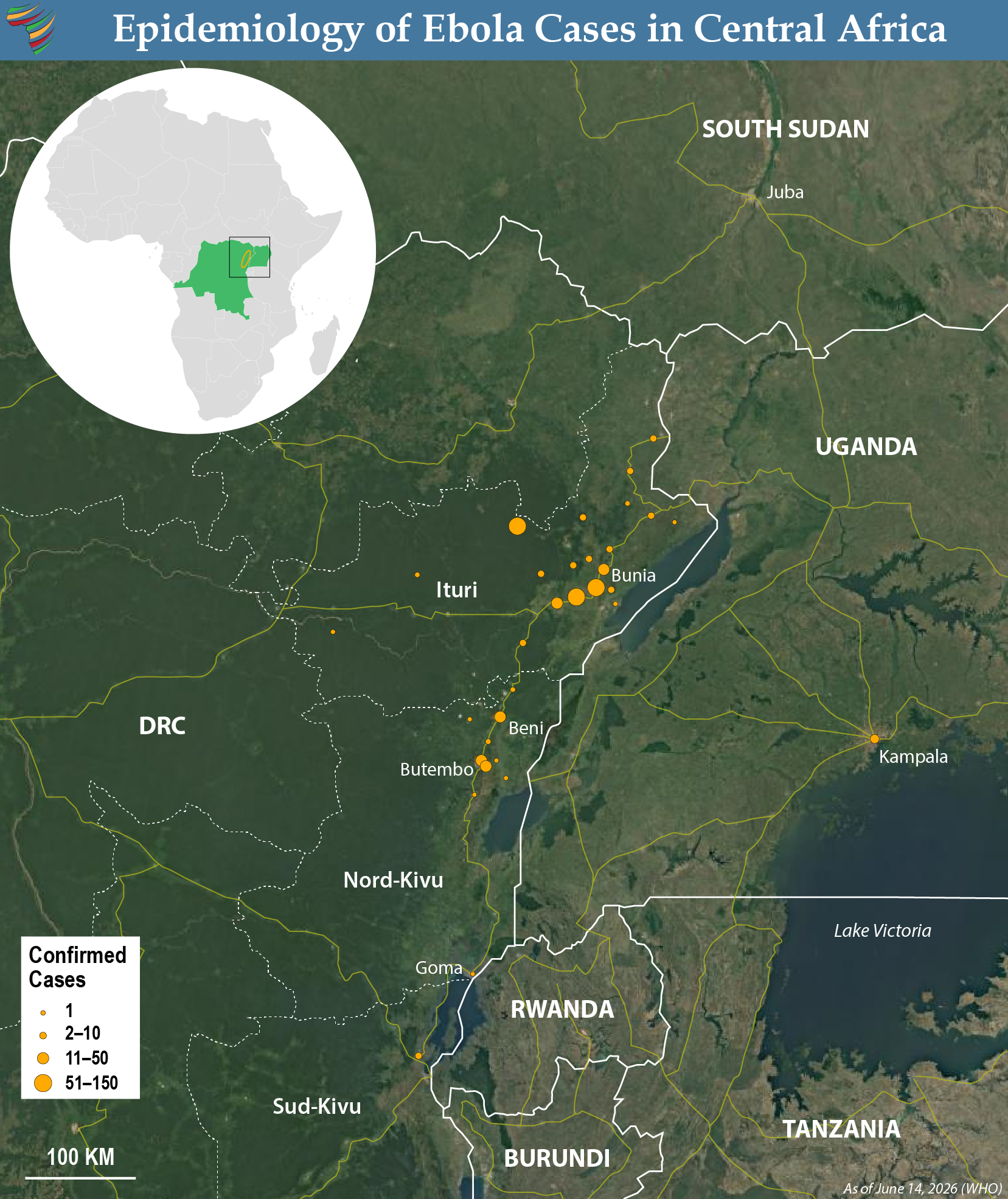
The few cases confirmed in Uganda had been limited to the capital city, Kampala, where a strong public health response has kept the outbreak under control. A medical doctor returning from the Ebola response in the DRC has also tested positive in France. While public health authorities have declared South Sudan a high-risk country—given its porous borders with the DRC, weak public health system, and its ongoing instability—it has yet to detect any cases. The South Sudanese authorities, moreover, have collaborated with the WHO to establish detection protocols at its borders with the DRC and Uganda.
What is Ebola?
Ebola is caused by a genus of viruses that cause severe hemorrhagic fevers. First detected in 1976, case fatality rates range from 25 to 90 percent. Early intensive care, including rehydration and symptom management, improves survival rates. Ebola is transmitted through contact (via broken skin or mucous membranes) with the bodily fluids of an infected person or corpse. It is less contagious than other viral diseases such as COVID-19 or measles, which spread quickly through the air. Further, a person infected with Ebola is not contagious until they become symptomatic.
Initial symptoms, which typically emerge 8-10 days after exposure, resemble many other common illnesses and include fever, fatigue, muscle pain, and headache. This makes initial detection difficult. Advanced symptoms may include vomiting, diarrhea, and impaired kidney and liver function. In some patients, late stages of the disease may include internal and external bleeding.
There are no approved vaccines or treatments for the current strain of the virus, but the Coalition for Epidemic Preparedness Innovations (CEPI) has fast-tracked the development of three vaccine candidates. Of these, one vaccine has been shown to work in monkeys, and another could enter Phase 1 trials as early as July. The United States is also providing an experimental antibody drug for use in clinical trials
Experts believe that fruit bats, which are widespread throughout Central Africa, play a role in the spread of the virus and may serve as its natural reservoir. Transmission to humans may occur through contact with infected animals.
What is being done to address the outbreak?
Once it was confirmed that the illness sickening people in the eastern DRC was Ebola, local, regional, and international bodies quickly mobilized to support the response effort. The DRC’s Ministry of Public Health, Hygiene, and Social Welfare publicly declared the outbreak on May 15, the same day the virus was confirmed. The Uganda Ministry of Health confirmed a case in Kampala the same day. Both countries quickly activated national emergency coordination mechanisms, which include measures to strengthen surveillance, laboratory testing, contact tracing, and case management.
Within hours of the outbreak declaration in Uganda, officials commissioned an Ebola Treatment Unit at a hospital in Kampala. The unit is staffed by members of Uganda’s 146-person Emergency Medical Team.
Authorities started building specialized treatment centers and isolation units near the epicenters of the outbreak. There are now 500 treatment beds available for Ebola patients, and surveillance teams have the capacity to administer more than 2,000 tests a day.
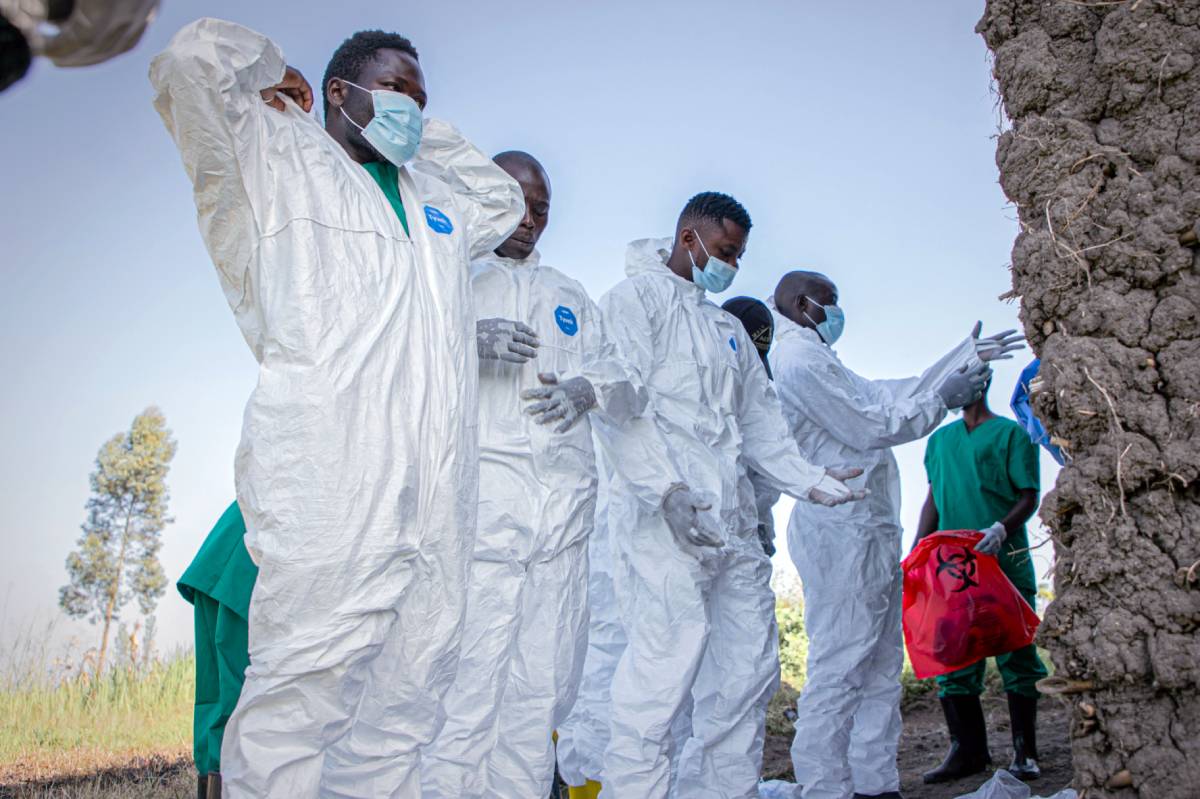
Volunteers in Bunia, DRC, don personal protective equipment before recovering the body of a 3-year-old presumed to have died of Ebola virus disease, June 11, 2026. (Photo: AFP/Bénédiction Murhabazi)
The WHO Director-General declared the outbreak a “Public Health Emergency of International Concern” on May 17. On June 5, the Africa CDC and WHO launched a 6-month joint continental response plan to support the region’s capacity to fight the outbreak. As part of the response, the Africa CDC made a request to urgently open humanitarian corridors and “corridors of peace” to provide safe access to high-risk areas for government authorities and humanitarian organizations.
Nongovernmental organizations, including the International Medical Corps, Doctors Without Borders, and the International Federation of the Red Cross and Red Crescent Societies, have teams on the ground to support health care workers, engage with the community, and conduct safe burials to keep the public from handling infected bodies—a key means of transmission.
On June 21, the DRC Minister of Health announced a pilot program providing free health care for all diseases in Ituri Province to improve early detection of new Ebola cases.
International partners, including the United States, Japan, and the European Union, have pledged hundreds of millions of dollars in emergency funding to support the response.
Why has this outbreak been so challenging?
While every Ebola crisis poses serious risks, the conditions surrounding this outbreak create especially challenging circumstances for containing the disease.
Rare strain
The laboratories in this remote part of the country only had tests for the more common strains of the virus.
This Ebola outbreak is caused by the rare Bundibugyo virus (BVD), which has been associated with only two other outbreaks (Uganda in 2007 and the DRC in 2012). Although the DRC has extensive experience detecting and managing Ebola outbreaks, the laboratories in this remote part of the country only had tests for the more common strains of the virus. It was not until blood samples were shipped to Kinshasa that BVD was confirmed. This detection delay enabled the virus to circulate within the population and among health care workers for weeks (possibly as early as February) without Ebola-specific interventions.
Insecurity
The DRC’s eastern provinces have experienced decades of violent conflict. Ituri Province, the epicenter of this Ebola outbreak, is the site of violent clashes between armed militant groups and Congolese and Ugandan troops. This includes the Allied Democratic Forces, which has carried out regular massacres and mass abductions in Ituri and North Kivu. More than 170 people were killed from armed group violence in Ituri in May alone.
Ebola has also been detected in a part of South Kivu Province that is currently under the control of the M23 militia, widely believed to be backed by Rwanda and Uganda. The risk of encountering militant groups while traveling to one of the few functioning health centers has deterred some patients from seeking care and complicated humanitarian efforts to reach remote locations.
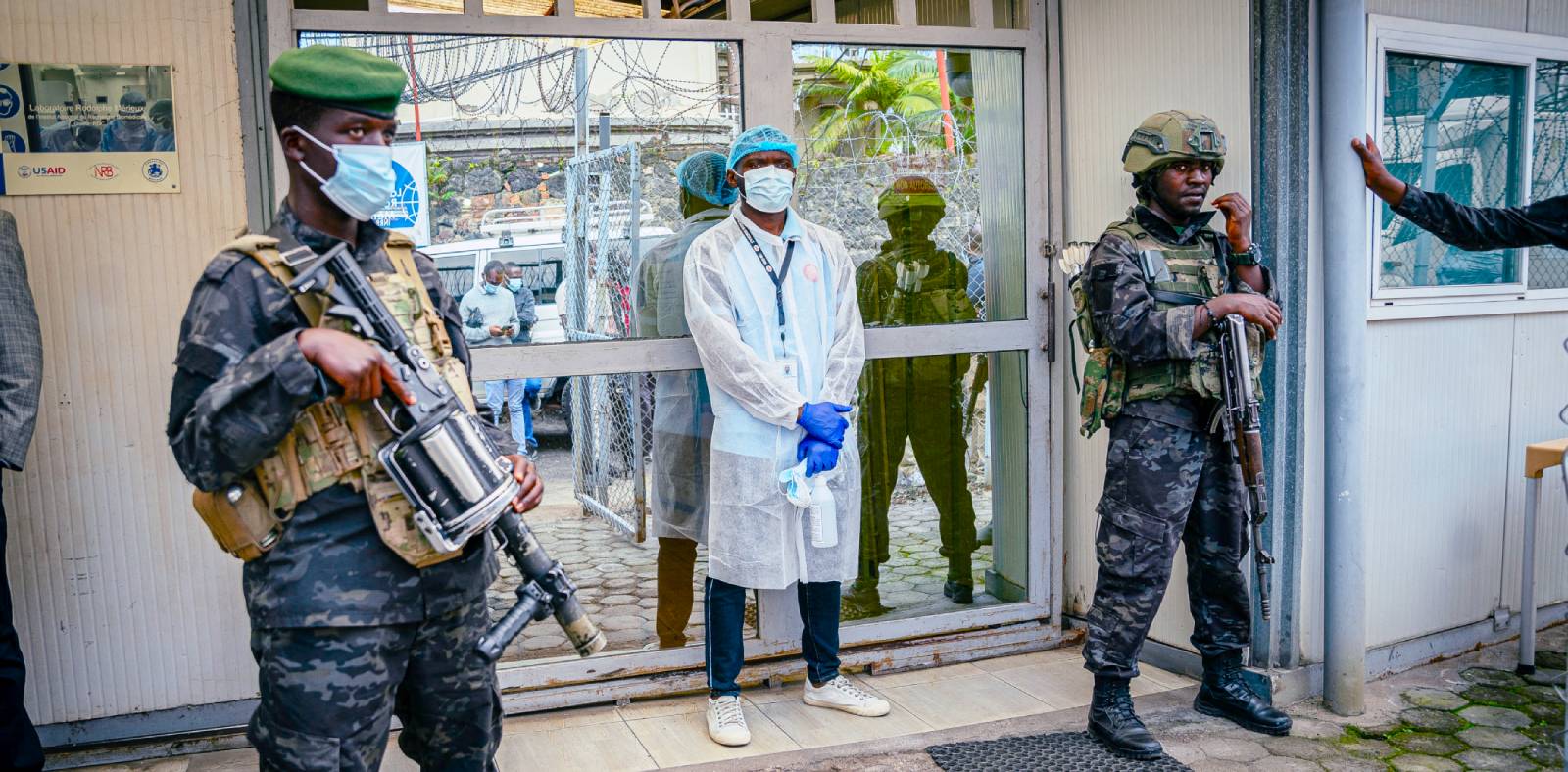
M23 soldiers provide security for the movement’s authorities at the National Biomedical Research Institute (INRB) in Goma, during their visit to the laboratory responsible for analyzing suspected Ebola cases. (Photo: AFP/Jospin Mwisha)
Forced Displacement
Insecurity in the eastern DRC has led to widespread displacement in the region. More than five million people have been displaced as a result of decades of conflict in Ituri, South Kivu, and North Kivu.
At least 30 people have died from illnesses since the beginning of May at a displacement camp hosting 15,000 people in Bunia. Officials were unable to test these individuals, but they all had symptoms associated with Ebola, and camp officials report that the death rate is unprecedented. At another camp, where 30,000 people live, aid workers reported that two people died and their bodies tested positive for Ebola. Authorities at a third camp reported the death of a baby with whom more than 100 people came into contact.
Displacement camps are overcrowded, have limited hygiene infrastructure, and lack space for isolating symptomatic people.
Fragile public health system
The health care system in the eastern DRC was already fragile when the outbreak hit. The DRC is estimated to have just 0.2 physicians and 1.2 nurses per 1,000 people. Moreover, 85 percent of the health facilities in the Kivus are experiencing medication shortages, and 40 percent of health clinics saw a mass exodus of staff as conflict in the region increased.
The DRC is estimated to have just 0.2 physicians and 1.2 nurses per 1,000 people.
Roughly only 20 percent of people in Ituri have access to clean water, and only 25 percent have functional sanitation and hygiene infrastructure. Proper handwashing and waste management are important tools for stopping the spread of the disease.
The lack of appropriate tests for BVD in laboratories in Ituri Province contributed to the delayed confirmation of the outbreak. Even after the outbreak was confirmed, clinics in the affected areas still had to send blood samples to Kinshasa for testing, which meant days-long delays in confirming the disease in patients. In the month since the outbreak was declared, however, the WHO rolled out a decentralized testing network with new diagnostic devices that can return test results within an hour.
Food Insecurity
The public health threat of the BVD outbreak collides with existing humanitarian crises. Roughly 10 million people face severe hunger in the eastern DRC, and in Ituri Province, more than a third of the population faces crisis or worse levels of hunger. This decreases the population’s immunity to Ebola and other diseases.
Artisanal Mining and Transient Populations
Ituri Province is home to significant gold deposits, and people travel from all over the region to work in artisanal mines there. Informal miners work in crowded conditions and are unlikely to have access to proper hygiene facilities, increasing their risk of becoming infected with Ebola. The informal mining economy also attracts other transient people, including traders, sex workers, and smugglers, who could carry the disease with them to new places. Authorities in Mongbwalu, one of the main gold mining towns, believe that more than 80 people died from Ebola before the outbreak was detected.
Mistrust
After the declaration of the Ebola outbreak, rumors and conspiracy theories began circulating both online and on the ground. These false narratives include accusations that outside organizations intentionally brought Ebola to the region or that they are hiding a simple cure. Some people believe Ebola is simply a myth, despite the deaths in their communities.
Groups of angry residents have stormed and set fire to health centers. In some incidents, patients who were suspected of having Ebola fled during the attacks. Residents in Katana, a town under M23 control in South Kivu, attacked a humanitarian team conducting the safe burial of a body infected with Ebola. The team was forced to abandon the coffin, and members of the community took over the burial, increasing their risk of infection.
To counter these fears, some local community leaders in Ituri have mobilized to address the misinformation surrounding the outbreak. A journalist at a radio station in Bunia, Ituri’s capital city, launched a daily radio program to factcheck the rumors and connect listeners to health specialists featured on the show. In addition to the program’s scheduled 10 am broadcast, its jingle about Ebola airs throughout the day on the radio station. The WHO has organized motorcycle taxi drivers in Bunia in an awareness caravan to spread accurate information about the outbreak. Wearing t-shirts emblazoned with “Stop Ebola,” dozens of drivers rode around the city carrying large posters with recommendations for avoiding contracting the disease.
Disease outbreaks, including previous Ebola outbreaks, have also been exploited by Russia and other foreign actors seeking to sow distrust toward the government or the West.
Disease outbreaks, including previous Ebola outbreaks, have also been exploited by Russia and other foreign actors seeking to sow distrust toward the government or the West. These foreign actors tend to follow a similar playbook. They begin with claims that the disease is either not real or was created in a laboratory. The narratives then claim that the outbreak is a scheme through which pharmaceutical companies will profit. Finally, they often frame normal and predictable challenges to managing a health outbreak as a sign of institutional corruption. Other opportunistic online actors may amplify these narratives to attract attention to their own accounts, even if they are not part of a coordinated campaign.
What are some lessons and best practices from previous Ebola outbreaks?
2025 Outbreak in Kasai Province, DRC
During the 2025 Ebola outbreak in Kasai Province in southwestern DRC, the country’s Public Health Emergency Operations Center launched a Community Protection plan to simultaneously address the spread of the disease and mistrust among community members. This approach involved:
- Community Engagement. Community engagement teams were deployed to speak with residents.
- Trusted Messengers. Trusted local actors conveying relevant public health messages to strengthen public confidence.
- Adaptive Outreach. Public health workers listened to public perceptions through radio programs, hotlines, and community groups and then adjusted public health messaging in response.
- Customary justice. Traditional and community leaders using customary justice mechanisms to reinforce collective responsibility after public health infrastructure was vandalized.
2018 Outbreak in Ituri and the Kivus, DRC
DRC’s worst and longest Ebola outbreak on record occurred between August 2018 and June 2020 in the same three eastern provinces that are affected by the current outbreak. Nearly 3,500 people were confirmed to have Ebola and more than 2,200 people died. Many of the same security conditions hampering the current response were present. Healthcare workers and institutions had to navigate criminal activity, attacks on health centers, and mass displacement due to the presence and operations of dozens of armed groups. Hundreds of attacks on health facilities resulted in the deaths and injuries of nearly 100 health care workers. The response to this outbreak entailed:
- Mass Deployment of Personnel. The WHO deployed more than 1,500 people, including epidemiologists, logisticians, anthropologists, and field coordinators to work alongside 16,000 local frontline workers.
- Expansive Contact Tracing. Health authorities trained thousands of these local frontline workers in contact tracing and vaccine administration and provided them with a mobile phone app to improve tracking. More than 300,000 people received vaccinations during the outbreak. For each confirmed case of the disease, local workers registered up to 200 contacts.
- Therapeutic Advances. In collaboration with the DRC’s National Institute for Biomedical Research, the Ministry of Health, the National Institute of Allergy and Infectious Diseases, and other medical organizations, the WHO launched the first multidrug randomized control trial of drugs used for treatment of Ebola patients. The trial found that two of the drugs were more effective at treating patients.
- Health Center Innovations. Congolese and international institutions built a special health center in Beni to test, isolate, and treat people. In 2019, Congolese physician, Dr. Richard Kojan, developed a portable biosafety unit with transparent walls and built-in glove-like sleeves to improve safety and efficiency for healthcare workers treating Ebola patients.
2014 Outbreak in West Africa
The 2014 Ebola outbreak in West Africa (Liberia, Guinea, and Sierra Leone) was the worst on record with 28,600 cases and 11,325 deaths. Ebola had not been detected in this region before, so it took months for authorities to confirm the outbreak. Once the international public health community mobilized to fight the outbreak, several lessons emerged to manage Ebola outbreaks. These lessons included:
- Disease Surveillance. The uncontrolled spread due to the delay in detection underscored the importance of disease surveillance mechanisms and spurred the development of advanced diagnostic and surveillance systems and protocols.
- Vaccine Research. The outbreak led researchers to accelerate vaccine development. The resulting vaccine has been used in several outbreaks since.
- African Health Leadership. The scale of the outbreak and weak coordination highlighted the need for an African-led institution to quickly step into health emergencies. As a result, the African Union established the Africa CDC, which has been a leader in the response to subsequent outbreaks, including the current Bundibugyo virus epidemic.
Ebola Outbreaks in the DRC
| Date | Geographic Spread | DRC Locations | Cases in DRC | Deaths in DRC | Outbreak Length |
|---|---|---|---|---|---|
| 1976 | Sudan, DRC | Équateur province/Yambuku village | 318 | 280 | ~3 months |
| 1977 | DRC | Tandala village | 1 | 1 | Isolated case |
| 1995 | DRC | Kikwit | 315 | 254 | ~6 months |
| 2007 | DRC, Uganda | Mweka and Luebo health zones in the Kasai Occidental province | 264 | 187 | ~2 months (Sept-Nov) |
| 2008 | DRC, Philippines | Mweka and Luebo health zones in the Kasai Occidental province | 32 | 15 | ~4 months |
| 2012 | DRC | Orientale province | 62 | 34 | ~4 months (Aug-Nov) |
| 2014 | DRC | Équateur province | 69 | 49 | ~4 months (Aug-Nov) |
| 2017 | DRC | Likati health zone of the province of Bas Uélé | 8 | 4 | ~2 months (May-July) |
| 2018 | DRC | North Kivu, Ituri, and South Kivu | 3,470 | 2,287 | ~2 years (Aug 2018 - June 2020) |
| 2018 | DRC | Bikoro region of Équateur Province | 54 | 33 | ~2 months (May-June) |
| 2020 | DRC | Mbandaka, Équateur Province | 130 | 55 | ~6 months (Jun-Nov) |
| 2021 | DRC | Beni Health Zone, North Kivu Province | 11 | 9 | ~3 months (Oct-Dec) |
| 2021 | DRC | Biena Health Zone, North Kivu Province | 12 | 6 | ~4 months (Feb-May) |
| 2022 | DRC | Beni Health Zone, North Kivu Province | 1 | 1 | ~1 month (Aug-Sep) |
| 2022 | DRC | Mbandaka city, Equateur Province and Mbandaka and Wangata health zones | 5 | 5 | ~3 months (Apr-July) |
| 2025 | DRC | Bulape health zone in Kasai Province | 64 | 45 | ~3 months (Sep-Dec) |
| 2026 | DRC, Uganda, France | Haut-Uele, Ituri, North-Kivu, South-Kivu, and Tshopo | 5,713 | 2,744 | Ongoing |
Additional Resources
- Africa Centres for Disease Control and Prevention, “Bundibugyo Virus Disease (BVD) – Ebola Outbreak,” Factsheet, 2026.
- U.S. Centers for Disease Control and Prevention, “Ebola Outbreak: Current Situation,” June 22, 2026.
- Christopher Nehring and Hendrik Sittig, “The Playbook of Health Disinformation and the Ebola Outbreak in the DRC and Uganda,” Konrad Adenauer Stiftung, May 28, 2026.
- World Health Organization, “Bundibugyo Virus Disease Outbreak: Democratic Republic of the Congo,” May 17, 2026.
- Africa Center for Strategic Studies, “Africa’s Colliding Conflicts Compound Forced Displacement Crisis,” Spotlight, September 22, 2025.
- World Health Organization, “Ebola Disease,” Factsheet, April 24, 2025.
More On: Democratic Republic of the Congo