

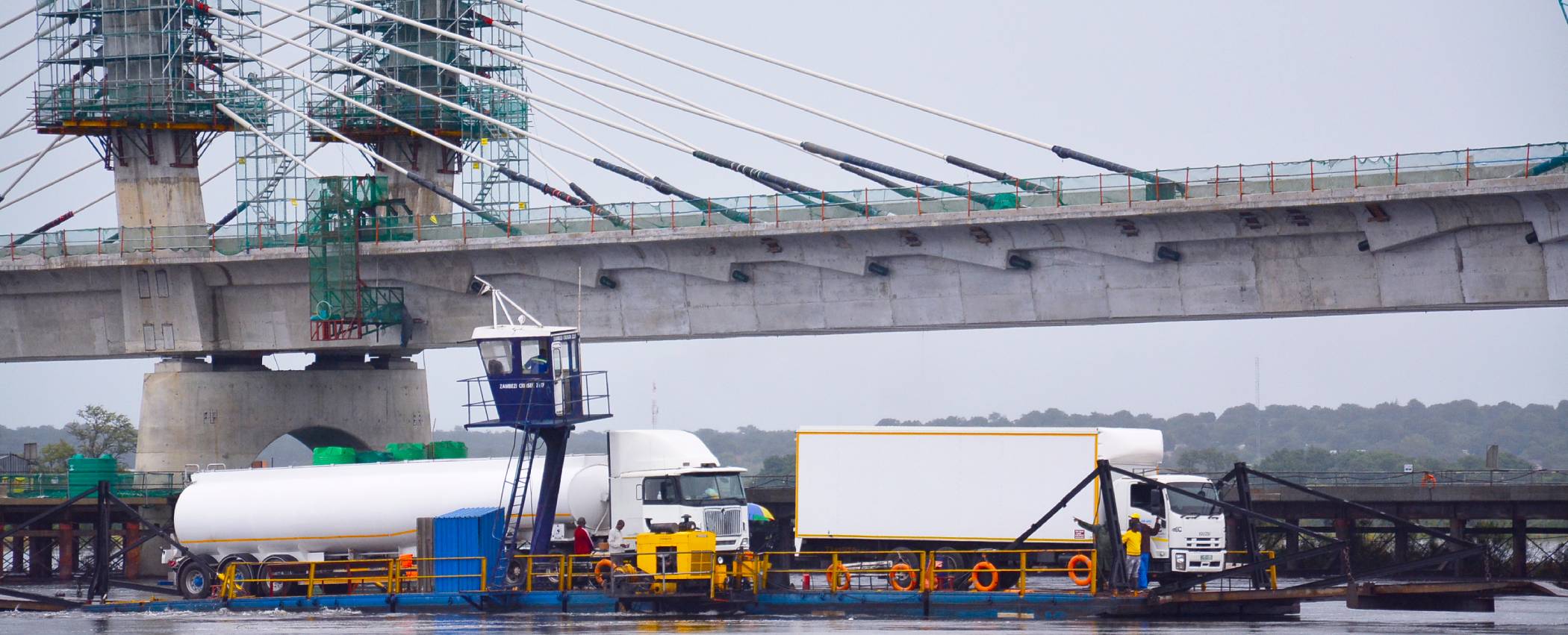
Construction of the Kazangula Bridge to replace the aging ferry between Zambia and Botswana. (Photo: Tracy Anne Brooks)
Africa is endowed with some of the world’s largest known reserves of critical minerals such as manganese, platinum group metals, cobalt, and graphite. Renewed global interest in securing stable supplies of these minerals has revisited attention on the continent’s infrastructure and logistics corridors—often seen as critical impediments to both access and investments in Africa.
Corridors are not merely a collection of rail, road, or air links or simply a means to dig and ship raw materials to global markets—a model that captures limited value for African economies and undermines Africa’s industrialization and regional integration. Among other things, corridors are integrated economic ecosystems that:
- Connect production centers to domestic, regional, and international markets.
- Create industrial clusters for processing, refining, manufacturing, and reinvestment.
- Provide the connective infrastructure to deepen intra-continental trade.
Africa’s existing economic corridors have been engines of the continent’s economic growth. The Abidjan–Lagos Corridor, for example, supports 75 percent of the total economic output of the Economic Community of West African States (ECOWAS). Highways, railways, ports, pipelines, industrial zones, energy infrastructure, and one-stop border posts function as interconnected systems, linking markets, creating production centers across borders, mobilizing domestic capital, and attracting foreign direct investment (FDI).
Infrastructure becomes economically transformative when complementary investments, institutions, markets, financing, and governance operate as a single system.
The Program for Infrastructure Development in Africa (PIDA), a joint initiative of the African Union (AU), the AU Development Agency–New Partnership for African Development (AUDA-NEPAD), and the African Development Bank (AfDB), identifies 42 priority corridors, of which AfDB has funded 25. These corridors aim to address a fundamental structural constraint: the high cost and difficulty of moving goods, people, energy, resources, and capital across African economies. In total, Africa has 79 ongoing and planned regional economic corridors.
African corridor development strategies are hampered by numerous challenges: fragmented domestic and regional governance, duplicated or misaligned investments, environmental and social impacts, and weak data systems. Hard infrastructure alone does not guarantee transformation.
For economic corridors to realize their economic potential, African countries must ensure that foreign participation in their corridor-development plans advances regional priorities and promotes sound corridor management without eroding policy autonomy or turning infrastructure into mere arenas of strategic contests.
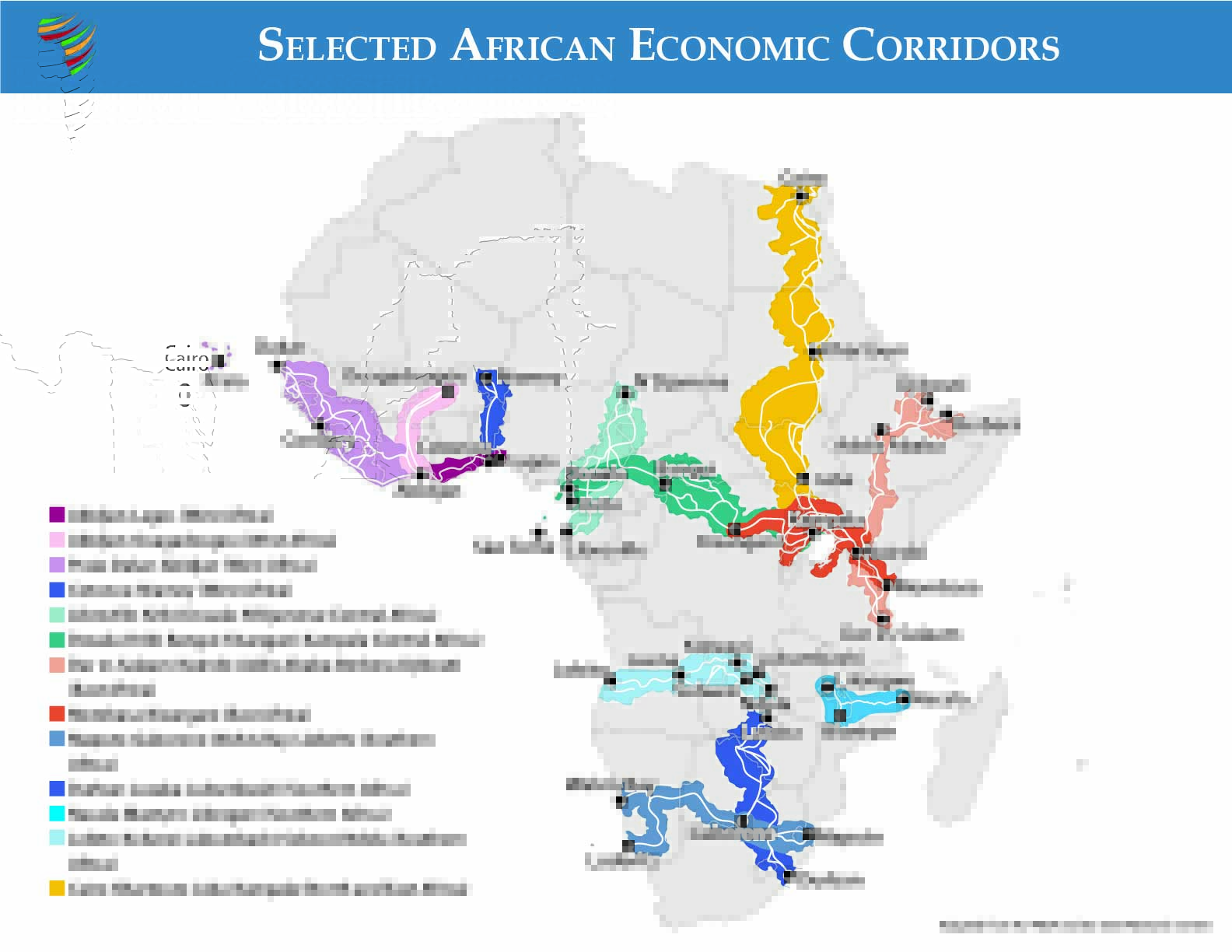
Click for a text description of the map
Map of Africa showing the following 12 economic corridors:
- Abidjan–Lagos (West Africa)
- Abidjan–Ouagadougou (West Africa)
- Praia–Dakar–Abidjan (West Africa)
- Cotonou–Niamey (West Africa)
- Libreville–Kribi–Douala–N’Djamena (Central Africa)
- Douala–Kribi–Bangui–Kisangani–Kampala (Central Africa)
- Dar es Salaam–Nairobi–Addis Ababa–Berbera–Djibouti (East Africa)
- Mombasa–Kisangani (East Africa)
- Maputo–Gaborone–Walvis Bay–Lüderitz (Southern Africa)
- Durban–Lusaka–Lubumbashi (Southern Africa)
- Nacala–Blantyre–Lilongwe (Southern Africa)
- Lobito–Kolwezi–Lubumbashi–Solwezi–Ndola (Southern Africa)
- Cairo–Khartoum–Juba–Kampala (North and East Africa)
Click for printable PDF version
Strategic Logic
African corridor planning stretches back to the 1980–2000 Lagos Plan of Action and the 1991 Abuja Treaty. These plans were integrated into the Move Africa Initiative, the AUDA-NEPAD’s transport and logistics program launched in 2016, as part of the AU’s Agenda 2063. These frameworks, along with the African Continental Free Trade Agreement that came into force in 2019, aim to transform transboundary transport and logistics, connect markets by driving down the costs of moving goods and services, stimulate production, and integrate African economies with one another and globally.
PIDA employs a cross-sectoral approach encompassing:
- Transport and multimodal logistics: roads, railways, ports, and border infrastructure to reduce transit times and facilitate trade
- Energy infrastructure: power generation, transmission grids, and regional power pools to supply industrial zones
- Industrialization and value addition: manufacturing, agro-processing, special economic zones, and industrial parks to move beyond commodity exports
- Digital and ICT infrastructure: fiber-optic networks, data centers, and digital customs systems to facilitate trade and supply-chain traceability
- Climate, environment, and water management: climate-resilient infrastructure and sustainable resource management to ensure sustainable returns
The 2024 African Green Minerals Strategy has expanded this agenda to critical minerals, reflecting growing recognition that corridor design will influence whether Africa exports raw materials or captures greater value through processing and manufacturing.
Across the 5 sectors, 184 projects valued at approximately $550–600 billion and spanning all 54 AU member states have been implemented over the past 3 decades. The Trans-Saharan Optic Fiber Broadband Project traversing Algeria, Chad, Niger, Nigeria, Mali, and Mauritania illustrates the broader concept by linking Mediterranean and sub-Saharan markets while reducing bandwidth costs and facilitating digital services, banking, education, and healthcare.
The Mtwara Development Corridor in southern Tanzania illustrates how physical infrastructure can be designed around an emerging economic ecosystem. Upgrades to Mtwara Port, the Mbamba Bay inland terminal, the Mtwara-Songea Highway, and a planned standard-gauge rail will connect Tanzania with Malawi and Zambia and facilitate the movement of refined critical minerals to the coast. Port cargo handling increased from 592,000 metric tons (MT) in 2021-2022 to 2.58 million MT in 2024-2025, demonstrating the economic impact of complementary infrastructure.
Financing and African Ownership
African governments are major investors in their own infrastructure, financing over 40 percent of active infrastructure commitments against total annual investment requirements of $130–170 billion. This amounts to roughly $68 billion generated through African sources. Between 2014 and 2024, non-bank domestic capital pools exceeded $2 trillion, surpassing $1.7 trillion in cumulative external flows into Africa.
African governments are major investors in their own infrastructure.
The AfDB remains the single largest institutional financier, having deployed over $55 billion over the last decade. The Abidjan-based Infrastructure Consortium for Africa (ICA), coordinated by the AfDB, generates an additional estimated $26 billion in annual financing toward the continent’s infrastructural needs. African countries are key ICA contributors, committing 27 percent to the fund.
Outside the ICA, China has been the largest single-country provider of infrastructure loans on the continent, although its commitments have fluctuated widely. Focused on its Belt and Road Initiative projects, Chinese financing and investment amounted to $39 billion in 2025, increasingly on renewable energy, port expansion, and critical minerals.
To mitigate the impacts of sharp swings in external commitments, African countries continue to expand African-led pooled financing mechanisms while increasingly avoiding sovereign borrowing due to prohibitive costs and debt distress. The trend is to instead turn to domestic capital, multilateral finance, and public-private partnerships (PPPs).
Integrating Infrastructure into Africa’s Growth Corridors
Lessons from existing corridor development efforts across Africa have demonstrated that, for corridors to stimulate synergistic economic opportunities, the integrated infrastructure, institutions, markets, laws, regulations, security, and financing must be mutually reinforcing.
Walvis Bay: Linking Economic Hubs and Strong Regional Governance
The Greater Walvis Bay Corridor demonstrates how infrastructure assets contribute to economic transformation when anchored in functional economic hubs. Namibia, with a population of just 3 million, has used Walvis Bay and its sister port of Lüderitz to provide economic gateways for the 350 million people in the Southern African Development Community (SADC) region. Connecting the Trans-Kalahari, Walvis Bay-Ndola-Lubumbashi, Trans-Cunene, and Trans-Oranje Corridors, Angola, Botswana, the Democratic Republic of the Congo (DRC), South Africa, Zambia, and Zimbabwe rely on the Walvis Bay Corridor for access to the Atlantic. The system is integrated into the SADC’s Regional Infrastructure Development Master Plan and the Southern African Customs Union (SACU).
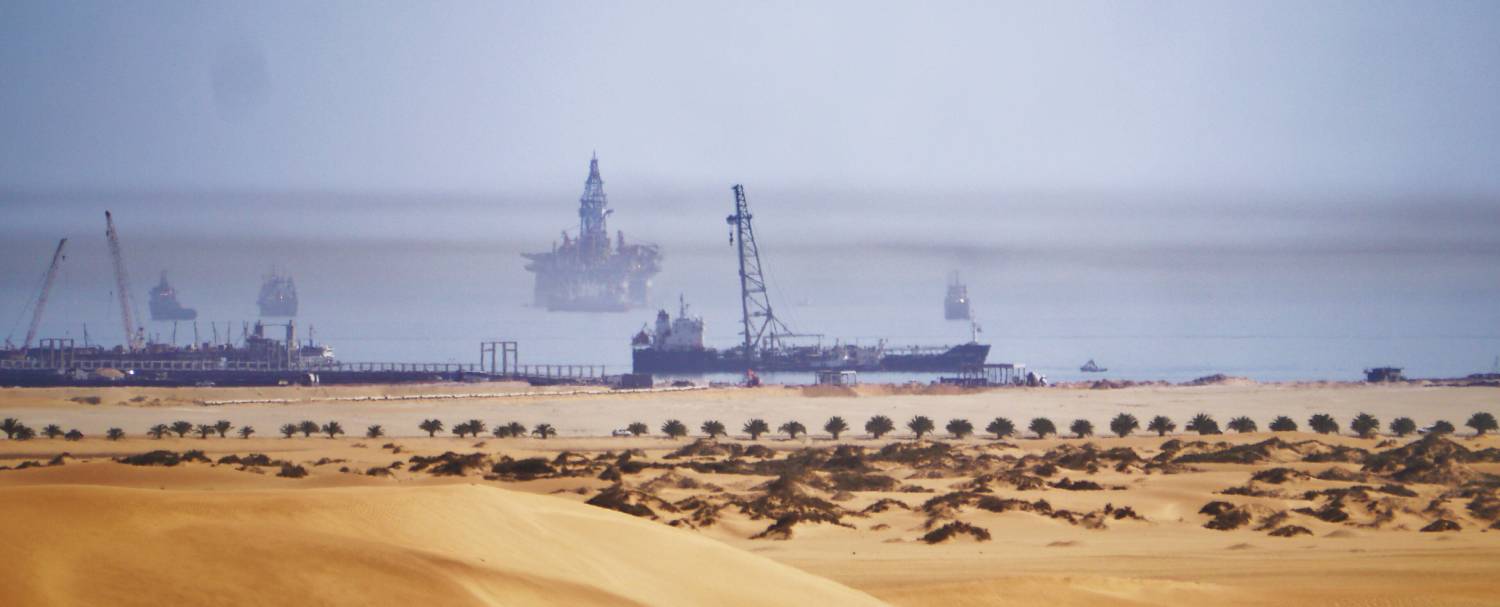
View from Dune 7 of Walvis Bay, Namibia. (Photo: Zairon)

The Walvis Bay Corridor also illustrates the value of diversified financing. In 2009, Namibia rejected a $100-million preferential buyer’s credit from China Eximbank and instead secured a $300-million AfDB loan for the new Walvis Bay container terminal. Namibia’s port authority, Namport, contributed 12 percent, while the government covered structural costs.
A subsequent $245-million blended commercial financing package, structured by Standard Bank Namibia and Rand Merchant Bank, supported additional port development while establishing a model that combines public finance, development finance, and private capital.
The greater Walvis Bay Corridor system has registered notable achievements.
- It has created the shortest western trade route for the SADC interior, saving at least 5 days in shipping time to and from international markets and helping to decongest traditional routes in East and Central Africa.
- It facilitates the safe and efficient transit of nearly 2.5 million MT of cross-border cargo annually, stimulating the development of refining and manufacturing ecosystems across the four corridors.
- It has boosted economic growth in interior countries (Botswana, Zambia, and Zimbabwe) by providing them with dedicated dry ports at Walvis Bay. This has enabled these countries to treat this port, which is geographically closer to European and North American markets, as an extension of their own territorial borders.
The corridor’s viability rests on more than port infrastructure, however.
Namibia’s stable political environment, financial institutions, customs arrangements, and road networks connect the ports to regional markets. This political stability, commitment to the rule of law, transparency, and respect for property rights create the predictability favorable to investment.
Political stability, commitment to the rule of law, transparency, and respect for property rights create the predictability favorable to investment.
Regional governance coordination mechanisms are likewise integral. The Walvis Bay Corridor Group, established in 2000 as an independent public-private partnership, coordinates development across the four corridors and addresses constraints affecting cross-border trade across the seven countries linked to Walvis Bay.
The Corridor’s economic viability is reinforced by its proximity to Gauteng Province, South Africa’s mining and economic powerhouse, which uses Walvis Bay rather than Durban for imports and exports. South Africa’s Northern Cape, meanwhile, exports refined manganese and zinc through Lüderitz.
| Greater Walvis Bay Corridor Ecosystem | ||||
|---|---|---|---|---|
| Corridor | Members | Primary Infrastructure Components | Primary Financing | Economic Sectors |
| Trans-Kalahari Corridor | Namibia Botswana South Africa | Road: Tarred Highway via Mamuno/Buitepos Rail: 1,500-km Trans-Kalahari Railway (Linking Botswana to Walvis Bay via the Kalahari Desert (planned) | Domestic capital: National budgets of Namibia and Botswana Maintenance: Fuel/road user levies via Namibia’s Road Fund Administration Rail Expansion: An International PPP Governance: Trans-Kalahari Corridor Secretariat (Namibia, Botswana, South Africa) | Mining/Energy: Bulk export of Botswana’s refined copper and cobalt assets and South Africa’s refined manganese products Agriculture: Livestock and commercial beef from Botswana Retail and Logistics: Interstate movement of fast-moving consumer goods and manufactured goods from Gauteng Province |
| Walvis Bay-Ndola-Lubumbashi Corridor (formerly Trans-Caprivi Corridor) | Namibia Zambia DRC | Road: Katima Mulilo Bridge Link Rail: Cross-border railway connecting Namibia and DRC to Zambia’s rail network (planned) | Cross-Border Cargo User Levy: 90 cents per MT Soft Infrastructure: Africa Development Bank Hard Infrastructure: National budgets and Namport extensions Governance: Walvis Bay-Ndola-Lubumbashi Development Corridor Committee | Critical Minerals: Bulk transit of copper and cobalt from Zambia’s Copperbelt Province and DRC Agriculture/Timber: Timber and food exports Manufacturing: Heavy industrial machinery for mining operations |
| Trans-Cunene Corridor | Namibia Angola | Road: Main network through Oshikango-Santa Clara border post (Namibia/Angola) Rail: Connected northern Namibian rail line to southern Angola | Domestic Capital: National budgets Cross-Border Utilities: World Bank financing for associated utility/ power transmission Governance: Walvis Bay Corridor Group | Wholesale and Cross-Border Retail: High volume hub for Namibian manufactured goods and food exports into Southern Angola Energy: Logistics support for cross-border power transmission and petroleum distribution Construction: Import of construction materials for Angolan reconstruction efforts |
| Trans-Oranje Corridor | Namibia South Africa | Road: Highway network via Noordoewer-Vloolsdrift border crossing Rail: Direct links to South African rail system at Upington Port: Connects directly to the Port of Lüderitz (Namibia) | National budgets: South Africa’s transport utility Transnet and Namibia’s Namport Bilateral: South African and Namibian transport ministries | High-Value Mining: Export of refined manganese and zinc from South Africa’s Northern Cape Agribusiness: Exports of food products from the Orange River region Maritime: Supply chain links to Port of Lüderitz |
The Walvis Bay model demonstrates a central policy lesson: infrastructure becomes economically transformative when complementary investments, institutions, markets, financing, and governance operate as a single system.
Maputo Development Corridor: Diversification and Value Addition Bolsters Sustainability
The Maputo Development Corridor—SADC’s largest—connects South Africa’s industrial heartland with Mozambique’s ports of Maputo and Matola. Its 570-km N4 toll road, railway links, and port infrastructure have catalyzed diverse industrial and economic ecosystems: aluminum smelting, agro-processing, stainless steel and iron production, chrome, manganese, magnetite, and ferrochrome processing, and the Pande-Temane gas pipeline supplying petrochemical facilities in Secunda, South Africa.
The Maputo Development Corridor is considered a major regional success because it pioneered a self-sustaining public-private partnership model, anchoring state-of-the-art infrastructure directly to high-volume mining and industrial megaprojects to turn a simple cross-border route into a multibillion-dollar economic enterprise. It moves roughly 32 million MT of cargo annually, supports over 330,000 jobs, and has become a pillar of SADC’s total economic output.
The Maputo Corridor is supported by blended finance and AfDB core investment backed by multilateral finance. This includes the European Union’s “Global Gateway” that supports soft and hard infrastructure upgrades in the corridor, demonstrating how integrated transport infrastructure can generate investment and value addition well beyond the “dig and ship” model of raw material transportation and export. Additional foreign investors include Japan, the United Arab Emirates, Portugal, and Australia.
Nacala Corridor: Co-Ownership and Bottom-up Partnerships Stimulate Private Sector
The Nacala Corridor was reestablished in 2000 as a tri-national ecosystem linking Mozambique, Malawi, and Zambia. Integrated into the SADC Regional Infrastructure Development Master Plan, it combines government and AfDB financing with foreign investment initially from Brazil and later Japan. Its tri-national governance structure illustrates how external capital can support locally driven regional development.
Linkages to domestic forestry, agriculture, graphite, titanium, and emerging lithium-related industries demonstrate the corridor’s potential to connect infrastructure with productive capacity. The approach emphasized co-ownership, the sharing of advanced technology, and the ability to strike bottom-up partnerships to support complementary African and Japanese private sector projects along the Corridor. Mozambique’s 99-year lease of a dedicated terminal near Nacala Port to Malawi in 2024 for its imports and exports further illustrates the potential of cross-border arrangements.
Central Corridor: Linking East and Southern Africa
Launched in 2006 by Tanzania, Rwanda, Burundi, and the DRC, the Central Corridor connects the region through the Port of Dar es Salaam using roads, railways, and inland waterways—enabled by regional energy infrastructure. A priority of the East African Community (EAC) Regional Infrastructure Framework, this corridor supports agriculture, mining, manufacturing and industrial processing, logistics, and regional commerce.
The Central Corridor links the Port of Dar-Es-Salaam with economic clusters in Dodoma, Isaka, and Mwanza (Tanzania), Kigali, Bugesera, and Gahanga (Rwanda), Bujumbura (Burundi), Jinja, Mukono, Njeru, Masaka, and Kyotera (Uganda), the Copperbelt Special Economic Zones (Zambia), and Kalemie, Goma, Ruzizi, and Kasumbalesa (DRC). In addition to its multinational nodes, the Central Corridor is distinctive for its highly digitized systems and streamlined border passages operating under a single customs territory.
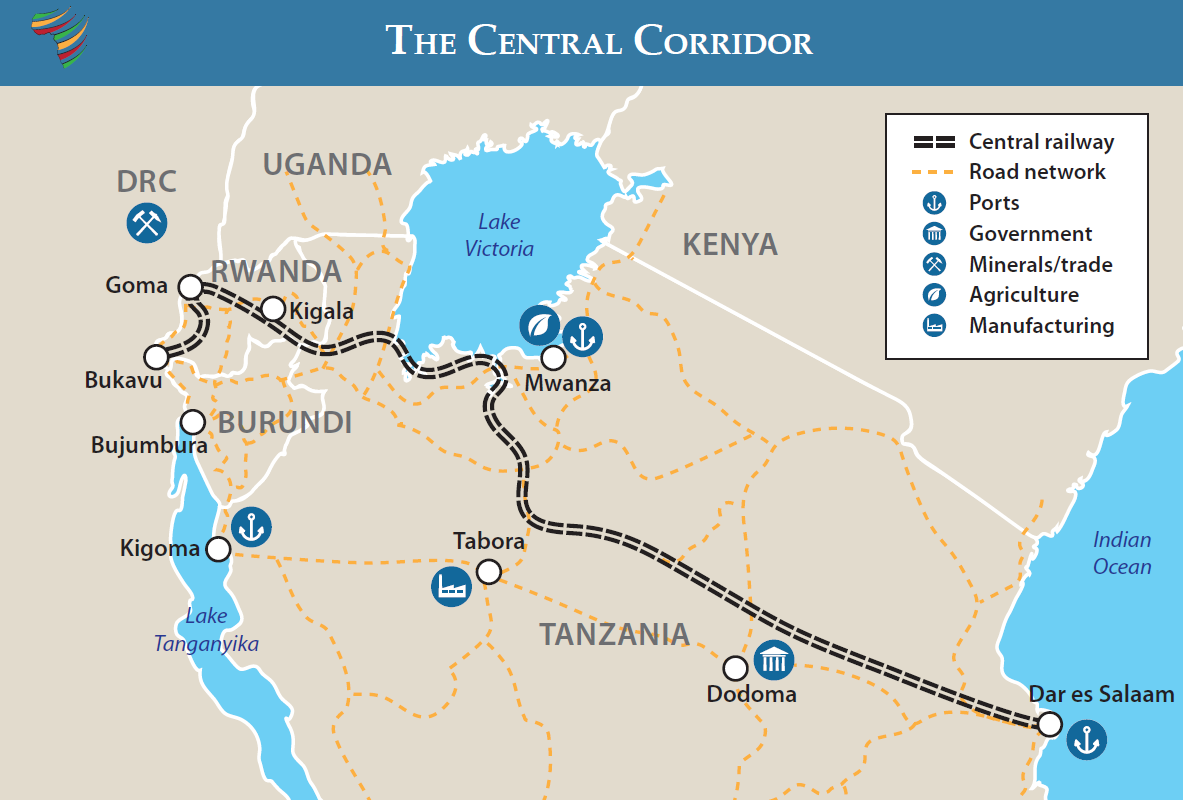
In 2024, the AfDB approved a credit guarantee of $696 million to release $3.9 billion for the Central Corridor Electric Rail, which will connect Tanzania, Burundi, and the DRC (Phases 1 and 2, linking Dar es Salaam to Morogoro and Makutopora in Tanzania, are fully operational).
The Central Corridor plays a vital role in the continental logistical plan by serving as a hub linking the 10,000-km North-South Corridor, managed by a tripartite agreement between SADC, the EAC, and the Common Market for Eastern and Southern Africa (COMESA). It, thus, connects major economic nodes from Durban, South Africa, to Richards Bay, Botswana, to DRC via Zambia, as well as Malawi, Mozambique, and the Port of Dar es Salaam via the Nacala Corridor.
Abidjan–Lagos Corridor: Strengthening Intra-Regional Trade by Connecting Economic Hubs
Established in 2002, the Abidjan–Lagos Corridor is less a transport route than the economic spine of coastal West Africa. It connects major ports, industrial centers, and consumer markets in Abidjan, Accra, Lomé, Cotonou, and Lagos. Economic activity encompasses manufacturing, agriculture, energy, logistics, ICT, tourism, mining, and special economic zones.
An independent oversight board within ECOWAS manages plans for the Corridor, coordinates resource mobilization and FDI, and facilitates communication among local, regional, and external stakeholders, underscoring the importance of sound governance to corridor development.
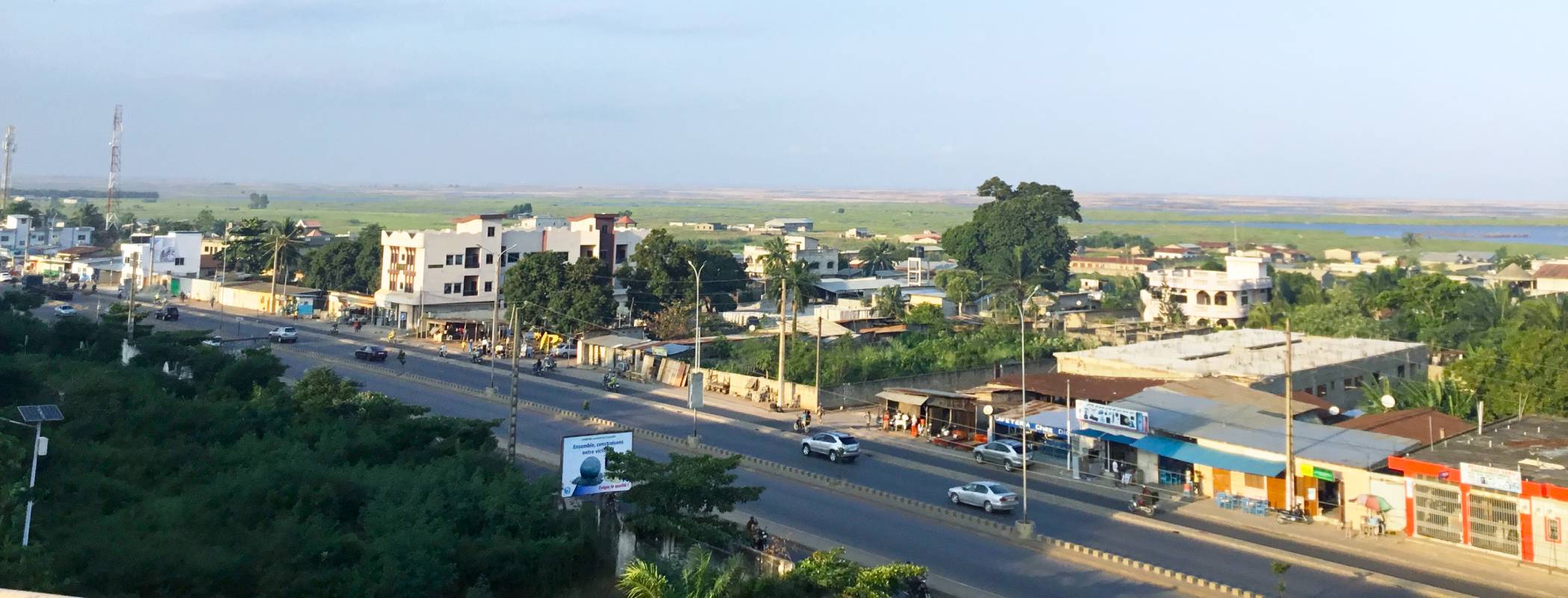
The Abidjan-Lagos highway, running through Abomey-Calavi, Benin. (Photo: Élisée Adad)

The Dangote Refinery in Lekki, Nigeria, serves as the vital energy anchor for the Lagos–Abidjan Corridor, transforming West Africa’s premier economic highway by providing a localized, high-capacity supply of refined petroleum products that directly mitigates costly regional import dependencies and fuel supply disruptions.
The AfDB has identified $6.8 billion in private-sector investment opportunities across 206 projects connecting the 5 countries along the corridor—Côte d’Ivoire, Ghana, Togo, Benin, and Nigeria. Meanwhile, the Africa Investment Forum has mobilized $15.6 billion in potential investment interest. Foreign investment spans China, Denmark, France, Japan, Nigeria, Switzerland, South Africa, the United Kingdom, and other partners.
| Notable Investments along the Abidjan–Lagos Corridor | |||
|---|---|---|---|
| Firm | Origin | Main Corridor Markets | Sector |
| Heineken | Netherlands | Nigeria, Ghana, Côte d’Ivoire | Breweries, manufacturing, distribution |
| Nestlé | Switzerland | Nigeria, Ghana, Côte d’Ivoire | Chocolate processing, manufacturing |
| Unilever | UK, Netherlands | Nigeria, Ghana, Côte d’Ivoire | Consumer goods, manufacturing, consulting |
| LafargeHolcim | Switzerland, France | Nigeria, Ghana | Cement and building materials |
| Dangote | Nigeria | Across the Corridor | Oil refining, cement, fertilizer, logistics |
| MTN | South Africa | Ghana, Nigeria, Côte d’Ivoire, Benin | Telecoms and digital infrastructure |
| Orange | France | Côte d’Ivoire, Ghana, Benin | Telecoms and digital infrastructure |
| Airtel Africa | UK, India | Nigeria, Ghana, Benin | Telecoms and digital infrastructure |
| CMA CGM | France | Ports of Abidjan, Tema, Lomé, Cotonou, Lagos | Ports, shipping, logistics |
| MSC | Switzerland, Italy | Ports in the Corridor | Shipping, terminals, logistics |
| DP World | United Arab Emirates | Dakar, West Africa | Ports and logistics |
| Maersk | Denmark | Ghana, Nigeria, Côte d’Ivoire, Togo | Shipping, logistics, terminals |
| Huawei | China | Nigeria, Ghana, Côte d’Ivoire, and others | Telecoms and digital infrastructure |
| China Roads and Bridges Corporation (CRBC) | China | Entire ECOWAS region | Hard infrastructure, digital networks, and industrial investments |
| JCB | Japan | Ghana, Nigeria, and regional markets | Equipment and industrial investment |
| China Harbor Engineering Company (CHEC) | China | Nigeria, Togo, Ghana, Côte d’Ivoire | Port contractor and expansion, equity, and construction |
Impediments to Africa’s Strategic Corridor Development
Realizing the potential of Africa’s strategic corridors requires thinking beyond the traditional extract-and-export model for raw materials that entails limited African added value, skills development, or technology transfer. Failure to do so will simply reinforce the historical model rather than transform it.
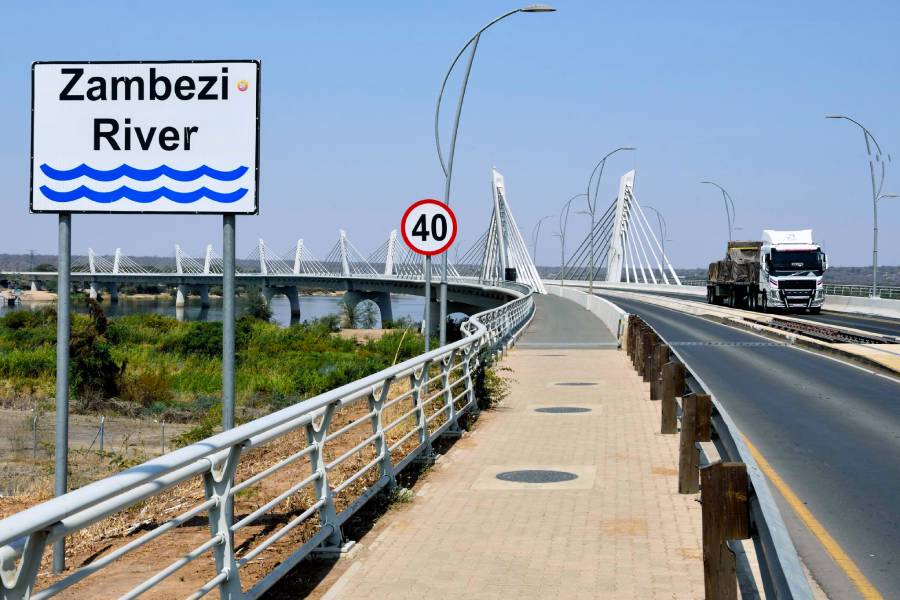
Kazungula bridge with Cape gauge railway track in the middle of road. (Photo: Matthias Hille)

Weak cross-border coordination and fragmented governance among public agencies and investors are common challenges with regional corridor development. For instance, delays at the Kazungula border between Botswana and Zambia at the confluence of the Zambezi and Chobe Rivers typically constrained the North–South Corridor, hampering trade flows and volumes to Namibia and Zimbabwe. The 2021 opening of the Kazungula Bridge, funded by the AfDB, helped solve this logistics problem by replacing the ageing ferry. This was paired with a one-stop border post, co-managed by Botswana and Zambia under a single authority that streamlined customs procedures and reduced transit times.
Misaligned investor and government priorities can also slow corridor development, particularly when external financing emphasizes commodity extraction over governments’ prioritization of value addition and beneficiation. Lessons from the Walvis Bay and Maputo Corridors suggest that these problems can be addressed when investors, regional organizations, and national governments agree upfront upon shared priorities, financing responsibilities, implementation timelines, and measurable outcomes.
State-led or single investor projects can create unsustainable debt and vulnerability when infrastructure outpaces demand. Kenya’s Standard Gauge Railway, financed largely through Chinese loans, illustrates the risk. Lower-than-expected freight volumes and revenue have raised concerns about the Railway’s ability to generate sufficient returns to offset its financing costs, increasing the fiscal burden on the government.
Realizing the potential of Africa’s strategic corridors requires thinking beyond the traditional extract-and export model.
Insecurity—from terrorism and banditry to cross-border conflict—raises costs and disrupts operations of strategic corridors, as demonstrated by the 2022 al Shabaab attacks targeting infrastructure and workers along the Lamu South Sudan Ethiopia Transport Corridor (LAPSSET) in Kenya.
Successful corridors, in short, require a careful balance of local ownership, strong governance, regional coordination, security, diversified financing, and demand-driven investment. Sustainably pulling these interests together requires commitment by all stakeholders to mutual benefits and long-term returns.
Lessons for Sustainable Corridor Development
Standalone infrastructural assets rarely generate transformational economic benefits. Nor have logistical hubs focused solely on extraction contributed to Africa’s economic growth and development.
Corridors in the 21st century succeed as integrated economic systems. They connect ports to reliable road, rail, logistics, energy, and industrial networks. Rather than just one-way extractive systems, sustainable corridors link to domestic economic sectors and value beneficiation that stimulate businesses and further demand for corridor development.
Diversified financing contributes to sustainability and guards against threats to sovereign authority over critical infrastructure.
Viable African corridors are also not solely a means of linking to global markets. Rather, they are also vital mechanisms to connect economic hubs on the continent, facilitating intraregional trade and bridging infrastructure to productive capacity.
The effectiveness of corridors depends on aligning the policies and activities of governments, investors, and operators as part of a coordinated regional strategy. This requires regional governance structures with clear mandates, strong institutional coordination and stakeholder buy-in, predictable regulations, accountability, and sufficient authority to implement decisions across national borders.
Many of today’s most vibrant transnational African integrated economic corridors have emerged over a period of decades. This underscores the importance of establishing durable institutional structures to manage these dynamic arteries over time.
Another lesson from Africa’s corridor development is that diversified financing contributes to sustainability and guards against threats to sovereign authority over critical infrastructure. Diversifying financing across national budgets, African development institutions, multilateral lenders, private capital, and PPPs reduces dependence on any single partner. But capital alone is insufficient. Phased, demand-driven development must anchor investment to cargo flows, revenue potential, and secured financing.
Building on long-envisaged regional strategic objectives, Africa’s modern corridor development is not simply aiming to build infrastructure, but to create investable corridor ecosystems in which infrastructure, institutions, markets, financing, and security reinforce one another. Properly managed, corridors can shift Africa from an extract-and-export model toward integrated production, regional trade, and greater value capture while allowing African governments to leverage external capital without surrendering ownership of their economic priorities.
Additional Resources
- Landry Signe, “The Future of Africa’s Transport Sector,” Commentary, Realizing Africa’s Potential, May 6, 2026.
- Paul Nantulya, “Reciprocal and Resilient Mineral Supply Chains: Lessons from the Nacala Corridor,” Spotlight, Africa Center for Strategic Studies, April 13, 2026.
- African Union Development Agency (AUDA-NEPAD), “Corridors, Trade, and Local Development in Africa: An Agenda for Action” Policy Brief, February 2026.
- Africa Center for Strategic Studies, “Africa’s Critical Minerals at a Critical Juncture,” Spotlight, May 20, 2025.
- African Union, GMES and Africa, and European Union, “The African Development Corridors Database,” Interactive Map and Datasets, March 5, 2023 (Regularly Updated)
- African Development Bank, African Union, New Partnership for Africa’s Development, “Program for Infrastructure Development in Africa (PIDA): Interconnecting, Integrating, and Transforming a Continent,” PIDA Study Synthesis, 2011.