These pages reflect information about Community Members and Chapters. We urge community members to begin contributing now to their content. Send your stories, photos, chapter documents, member promotion announcements, and other information you want to share with the world to the Africa Center’s Community Affairs Specialists.
Africa Center’s latest community news:
Africa Center and U.S. Embassy Sponsor Symposium on Natural Resources and Conflict Prevention in Tanzania
View Photos from the Event
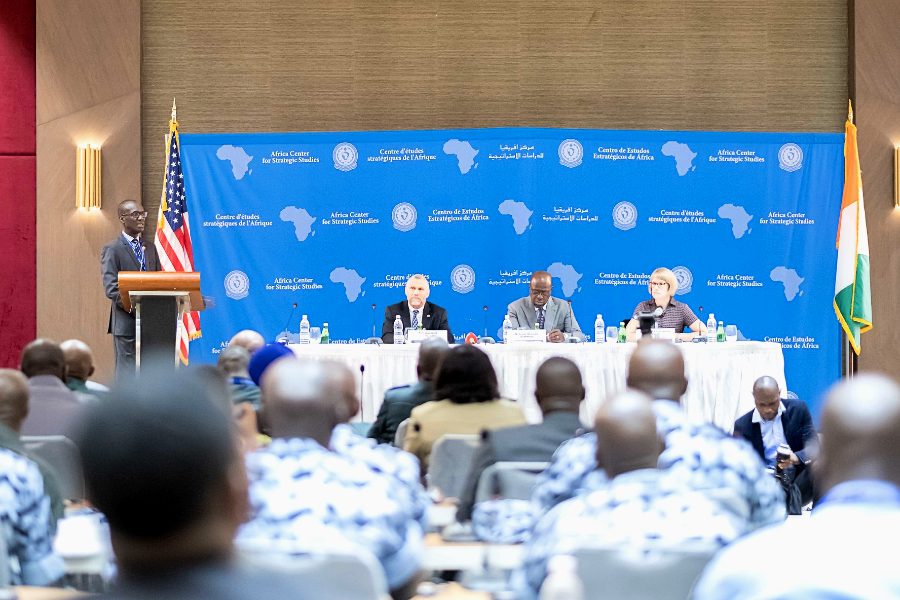
DAR ES SALAAM, Tanzania—A group of 71 security sector experts and students from the Tanzania National Defence College, academic institutions, the Ministry of Defence, non-profit organizations, Tanzanian Parliamentarians and U.S. and Tanzanian government officials, convened in Dar es Salaam on 16 May, 2013 for a full-day program discussing Natural Resources and Conflict Prevention.
The event was co-hosted by the Africa Center for Strategic Studies (ACSS), the ACSS Tanzania Community Chapter, and the U.S. Embassy in Tanzania. The symposium is part of the Washington, D.C.-based Africa Center’s Topical Outreach Program Series (TOPS), designed to increase the quality and quantity of communications and networking among ACSS alumni, ACSS faculty and staff, and U.S. stakeholders and policymakers.
Welcoming and opening remarks were delivered by Professor Egnald P. Mihanjo, President of the ACSS Tanzania Community Chapter; Mr. Bradley Anderson, Program Manager at the ACSS Regional Office for East Africa; and Lt. Col. Kevin C. Balisky, Defense Attaché at the U.S. Embassy in Dar es Salaam. The symposium was divided into two panels, with discussions on “Natural Resources and Conflict Prevention” and “Competition for Resources.” Panelists at the event included Dr. John Kelly, ACSS Professor of National Security Studies; Professor Egnald P. Mihanjo, President of the ACSS Tanzania Community Chapter and Associate Professor at St. John's University of Tanzania; Honorable James Lembeli, Member of Parliament for Kahama and Chairman Natural Resources Parliamentary Committee, Natural Resources and Conflict Prevention; Honorable Moses Machali, Member of Parliament for Kasulu; and Ms. Leslie Armstrong, Senior Science Advisor, U.S. Africa Command.
The symposium theme concentrated on the factors of social responsibility and transparent accountability from the government. The idea that those who take resources from the land should return something to the local community was mentioned numerous times during the discussion. Also discussed was the role Parliamentarians play in challenging the system and assuring the people that their environment is not being wrongfully exploited. The panelists all agreed that the government officials should be mindful of their role as guardians of the public trust.
Professor Mihanjo set the stage by framing the concerns and challenges Tanzania is currently facing.
“All in all, for natural resources to be a valuable national asset for development and to enhance national security, it would need a government that is accountable to people and manages well national resources with well-enshrined public oversight," Professor Mihanjo said, "otherwise a corrupt bureaucracy will heighten grassroots resistance, public disorder and violence."
The ACSS Tanzania Community Chapter has developed an interest in the issue because of the potential threat to national development, peace, and stability, Professor. Mihanjo said.
The Honorable James Lembeli presented both the socio-economical benefits and the numerous conflicts that Tanzania is currently facing. “Tanzania is endowed with enormous natural resources," he said, adding that similar resources have been a source of conflicts in adjacent communities. In his presentation he discussed the conflicts and challenges for communities living in or next to wildlife protected areas and mines.
Dr. John Kelly’s presentation was focused on climate change, water and mining issues in Africa. “The mining industry in Tanzania is an enormous generator for 43 percent of the foreign exchange reserves while representing only 2.5 percent of the GDP," he said "Expansion of mining operations requires greater oversight and accountability in order to protect the public welfare.”
He added, “Climate change will impact all natural resources—fresh water, wildlife, timber and extractive materials—because extreme weather changes all operating environments.”
The Honorable Moses Machali explained to the audience what natural resources are, what they are used for and what challenges exist when using the natural resources. He warned, “The government should lead all stakeholders on reviewing the policies and laws governing the use of natural resources and aspects of investment so as to harmonize the country.” He continued, “…there must be a real participatory approach towards decision making on the use of natural resources in the country. Failure to that it is an extraordinary mistake due to the fact that the government is made for the public interest and the resources available are there for daily human challenges.”
Lastly, Ms. Leslie Armstrong made clear that she was not presenting her personal opinion but instead offering a scientific approach. She said, “I want to use the language of science, which is objective. By reviewing the facts, you can make your own opinion and draw your own conclusions. My job is to provide scientific facts and not to make decisions for you.” Armstrong shared a model that could be used in Tanzania to help the country better understand the current state of the environment to better plan for the future. She explained to the audience, “The management of information provides government the opportunity to see over the horizon.”
ACSS is the pre-eminent institution for strategic security studies, research, and outreach in Africa. The Africa Center engages African partner states and institutions through rigorous academic and outreach programs that build strategic capacity and foster long-term, collaborative relationships. Over the past 14 years, more than 5,000 African and international leaders have participated in ACSS programs.ACSS Delegation Conducts a Program With Uganda Community Chapter in Kampala
A delegation from the Africa Center for Strategic Studies (ACSS) visited Uganda on January 28 to February 6, 2013 to attend a workshop on “Improving Regional Responses to Transnational and Irregular Threats in Eastern Africa”—an academic program of the Africa Center—and organize a Topical Outreach Program Series (TOPS) visit, an Africa Center initiative designed to strengthen long-term relations between community members and the Washington, D.C. headquarters.
During the visit, the delegation, which included Bradley Anderson, Program Manager at the ACSS East Africa Regional Office, Thomas Dempsey, Assistant Professor for Security Studies, and Mary McGurn, Community Affairs Specialist, met with the outgoing chair of the Uganda Community Chapter, Constitutional Court Justice Steven B.K. Kavuma, to discuss the state of the chapter, and its upcoming 10th anniversary. They also attended the election of the new executive committee for the chapter, chaired by Ms. Edith Mwanje, Permanent Secretary at the Ministry of the East Africa Community (EAC) Affairs.
The visit to Kampala included a two-day TOPS symposium on peacekeeping operations and transnational threats. Nearly100 people—diplomats, military and civilians—gathered twice at Rwenzori Ballroom, Sheraton Kampala Hotel on February 4-5, 2013, for discussions concerning peacekeeping operations in Eastern Africa and rule of law and illicit trafficking. Both topics featured presenters drawn from ACSS academic staff, the Ugandan government and the Uganda People’s Defence Forces (UPDF).
During a discussion about peacekeeping operations in Eastern Africa held on February 4, Major General Francis Okello recounted—in the morning session—logistical and political challenges he faced when serving as the Force Commander of the African Union Mission in Somalia (AMISOM) from March 2008 to August 2009. General Okello said that despite resource constraints and, at times, inadequate training, AMISOM did not fail its mandate in Somalia, even if it has not fully accomplished it yet. He also laid the ground in his presentation for multidimensional peacekeeping operations to be effective.
The afternoon session featured Ms. Amanda Magambo from the Uganda Rapid Deployment Capability Centre and ACSS’s Dempsey, who discussed the role of civilians—and particularly women—in peacekeeping operations. Both presenters gave an overview of the evolving nature of peace operations in Africa, the role of women in conflict zones, and the key challenges they face. They concluded by presenting some recommendations for integrating women into military and police, as well as the broader society.
During a symposium on Rule of Law and Illicit Trafficking on February 5 that highlighted Uganda’s growing concerns about illicit trafficking, Senior Commissioner of Police Moses Sakira, Deputy Director of Interpol in Uganda, provided in his keynote address an overview of illicit trafficking trends in Eastern Africa. SCP Sakira also discussed lessons learned during Operation Hope, a three-day operation conducted throughout the five EAC-member states, aimed at curtailing illegal smuggling in the region. In Uganda, the operation resulted in the rescue of two dozen victims of human trafficking, the seizure of large quantities of illicit weapons, ivory, narcotics and counterfeit medicine as well as the arrest of numerous traffickers implicated in the sting.
However, SCP Sakira also said that the operation highlighted serious deficiencies in the country’s legal framework on illicit trafficking. Other speakers—including Commissioner of Police Moses Binoga, the coordinator of the newly established National Human Trafficking Task Force in Uganda; Ms. Patricia Nduru, Human Right Officer at the Uganda Human Right Commission; and Colonel Aloysius Kagoro, Vice Chair, Uganda Chapter and Deputy Chief of Legal Services, UPDF—echoed his concerns and recommended that the state intensifies capacity building for police officers engaged in countering illegal trafficking as a way forward.
In their final words, representatives of the Africa Center, the U.S. embassy in Kampala and the Uganda Community Chapter thanked the participants for their thoughtful discussions and their efforts to improve the life of their countrymen. ACSS’s Anderson encouraged the Uganda Chapter to conduct similar forums more often in the future.
The Africa Center is the pre-eminent institution for strategic security studies, research, and outreach in Africa. The Center engages African partner states and institutions through rigorous academic and outreach programs that build strategic capacity and foster long-term, collaborative relationships. Over the past 13 years, more than 6,000 African and international leaders have participated in over 200 ACSS academic programs.ACSS-Lesotho encouraged to continue keeping peace, stability
Maintenance of peace and stability could promote foreign investment in any country which in turn would generate more jobs. The Speaker of the National Assembly Mr. Sephiri Motanyane said this when addressing members of the African Centre of Strategic Studies (ACSS)-Lesotho chapter at a one day symposium held in Maseru today (Wednesday). The symposium was hosted by the United States(U.S) Embassy in Maseru and the Africa Centre Event to discuss the Role of Military in Elections and Parliamentary Oversight of the Security Sector.
Mr. Motanyane said members of the Lesotho Defence Force(LDF) demonstrated professionalism by upholding the values of Basotho and ensuring that stability is maintained throughout the elections period. ''LDF can now be counted amongst the best military officers as they learn and adapt very easily whenever they are being trained,'' he said. He pointed out that he was proud of the support and the role played by LDF to keep peace and stability during the May 26 general polls which resulted in the formation of a new system of ruling in the political history of Lesotho. Mr. Motanyane added that since Lesotho started to interact with the military establishments worldwide particularly with those in the U.S, LDF members showed a lot of professionalism.
[caption id="attachment_21266" align="alignright" width="300" caption="Members of the Lesotho Community Chapter of the Africa Center for Strategic Studies (ACSS), October 30, 2012, in Maseru, Lesotho."]
[/caption]
Speaking at the same occasion U.S Ambassador to Lesotho Mrs. Michele Bond said the work of the ACSS is vital to promote dialogue between Lesotho and the U.S. She said this year's symposium would address two key areas aimed at strengthening bilateral relations on areas of democracy and security. Mrs. Bond highlighted a responsible role played by LDF in the elections indicating that in terms of democracy, the timing of today's discussions could not have been better. She expressed hope that LDF will develop its capacity to contribute with its humanitarian efforts and possibly even peacekeeping operations on the African continent.
She further said Lesotho and the U.S will continue to work together to build the LDF skills and its officers so that the military officers serve and protect the interests of Basotho as expressed through their democratic institutions.
On the other hand, the Acting Principal Secretary in the Ministry of Defence Mr. Pitso Makosholo said the Ministry will support ACSS-members in Lesotho to ensure that they achieve their goals. He said the military has to be loyal to the state by ensuring that peace and security are maintained at all times. He however advised the ACSS committee to revisit its programme for the development of ACSS-Lesotho chapter.
ACSS is a U.S. Department of Defence academic organisation that engages African states and institutions through rigorous academic and outreach programme that build strategic capacity and foster long-term, collaborative relationships.
Source: Lesotho News AgencyAfrica Center Co-Hosts Civil-Military Symposium, Launches Malawi Chapter
View Photos of the Event
LILONGWE, Malawi – In partnership with the U.S. Embassy in Lilongwe, the Africa Center for Strategic Studies (ACSS) conducted an academic symposium July 25-26, 2012, on the topic of civil-military relations in a democracy, an important topic in Malawi, which underwent a lawful change of leadership in April when Vice President Joyce Banda assumed the presidency following the unexpected death of President Bingu wa Mutharika. The Africa Center symposium also marked the launch of the ACSS Community Chapter in Malawi.
The creation of the Africa Center Malawi Chapter “marks an important milestone in the security sector for Malawi,” said Patrick V. Kachimera, Secretary of National Defence, who spoke at the symposium’s opening ceremony July 25.
Because Africa Center programs bring together professionals from across government sectors and civil society, Kachimera suggested the chapter could be used as a “conduit for institution-building in Malawi.” He added that he hoped the Africa Center chapter and its programs would continue to “encourage a culture of professionalism” within the security sector, as well as build greater trust between government agencies and between government and civil sectors.
Both days’ sessions were attended by approximately 50 people representing numerous sectors, including the Ministry of National Defence, the National Intelligence Bureau, the Malawi Police Service, the Ministry of Health, a member of Parliament, academic and media professionals, representatives of non-government organizations, and officials from the U.S. Embassy.
The Malawi Chapter became the Africa Center’s 31st chapter. ACSS chapters are intended to nurture the exchange of ideas within nations and regions, as well as between host nations and U.S. government representatives.
During the ACSS meetings in Lilongwe, Brigadier General Rodrick Chimowa was elected president of the ACSS Malawi Chapter. “Working together we can achieve great things,” Chimowa said. He added that the Malawi government’s support of the ACSS Chapter would contribute to Malawians developing increasingly effective approaches to national and regional security issues.
The sudden heart attack and death of President Wa Mutharika in April led to a temporary constitutional crisis in Malawi before his death was formally announced and, in accordance with the constitution of Malawi, President Joyce Banda, who was serving as vice president, was sworn in as the nation’s first female president. U.S. Secretary of State Hillary Clinton in a July statement marking Malawi’s national day, said that “over recent months, Malawi has demonstrated an impressive commitment to the rule of law and democracy.” Ambassador Jeanine Jackson, the U.S. ambassador to Malawi, also has applauded the actions of the Malawi Defence Force for its actions during the presidential transition, saying the MDF “served as a model of what a professional military should do in a democracy."
Speaking at the July 25 opening ceremony of the Africa Center event, Lisa Vickers, the Chargé d’Affaires at the U.S. Embassy in Lilongwe, also praised the professionalism of the Malawi Defence Force during the presidential transition and spoke of the “deep” partnership between the United States and Malawi. The establishment of the Africa Center chapter in Malawi, she said, would contribute to cross-sector relationships and cooperation between government and civil society. “Sustainable solutions grow from diverse opinions,” Vickers said.
Vickers also highlighted the new U.S. Strategy for Sub-Saharan Africa, announced in June by President Obama. The policy sets forth four strategic objectives for U.S. engagement in Africa: (1) strengthening democratic institutions; (2) spurring economic growth, trade, and investment; (3) advancing peace and security; and (4) promoting opportunity and development.
The Africa Center for Strategic Studies is a U.S. Department of Defense institution for security studies, research, and outreach in Africa. The Washington, D.C.,-based Africa Center sent a three-person academic and outreach delegation to the Malawi Chapter launch, including U.S. Colonel Saul Bracero, deputy chief of staff for ACSS, and Dr. Mathurin C. Houngnikpo, the Academic Chair of Civil-Military Relations at ACSS.
Africa Center programs and symposiums gather perspectives and recommendations from a cross-section of international security-sector officials, public servants, and civil-society representatives. Thousands of security, government, and civil-society professionals from across Africa have attended African Center programs since the Center’s founding in 1999. Prior to the July 25-26 symposium, approximately 60 Malawians from across diverse sectors participated in ACSS academic programs.
The July 25-26 event in Lilongwe was part of the Africa Center’s Topical Outreach Program Series (TOPS), which allow ACSS chapters and alumni to remain actively involved in regional security discussions. ACSS had conducted more than 90 TOPS visits to 35 African countries.ACSS Alumni Chapter Holds Conference in Senegal
Click here for photos from this event.
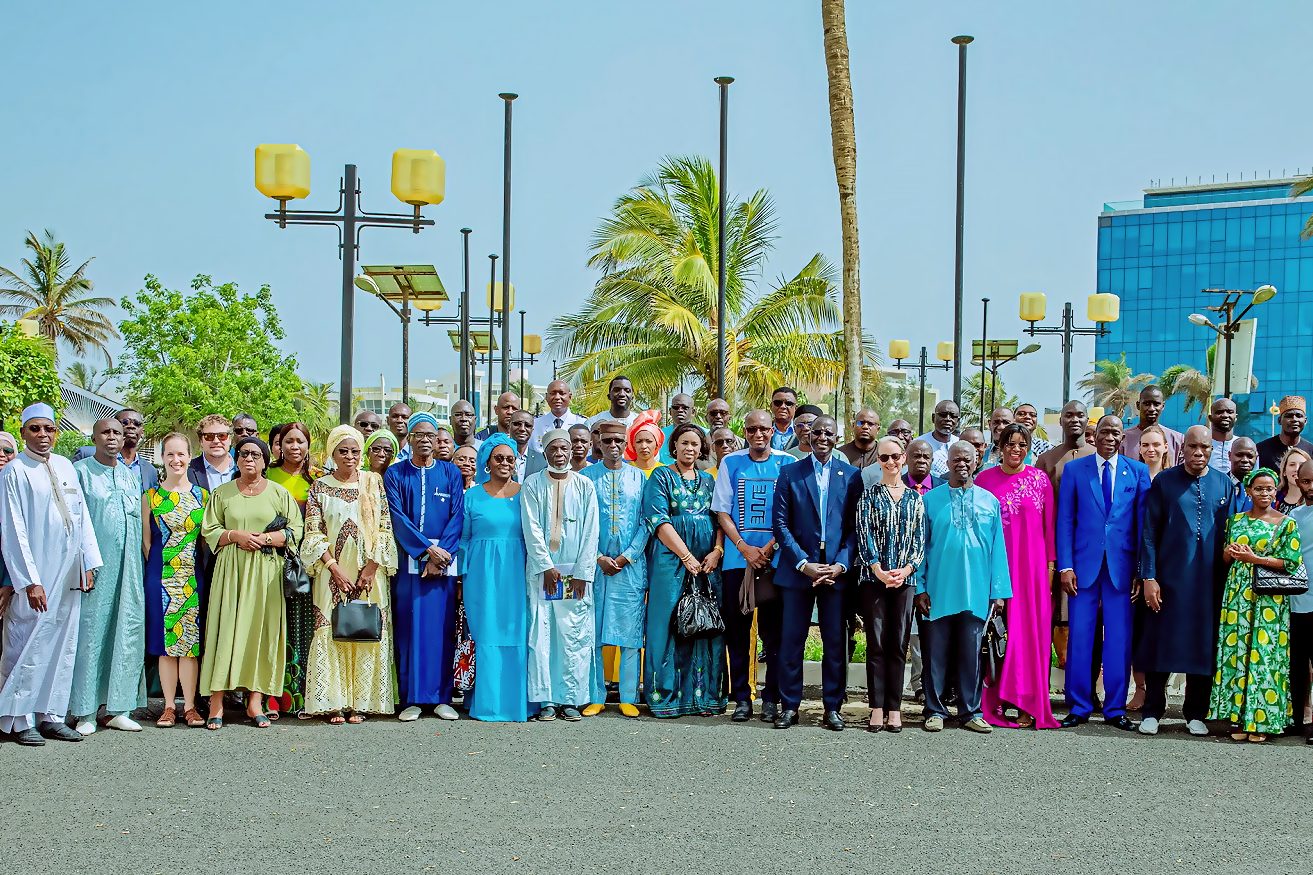
Military officers, high-ranking civilian government officials and members of the diplomatic corps gathered on November 19, 2011, in Dakar, Senegal, to discuss promoting a culture of peace and development in West Africa. The Africa Center for Strategic Studies’ Senegal chapter, led by 2008 ACSS Visionary Award recipient General Lamine Cissé, sponsored the event. The Chief of Staff to Senegal’s Defense Minister M. Birane Niang led the conference, which was the first held by the country’s chapter since its July 2011 re-launch.
Academic and military experts considered how best to promote a culture of peace and development in the region and attempted to define the roles of civil society and security forces towards that objective. During his opening remarks, Cissé thanked ACSS for its constant support of the Senegalese chapter. He reminded the audience that ACSS was founded in Dakar in 1999, giving Senegal a special place in the organization’s history.
ACSS chapters throughout Africa provide a forum for community members to develop independent programs that support common defense and security interests, maintain communication with the center and in-country U.S. Embassy colleagues, and provide networking opportunities between military and civilian colleagues.
For more information, visit www.africacenter.org.