

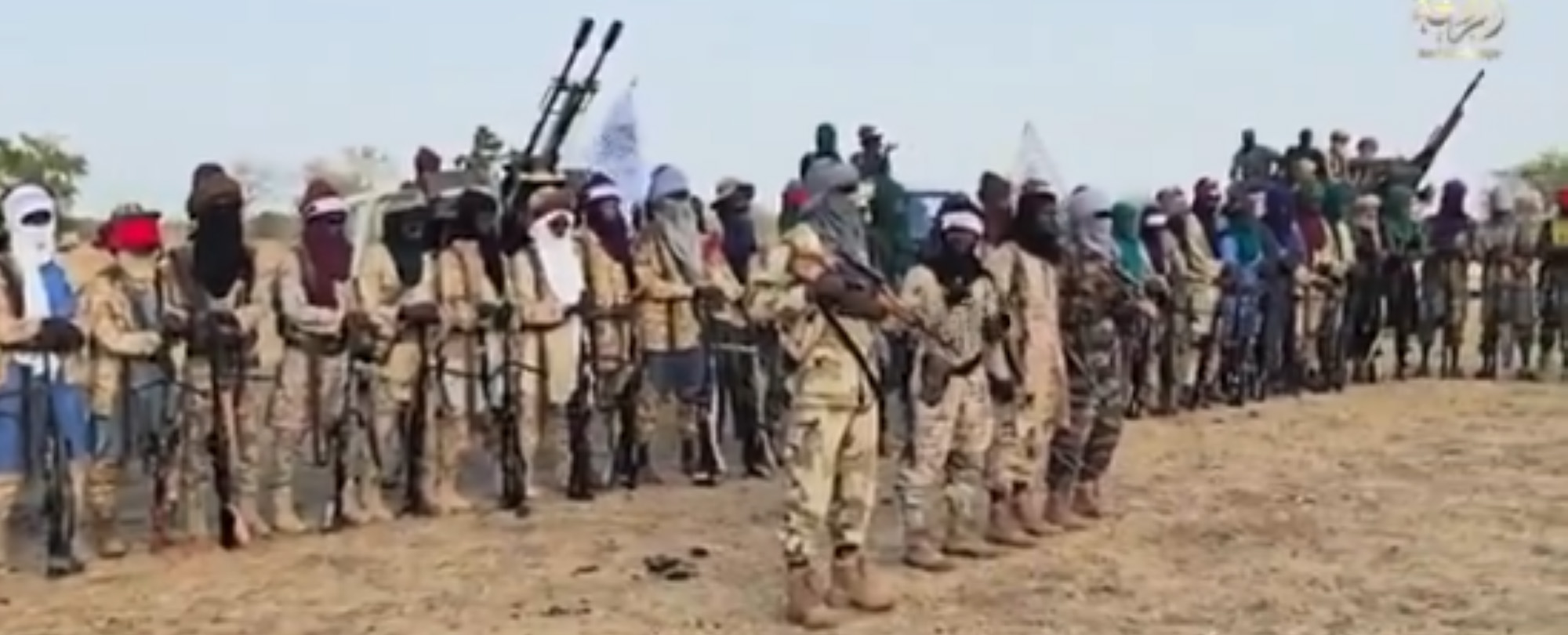
JNIM spokesperson Bina Diarra addresses fighters in a propaganda video. (Image: screengrab)
Since Mali’s military coup in 2020, the Sahel has become the deadliest theater of militant Islamist violence in Africa. Fatalities linked to these extremist groups continue to rise, violence has expanded geographically, and insurgent groups are increasingly threatening major population centers, transportation corridors, and economic infrastructure across Mali, Burkina Faso, and Niger. The nearly 9,800 reported fatalities linked to militant Islamist groups in the Sahel over the past year account for 41 percent of all such fatalities in Africa.
The deterioration has been particularly striking given that the military juntas in Mali, Burkina Faso, and Niger justified their seizures of power on the grounds that elected governments had failed to address growing insecurity. Yet, fatalities linked to militant Islamist violence in the Sahel are now roughly seven times higher than they were in 2019. In Mali, more than 80 percent of all fatalities linked to militant Islamist groups have occurred since the 2020 coup.
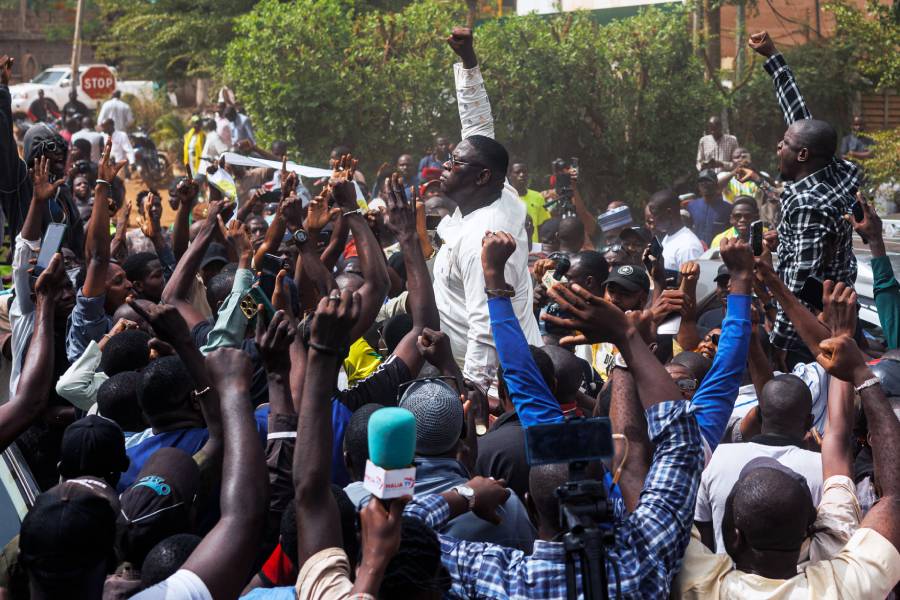
Mali Protest: In one of the most visible acts of protest since Colonel Assimi Goita came to power, hundreds of Malians gather in Bamako on May 3, 2025, following a call from a broad coalition of political parties fearing dissolution by the military authorities. (Photo: AFP)
The threat, moreover, has become increasingly regional in scope. Jama’at Nusrat al Islam wal Muslimeen (JNIM), a coalition of militant Islamist groups, now operates across a theater spanning more than 1,200 kilometers and has expanded southward and westward into more densely populated regions of the three Sahelian countries—as well as previously unaffected areas of coastal West Africa.
Coordinated attacks launched across Mali in April and July have exposed the growing threat. Simultaneous operations stretching from Bamako and Kati to Gao, Mopti, and Kidal have demonstrated an unprecedented level of coordination and growing operational reach of insurgent groups that appear increasingly capable of challenging military authority across multiple fronts.
The rapidly evolving security challenge makes strategic reassessment increasingly urgent.
Mali Junta Responds to Crisis with Political Crackdown
Defense leaders facing setbacks of the magnitude seen in the Sahel would ordinarily reassess strategy, force posture, intelligence failures, partnerships, and operational priorities. Instead, the juntas in power in the Sahel have focused on further tightening the domestic political space.
The response to the April attacks in Mali provides the clearest illustration of the pattern. In the weeks that followed the attacks, authorities launched a series of arrests and detentions targeting political figures, civil society actors, military personnel, journalists, magistrates, and ordinary civilians.
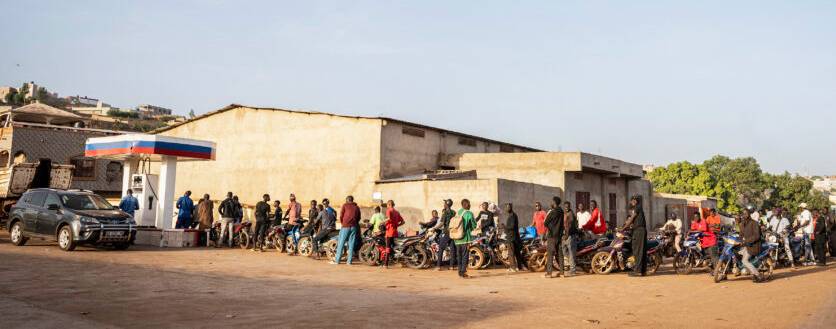
Motorcyclists line up to get fuel at one of the few petrol stations with supply in Bamako months after jihadists blockaded fuel routes. (Photo: AFP)
Among those detained were veteran political leader Mountaga Tall, political analyst Moussa Djiré, and opposition-linked figure Youssouf Daba Diawara. Authorities also arrested military officers and other individuals accused of involvement in plots against the junta. Beyond these high-profile cases, detentions and disappearances were reported in central and northern Mali, particularly among communities long viewed with suspicion because of their perceived links to armed groups. Together with continuing restrictions on political activity and public criticism, these actions reinforced a trend of shrinking tolerance for dissent under military rule.
This crackdown against civilian leaders has occurred even though there is no evident connection between these individuals and the military setbacks that precipitated the crisis. This appears to demonstrate that the junta is more focused on retaining power than protecting citizens or the state.
Meanwhile, there has been little discussion of the strategic questions raised by the attacks. The offensive exposed potential weaknesses in intelligence collection, force protection, operational coordination, and broader security strategy. There has also not been an effort to rebuild the regional security cooperation agreements with neighboring countries to counter what is increasingly a regional security threat.
Political Controls Expand as Security Challenges Persist in Burkina Faso
Burkina Faso remains the epicenter of militant Islamist violence in the Sahel, accounting for roughly half of all fatalities linked to militant Islamist groups in the region. Insurgents continue to operate unchecked across more than half of the country, while attacks have increasingly threatened population centers, transportation routes, and state authority. Despite repeated military campaigns, the mobilization of civilian auxiliaries, and forced conscription, dozens of Burkinabe towns remain under siege, battlefield losses mount, and security conditions continue to deteriorate.
Closing spaces narrows the discussion precisely when a broader assessment of the region’s deteriorating security trajectory is most needed.
Illustratively, the February assault on Titao, in which insurgents overran a military position, looted weapons and ammunition, and temporarily isolated the town by destroying telecommunications infrastructure, underscores the continuing ability of armed groups to challenge state authority across large parts of the country.
As security challenges have persisted, Burkina Faso’s junta leaders have expanded restrictions on civilians. While religious leaders, journalists, magistrates, and civil society actors occupy very different positions within Burkinabe society, each has faced growing pressure as space for independent voices has narrowed.
Investigative journalist Serge Oulon disappeared after being detained by authorities in 2024 and remains unaccounted for, while several other leading journalists have faced repeated arrests, detentions, and forcible conscription by the junta.
Several magistrates and an attorney went missing following their involvement in politically sensitive judicial proceedings in 2025. Other magistrates prosecuted in a high-profile corruption case in February 2026 alleged that they had been abducted, unlawfully detained, and tortured during the investigation.
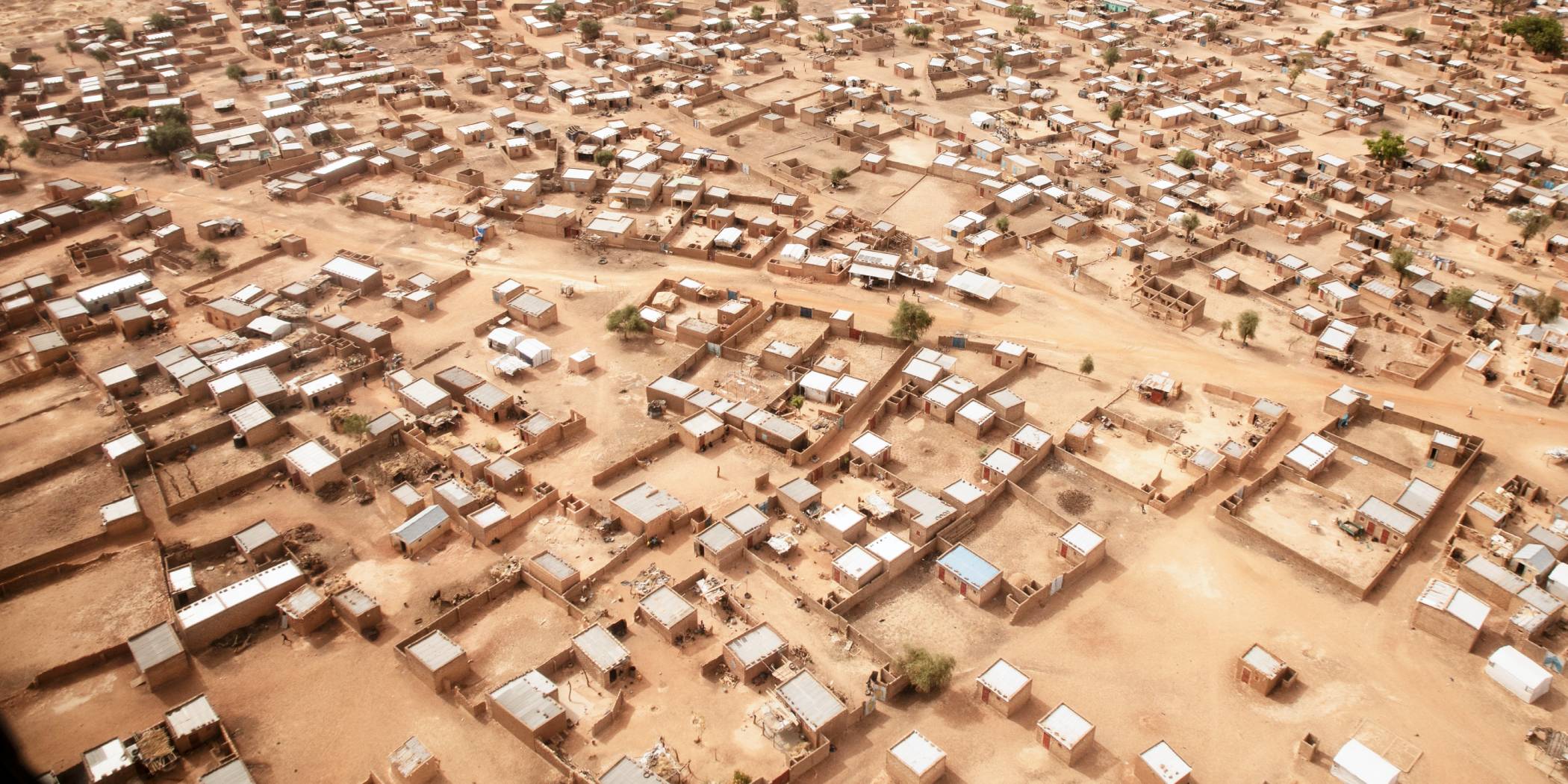
Barsalogho, Burkina Faso: Residents accuse the junta of forcing them to leave the town, exposing them to an attack by JNIM that left dozens dead. (Photo: AFP)
The junta’s campaign has increasingly extended beyond individuals to organizations. In January 2026, the junta dissolved all political parties after nearly three years of suspension. In April, more than 100 nongovernmental organizations and civil society associations were dissolved. Junta leader Ibrahim Traoré punctuated the significance of the action by stating that “People need to forget about the issue of democracy.”
This pattern of repression and violent crackdowns extends beyond traditional critics. The March 2026 death in detention of a prominent member of the pro-junta Wayiyan movement—a nationalist civic organization that has consistently mobilized public support for the junta—and a member of the Volunteers for the Defense of the Homeland (Volontaires pour la Défense de la Patrie, VDP) raised concerns over the growing use of coercive measures even against constituencies broadly aligned with the junta.
These fears were again on display in May when Imam Mohammad Ishaq Kindo—an influential Sunni religious leader—was arrested after publicly criticizing proposed legislation that would have expanded state regulation of religious practice. Demonstrators who gathered to demand his release were also subsequently detained.
Initiatives to pursue strategic adaptation and cooperation have been deprioritized relative to efforts to manage domestic dissent.
As in Mali, there is no indication that those targeted played a role in the country’s security setbacks or maintained links to insurgents.
Against this backdrop, public discussion of the country’s deteriorating security trajectory remains muted. This narrows the range of perspectives that can inform responses to an increasingly complex security environment, including ways to strengthen community relations, improve intelligence capabilities, and adapt military tactics and strategy to combat the insurgent threat.
The increasingly regional nature of the threat also calls for strengthening cross-border security cooperation. Recent overtures from Côte d’Ivoire suggest that opportunities for greater coordination still exist despite political tensions. Yet, initiatives to pursue strategic adaptation and cooperation have been deprioritized relative to efforts to manage domestic dissent.
Escalating Threats Raise Questions about the Niger Junta’s Response
Niger has experienced some of the sharpest escalation in insecurity in the central Sahel since the country’s July 2023 coup. Fatalities linked to militant Islamist violence have quadrupled, while insurgent groups have expanded operations in western Niger. The country now faces growing pressure from both JNIM-affiliated groups operating along its western border and the Islamic State in the Greater Sahara (ISGS), which has intensified attacks on civilians, security forces, and critical infrastructure.
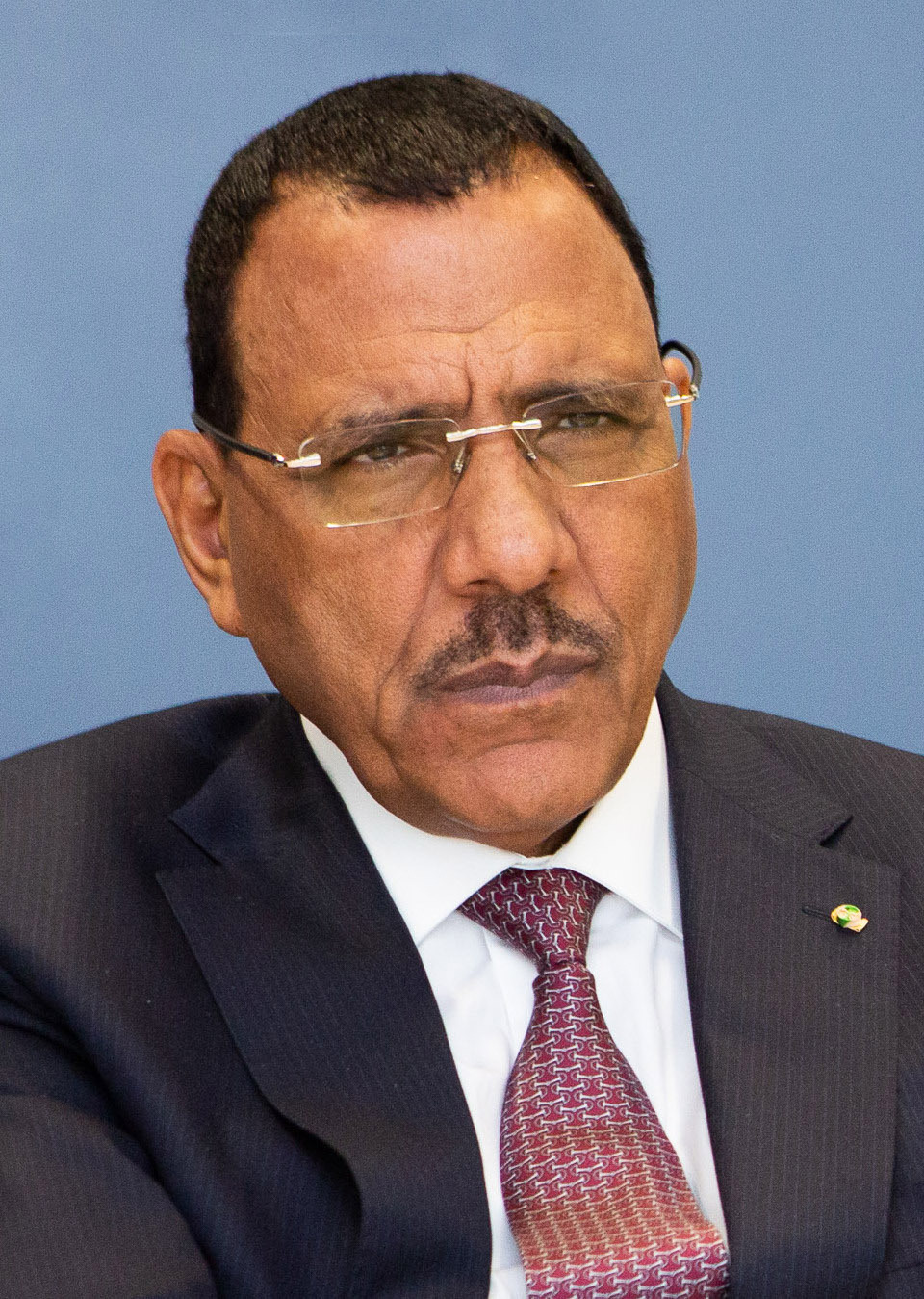
President of Niger Mohamed Bazoum at the European Commission in February 2023. (Photo: Bogdan Hoyaux, EC – Audiovisual Service)
The repeated attacks on Niamey’s international airport illustrate these challenges and the growing ability of militant Islamist groups to threaten strategic assets. In January 2026, suspected ISGS militants attacked the airport complex and adjacent military facilities, targeting a site that hosts key military aviation assets. Five months later, JNIM gunmen struck the same installation, killing soldiers and civilians despite enhanced security measures introduced after the first attack.
As security pressures have mounted, Nigerien junta leaders have ramped up pressure on critics and perceived opponents. In June, activist Mariama Djibrine, known as “Mayra,” was stripped of her Nigerien citizenship under provisions originally introduced to target individuals accused of threatening the strategic interests of the state. Her case followed a series of earlier citizenship revocations and sanctions directed at former officials, political figures, and other independent voices. Among those targeted was former Prime Minister Ouhoumoudou Mahamadou, whose designation on the junta’s terrorism list froze his assets, restricted his travel, and subjected his financial dealings to state monitoring.
Meanwhile, former President Mohamed Bazoum remains confined to the presidential residence in Niamey. Multiple mediation efforts seeking his release have failed.
As in Mali and Burkina Faso, there is no indication that those targeted played a role in the security failures confronting the state. Instead, junta leaders appear focused on suppressing the figures associated with the pre-coup, democratically elected political order.
Strategic Adaptation and the Questions Not Being Asked
The worsening security situation in the Sahel raises increasingly urgent security questions. The expansion of militant Islamist groups, repeated attacks on strategic infrastructure, and growing pressure on population centers demand a reassessment of military strategy, intelligence collection, force protection, regional coordination, and the effectiveness of current approaches.
The arrests, detentions, sanctions, citizenship revocations, and restrictions documented across Mali, Burkina Faso, and Niger further inhibit a public dialogue on these questions. Political leaders, journalists, religious figures, magistrates, civil society actors, and other independent voices often draw attention to emerging problems, challenge assumptions, and identify policy failures.
The consolidation of political power has taken precedence over the reassessment and adaptation demanded by a rapidly evolving security environment.
Experience in successfully countering insurgency demonstrates the importance of building trust with local communities and broadening governing coalitions.
The evidence from Mali, Burkina Faso, and Niger, however, suggests that the consolidation of political power has taken precedence over the reassessment and adaptation demanded by a rapidly evolving security environment. The effect is to compromise national security. Closing spaces for these voices narrows the discussion precisely when a broader assessment of the region’s deteriorating security trajectory is most needed.
Given the scale of the threat, rebuilding regional security coalitions is also an imperative. Signals from neighboring states suggest that opportunities for renewed cooperation are available. Yet many of these conversations remain underdeveloped.
The widening scope and complexity of the threat point toward the need for more comprehensive—and inclusive—responses than those pursued to date. Reversing these trends will require engaging a broader range of domestic actors, stronger regional cooperation, more effective intelligence sharing, and intensified efforts to mobilize the political, social, and economic resources needed to confront a complex insurgency.
Additional Resources
- Africa Center for Strategic Studies, “Attacks in Mali Mark Long Trajectory of Worsening Security,” Spotlight, April 27, 2026.
- Africa Center for Strategic Studies, “The Widening Scope of Africa’s Militant Islamist Threat,” Infographic, April 6, 2026.
- Daniel Eizenga, “JNIM Attacks in Western Mali Reshape Sahel Conflict,” Spotlight, Africa Center for Strategic Studies, September 29, 2025.
- Timbuktu Institute, “JNIM in Kayes: Economic Fragility and Cross-Border Threats,” Letter from the Observatory, September 2025.
- Africa Center for Strategic Studies, “A Growing Divergence of Security Narratives in Burkina Faso,” Spotlight, August 26, 2025.
- Daniel Eizenga and Amandine Gnanguênon, “Recalibrating Coastal West Africa’s Response to Violent Extremism,” Africa Security Brief No. 43, Africa Center for Strategic Studies, July 2024.
- Africa Center for Strategic Studies, “Malian Military Junta Scuttles Security Partnerships while Militant Violence Surges,” Infographic, February 27, 2023.
More on: Africa’s Crisis of Coups Democracy The Sahel