

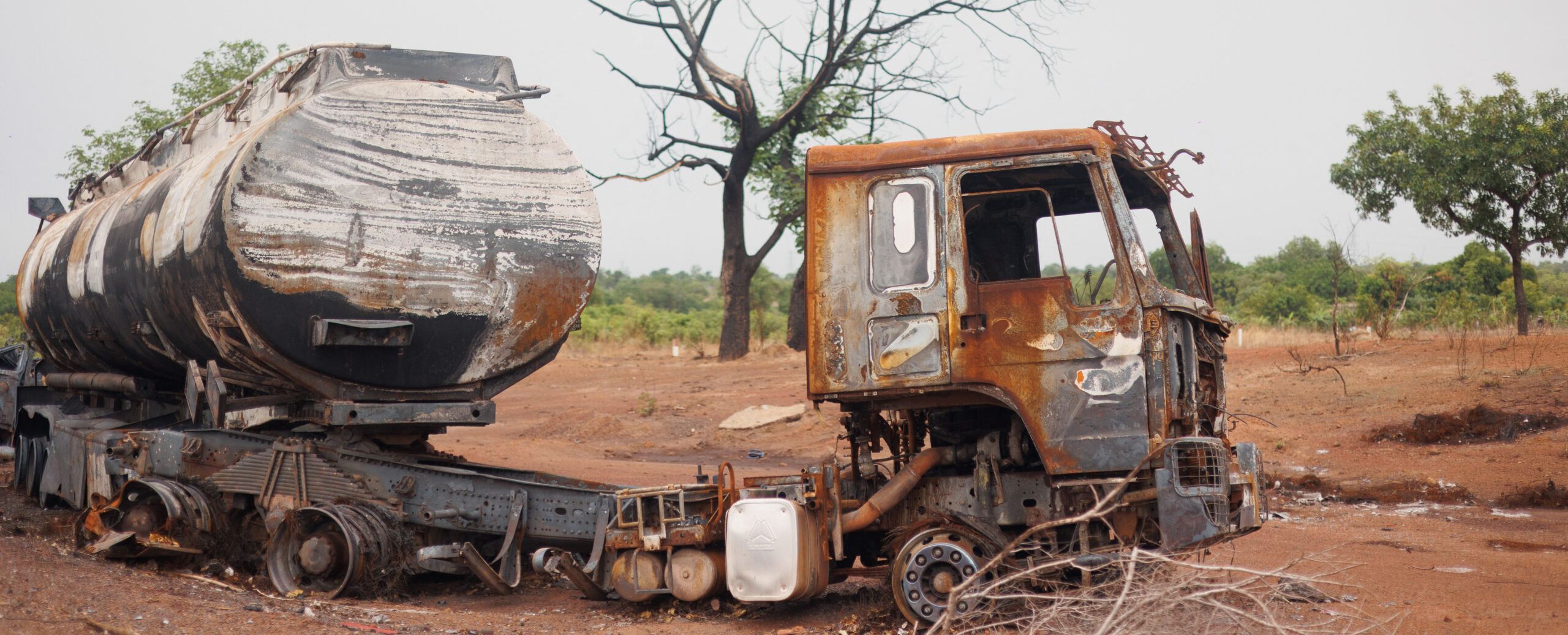
A fuel truck burned by militant Islamist groups in the middle of the road leading to Sikasso, Mali on May 26, 2026. (Photo: AFP)
Russia’s influence in Africa is built on a paradox. Moscow has become the dominant external actor in the Sahel and elsewhere on the continent in recent years despite providing only 1 percent of foreign direct investment, limited security assistance, and a political model few African societies want to emulate.
Russia’s primary vehicle for influence has been promoting unconstitutional seizures of power and then propping up these regimes.
Rather, Russia’s primary vehicle for influence has been promoting unconstitutional seizures of power and then propping up these regimes. This pattern has been most evident in the Sahel. In the year prior to the August 2020 coup in Mali, Russian information operations—executed through inauthentic social media accounts, influencers, and Russian state media amplification—were instrumental in fomenting disillusionment with the democratically elected government. Following the coup, Russia was the first foreign actor to recognize the junta—and has remained the Malian regime’s top patron since, shielding it from sanctions and pressure to return to civilian government.
Similar patterns have played out in Burkina Faso and Niger. In the former, it took two coups before a junta leader amenable to Moscow gained control.
Once in power, these juntas have acted in alignment with Russian interests, supported by information campaigns vilifying France, the West, and democracy. This led to the incongruent sequence of the Sahelian juntas pushing out not just Western security partners but also ECOWAS and the United Nations peacekeeping mission—even as jihadist insurgencies were expanding.
The juntas struck deals—paid in cash and minerals—to bring in the Russian paramilitary force, the Wagner Group. However, this totaled less than 10 percent of the international forces that had been in the region. Moreover, the Wagner forces (later Africa Corps) were primarily focused on safeguarding gold mining sites and other regime assets, rather than protecting citizens or fighting jihadists.
The contradiction underscores the sober reality that Russia’s aims in Africa are geopolitical—to undermine Africa’s ties with the West. Advancing African stability, prosperity, or representative governance are not part of the equation.
A chilling illustration of this is Moscow’s deceptive recruitment of thousands of Africans to fight in Ukraine. African conscripts are pushed toward frontline positions with little training, poor equipment, and high casualty rates.
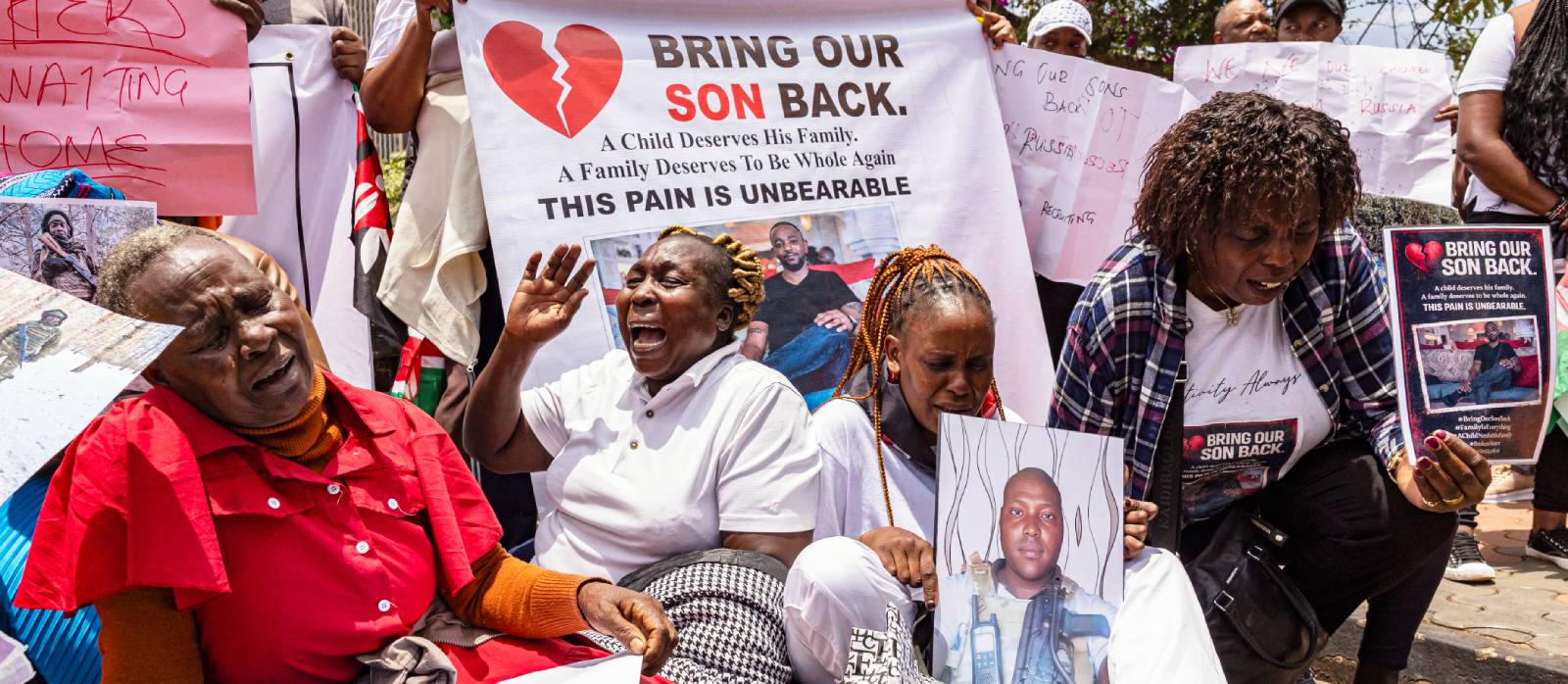
Family members of Kenyan nationals tricked into fighting for the Russian army in Ukraine. (Photo: AFP/Simon Maina)
While Russia’s influence is most evident in the Sahel, similar patterns are seen in Libya, the Central African Republic, Chad, and Madagascar, among others. Moreover, with 80 documented information operations targeting two dozen African countries, Russia’s polarizing narratives have advanced anti-democratic messaging across the continent.
An Achilles’ heel of Russia’s strategy of disruption in Africa, however, is that it is not sustainable. While Moscow may have been successful at pushing out Western security partners in the Sahel, by investing little in the stability of these highly fragile countries facing escalating jihadist insurgencies, security is bound to unravel.
This appears to be just what is happening. Jihadist groups are moving ever closer to Bamako, Niamey, and Ouagadougou. The insurgents are mounting sieges on dozens of towns across the three countries and have effectively constricted fuel supplies in Bamako. Insurgent attacks on Bamako and other Malian cities in 2026 killed the Minister of Defense, knocked out the power grid, and exposed the vulnerability of the military regime. The airport in Niamey has been closed twice during the year due to jihadist attacks.
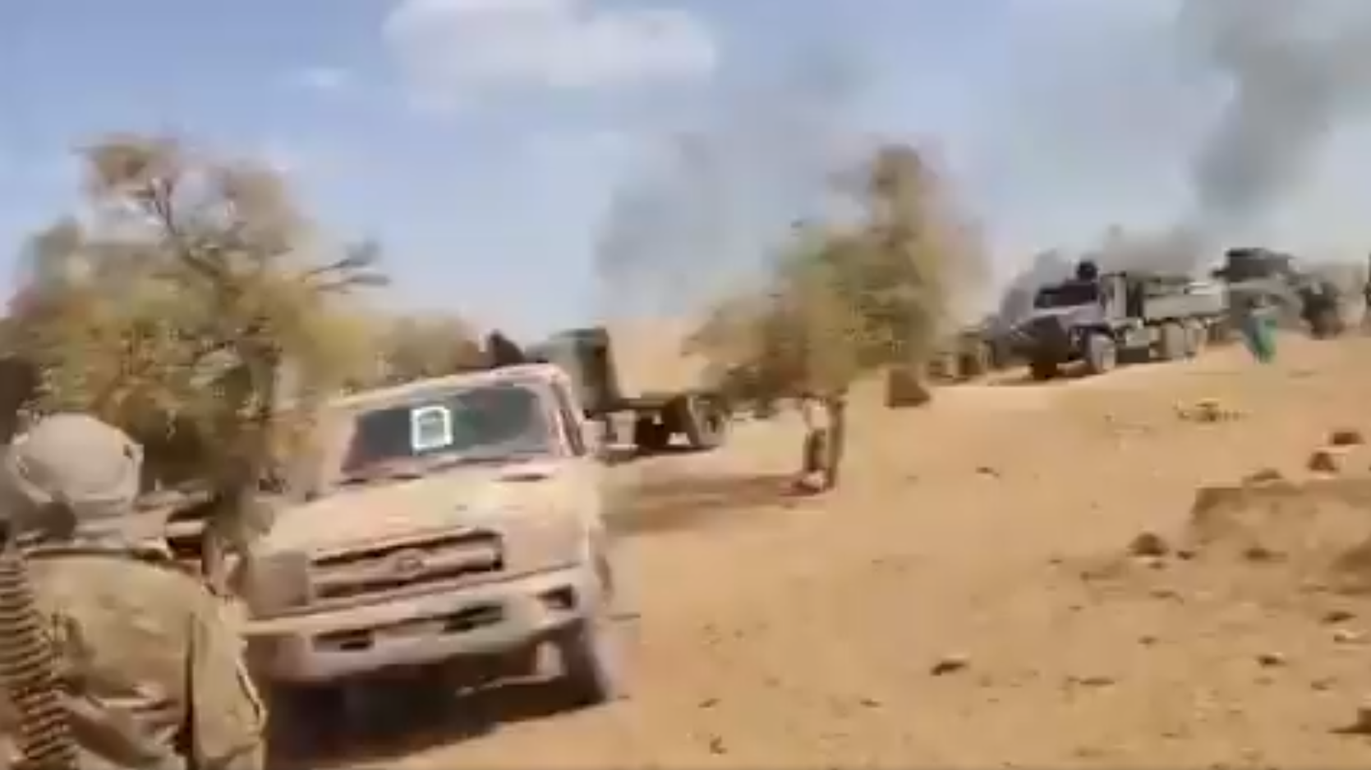
Russian paramilitary forces retreating from Kidal, Mali following insurgent attacks. (Screen capture)
Rather than rebuild the security coalitions they dismantled, the juntas have further cracked down on citizens. In Mali and Burkina Faso, violence against civilians by the militaries (and their Russian partners) since 2023 has resulted in more civilian fatalities than those caused by the jihadists.
Despite this collapsing house of cards, Russia and its junta allies remain on the offensive with their most potent asymmetric tool: information operations. Audaciously, this is not just directed at shoring up domestic support for the Sahelian juntas but is also targeting neighboring democratically oriented governments in Nigeria, Ghana, Senegal, Côte d’Ivoire, and Benin. Social media accounts linked to Russia and the juntas extol the fictional development and stability realized under the military regimes. Any jihadist gains are blamed on Western collusion.
Despite this collapsing house of cards, Russia and its junta allies remain on the offensive with their most potent asymmetric tool: information operations.
This messaging is coupled with the same narratives that proved successful in the Sahel—democracy has failed, voting is pointless, the West is the cause of Africa’s challenges, and only a strongman can bring order. While divorced from the realities in the Sahelian countries, this simplistic messaging resonates with some.
West Africa, thus, is in the throes of a pivotal race. Will the relentless negative messaging topple another democratic-leaning government before the fallacy of junta success is exposed? Or will the Sahelian military regimes collapse first, shattering any such illusion?
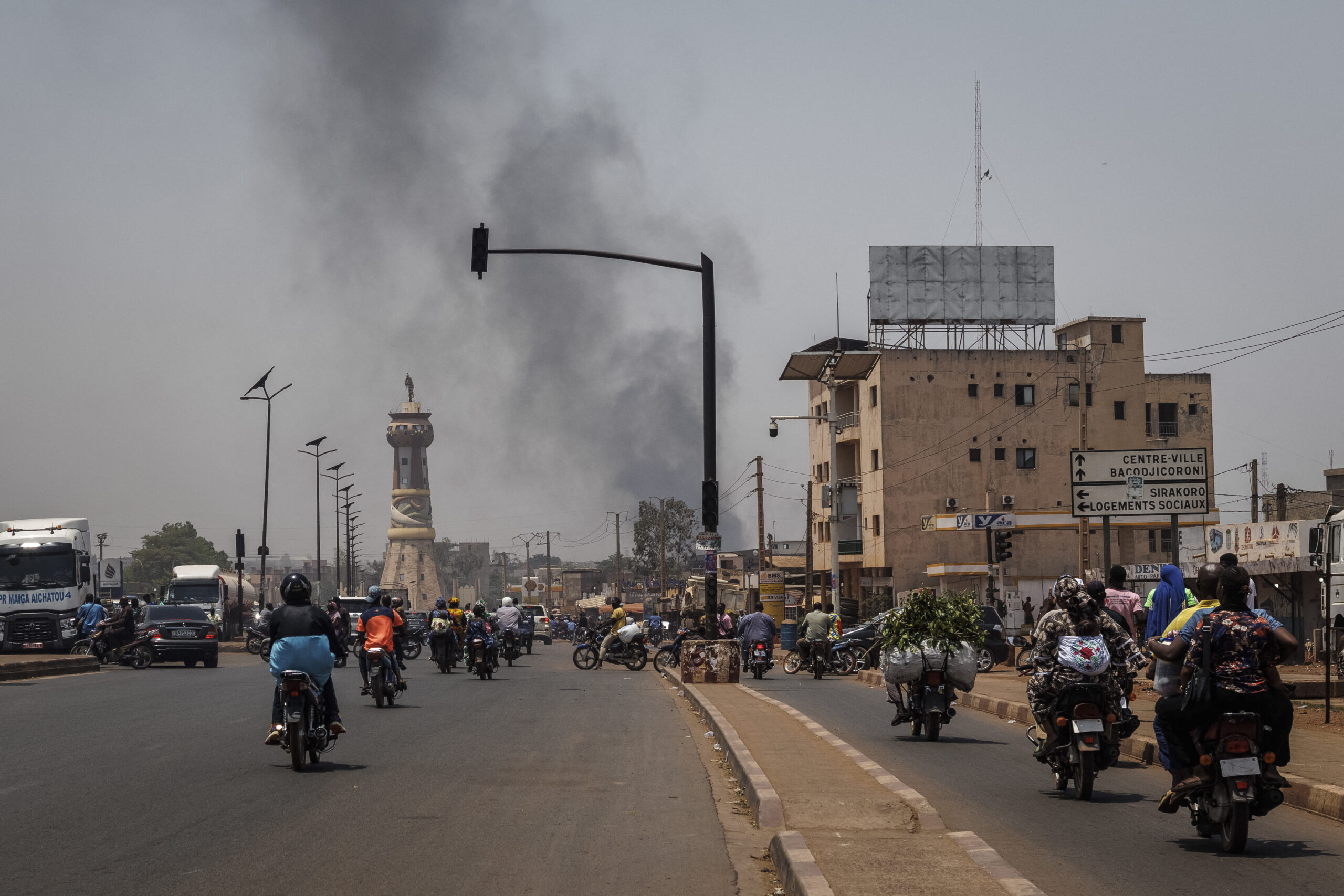
A column of black smoke rises over Bamako, Mali in the aftermath of the April 25 attacks. (Photo: AFP)
A coup in Nigeria or one of the other major West African countries—with a subsequent realignment to Russia—would be a great prize for Moscow. It would also enable Moscow to pivot from its failing strategy in the Sahel to a much more promising frontier in coastal West Africa. Nigeria’s economy is roughly 10 times that of the three Sahelian countries combined.
African democrats and international proponents of stability have an imperative to support the West African countries targeted by Russian destabilization. Toward this end, they should collectively work to expose inauthentic Russian-sponsored narratives and educate citizens to resist the siren call of authoritarianism. West Africa’s legacy of military government is already long and dark enough.
This article first appeared in Formiche. Read the original essay here.
Additional Resources
- Africa Center for Strategic Studies, “Attacks in Mali Mark Long Trajectory of Worsening Security,” Spotlight, April 27, 2026.
- Léa Peruchon and Eloïse Layan, “In the Sahel, journalists, activists and NGOs in the crosshairs of Russian agents from ‘The Company,” Forbidden Stories, March 27, 2026.
- Africa Center for Strategic Studies, “A Growing Divergence of Security Narratives in Burkina Faso,” Spotlight, August 26, 2025.
- Joseph Siegle and Jeffrey Smith, “Accommodating Africa’s Juntas Amplifies Insecurity,” Journal of Democracy, May 31, 2024.
- Africa Center for Strategic Studies, “Mapping a Surge of Disinformation in Africa,” Infographic, March 13, 2024.
- Africa Center for Strategic Studies, “Malian Military Junta Scuttles Security Partnerships while Militant Violence Surges,” Infographic, February 27, 2023.
- Joseph Siegle, “Russia and Africa: Expanding Influence and Instability,” in Russia’s Global Reach: A Security and Statecraft Assessment, (Graeme Herd, ed.), George C. Marshall Center, 2021.