


 Zambia: The Challenges of Maintaining Democratic Progress
Presidential & Legislative Elections: August 13
Zambia’s President Hakainde Hichilema is seeking a second term in office leading this landlocked southern African country of 22 million people.
The 59 percent of the vote he earned in 2021, galvanized by a strong youth turnout, was a significant breakthrough for the six-time candidate and his United Party for National Development (UPND). The outcome was particularly significant given concerns over democratic backsliding under President Edgar Lungu, who led Zambia from 2015 to 2021. Lungu’s tenure was marked by the arrest of political opponents, the weakening of judicial independence, the deployment of security forces and party militias to intimidate political opponents, and the politicization of independent government bodies.
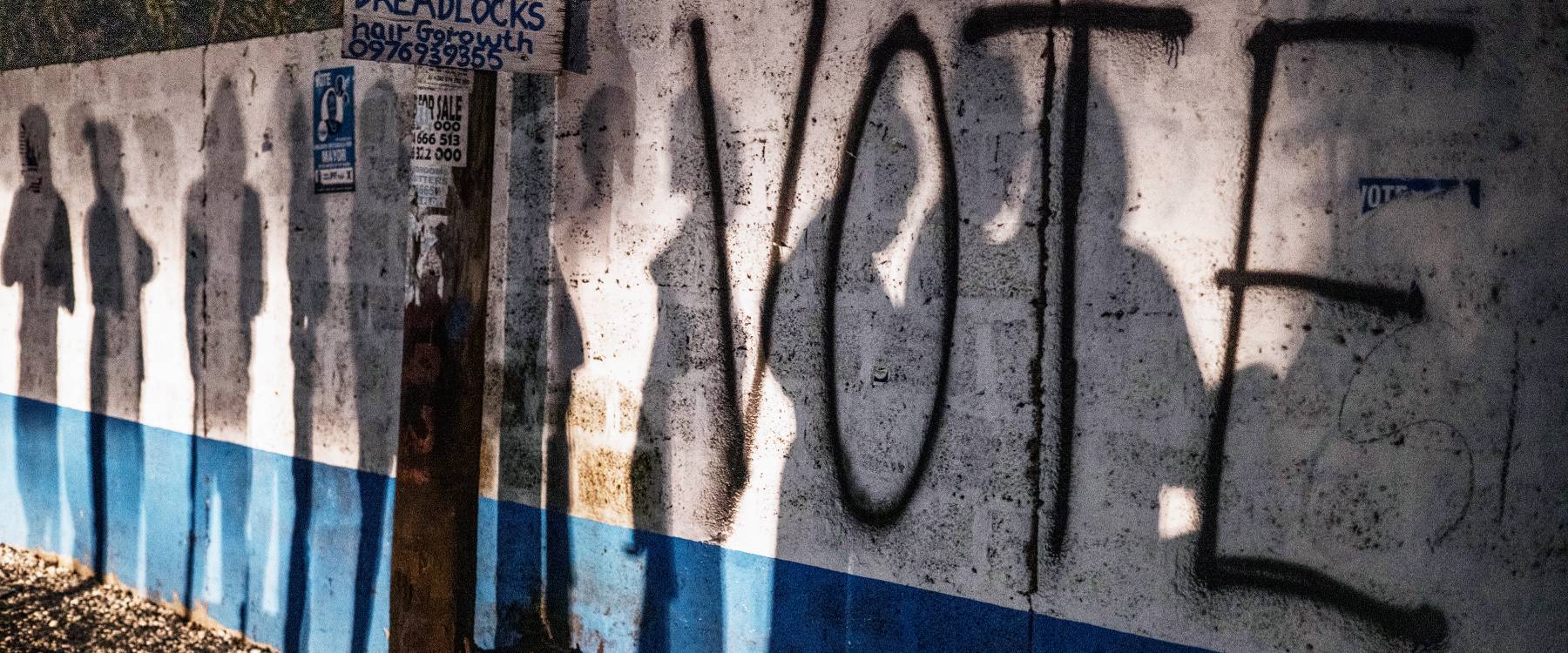
The silhouettes of people queueing for the opening of a polling station appear on a wall in Lusaka on August 12, 2021. (Photo: AFP/Marco Longari)
Early priorities for Hichilema, therefore, included abolishing the law that criminalized defamation of the president, removing political militias from markets and bus stations, strengthening of the independence of the Anti-Corruption Commission and other oversight bodies, and passing the Access to Information Act.
Hichilema also inherited a deeply strained economy characterized by high inflation, a kwacha that had lost 50 percent of its value, low investor confidence, and elevated youth unemployment. Unable to sustain its high level of debt, Zambia defaulted on its debt repayments in 2020.
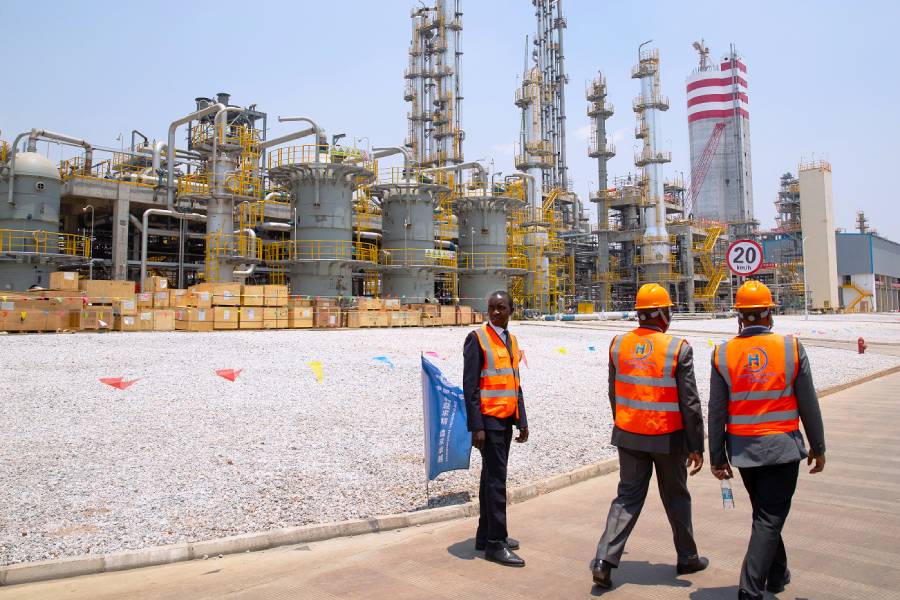
A Chinese-built fertilizer plant in Lusaka Province, Zambia. (Photo: AFP/Peng Lijun)
A businessman-turned politician, Hichilema achieved notable successes during his first term. This included the negotiation of a debt restructuring under the G20 Common Framework, reduced fiscal deficits, a decline in inflation from 24 percent to 9 percent, and improved transparency in government procurement. Zambia’s ranking on Transparency International’s Corruption Perceptions Index improved from 117th to 92nd (out of 180 countries) since 2021. Zambia has simultaneously seen a net increase of foreign direct investment from 1.7 percent to 4.7 percent of gross domestic product between 2021 and 2024.
Despite these achievements, Hichilema has been the subject of growing concern over diminished space for dissent in Zambia. Raphael Nakacinda, the secretary general of the main opposition party, the Patriotic Front (PF), was sentenced in May 2024 to a 6-month prison term for defaming the president in 2021, under the same law that Hichilema abolished in 2022. This was one of a pattern of arrests against members of opposition parties for making critical or false statements against the government. They have faced charges ranging from hate speech to seditious practices. Opposition parties, furthermore, complain of police harassment of supporters during campaign rallies. The government has also invoked the 2021 Cyber Security and Cyber Crimes Act to push back against online critics, raising concerns of the misuse of security tools for political objectives.
Independent media have also faced growing pressure under the Hichilema government, with 60 percent of surveyed journalists and bloggers indicating that they have experienced increased harassment, intimidation, and arrests. These reprisals are often associated with media outlets hosting opposition party members.
The effect of these restrictions [on dissent] has been to chill open debate, dialogue, and oversight in Zambia.
The effect of these restrictions has been to chill open debate, dialogue, and oversight in Zambia. Concerned that growing intolerance could destabilize this long-peaceful country, the Zambia Catholic Bishops Conference issued a statement in November 2025 urging political leaders to “take decisive steps in restraining and guiding their supporters… and [to] work toward preserving the harmony that has defined our nation for generations” as the country draws nearer to the 2026 elections.
In December 2025, Hichilema signed into law constitutional changes that expanded the National Assembly from 167 to 280 seats. Hichilema contends that the expansion in constituencies was needed to provide better service delivery to Zambia’s growing population. However, critics argue that the move is intended to further solidify UPND’s control. The UPND holds roughly half of the seats in the current National Assembly.
These changes are occurring at a time of flux in Zambia’s political alliances. UPND heads to the polls leading a coalition of 15 political parties—an expansion of 5 parties from the 2021 election.
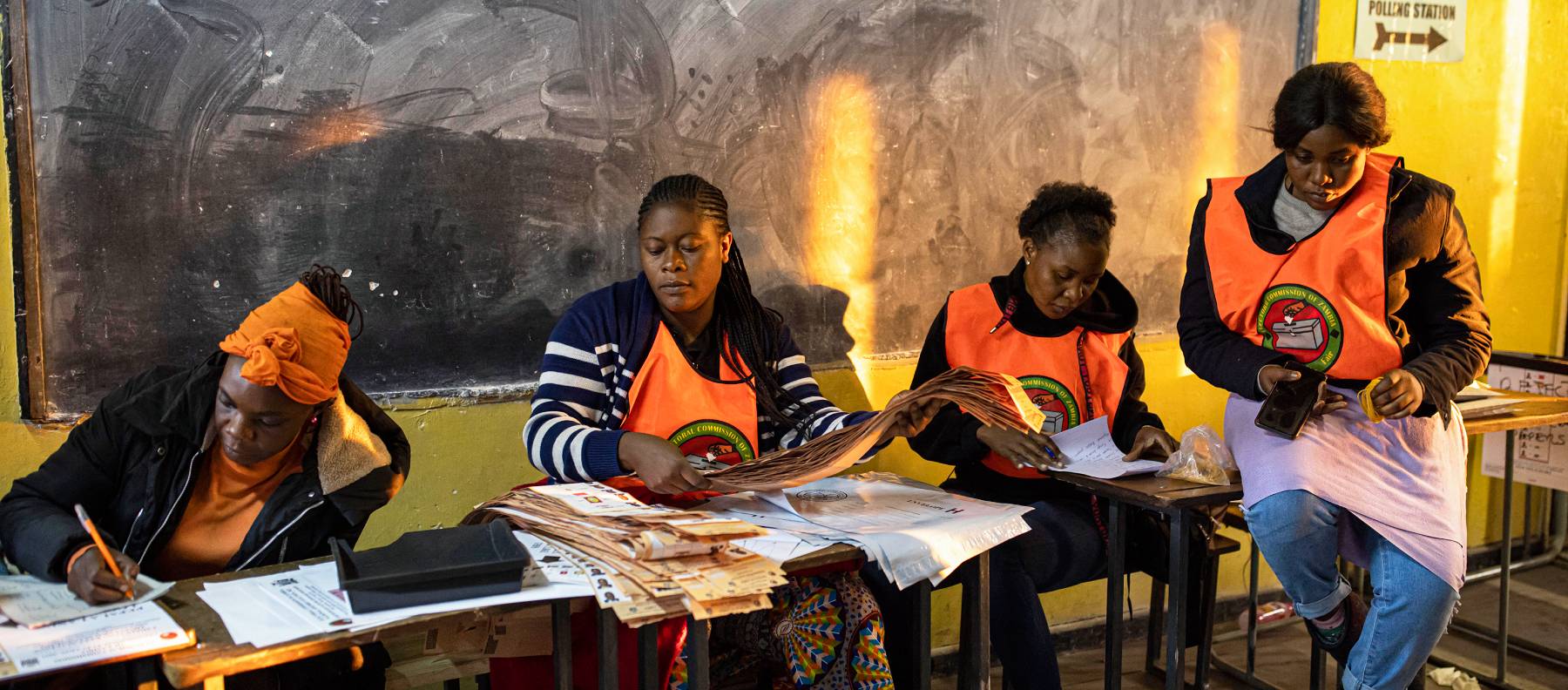
Officers from the Electoral Commission of Zambia (ECZ) count ballot papers at a polling station in Lusaka on August 13, 2021 (Photo: AFP/Patrick Meinhardt)
The PF is currently the country’s leading opposition party with 55 seats in the National Assembly. However, the death in June 2025 of Zambia’s most prominent opposition leader, former President Edgar Lungu, has resulted in the split of the party. One faction is led by Makebi Zulu, a former minister and the personal lawyer of the late president. While the other faction, led by PF’s president, Miles Sampa, has joined the UPND alliance.
The merger between the PF-Zulu faction and the Tonse Alliance (a coalition of 11 smaller parties) under the banner of the Tonse-Pamodzi Alliance is now the primary challenger to the ruling party. It has selected Brian Mundubile as its presidential candidate and Makebi Zulu as his running mate. The Tonse-Pamodzi Alliance has pledged to fuel job creation via investment in the agriculture sector, prioritizing local industrialization and minimizing the export of raw products. The proposals are intended to appeal to women and youth who make up the majority of the 8.8 million voting population.
Zambia’s test will be whether there is sufficient space to accommodate all voices, so that the outcome can be embraced by all Zambians.
The Electoral Commission of Zambia (ECZ) has a reputation for independence and administrative capacity. In June, the commission announced that 14 candidates are eligible to participate in the upcoming elections. The ECZ has been active in the 2 years prior to the election and launched its general election roadmap to foster transparency in July 2025. Voter registration in late 2025 was extended by 2 weeks to accommodate demand. As a result, 758,000 new voters were registered.
Zambia’s 2026 electoral process represents a mosaic of contrasts. The election is likely to be among the most transparent and well-run on the continent this year. Moreover, the incumbent has a strong economic track record to run on, despite ongoing challenges to create enough jobs for the country’s large youth population. The test will be whether there is sufficient space to accommodate a genuine spectrum of voices, including those who are critical, so that all Zambians can embrace the outcome.
More on: Democracy and Security