

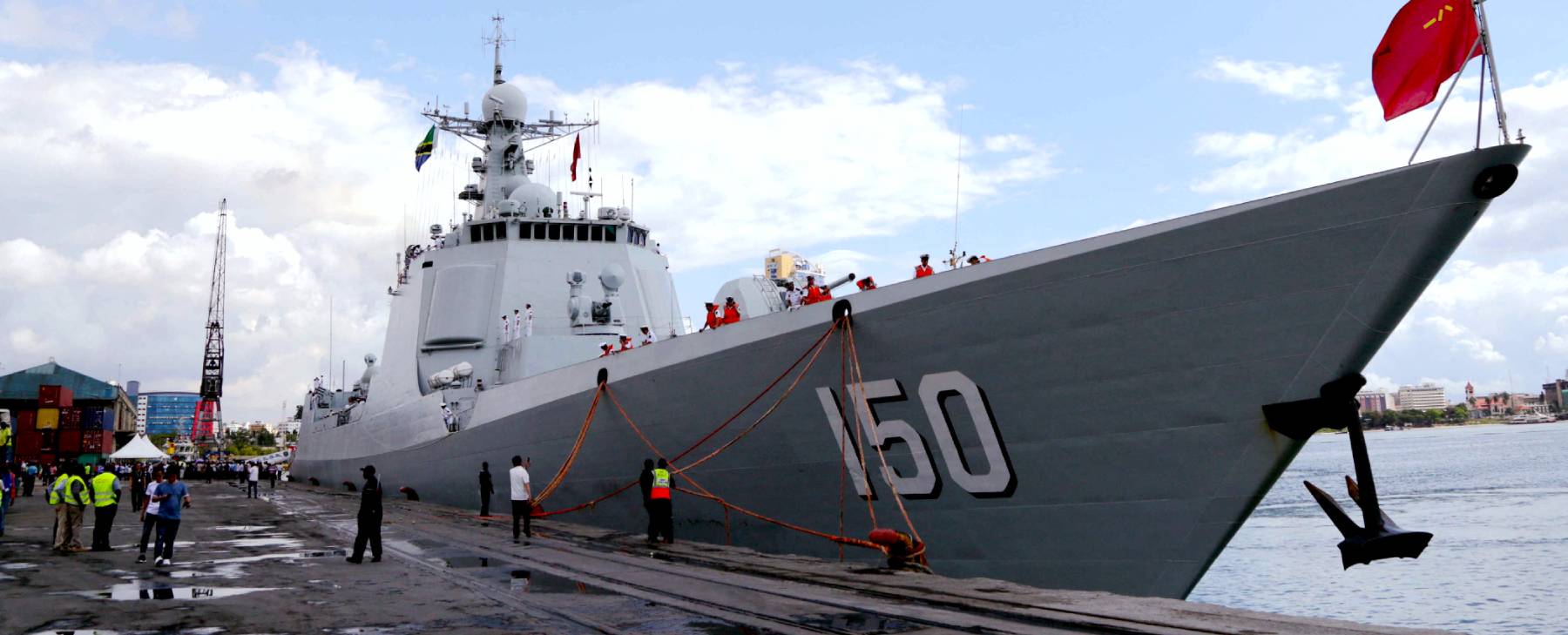
A Chinese naval vessel in Dar es Salaam, Tanzania. (Photo: AFP)
Africa occupies a critical geostrategic position along global maritime corridors connecting Asia, Europe, and the Americas. For China, access to these routes is both an economic and strategic priority.
Working with African governments and port authorities, China has established new shipping corridors that connect African port clusters in West, North, and Southern Africa to Chinese port hubs in Qingdao, Tianjin, and Yantai, and their adjacent pilot free-trade zones. These routes add to the dozens of direct lines between African and Chinese ports, reflecting Africa’s growing integration into China-centered maritime networks. China accounts for roughly 22 percent of all African trade, and Chinese firms now operate, finance, partner with, or hold stakes in roughly one-third of African ports.
China has become increasingly embedded in the systems that underpin African maritime activity.
China’s integration in African maritime ecosystems extends well beyond port construction. China is a major financier and operator of African road, rail, and warehousing infrastructure linked to these ports, closely intertwining African trade networks with China. China offers duty-free access to virtually all African countries. Moreover, China has become increasingly embedded in the systems that underpin African maritime activity through its merchant fleet—the largest in the world—as well as state-owned shipping and construction firms, terminal operators, technology companies, and policy banks.
These systems include port operations software, automation, artificial intelligence (AI) and cybersecurity technologies, maritime training and governance programs, and the development of standards for maritime governance. African governments have been drawn to China’s trade infrastructure investments because they provide financing, improve customs coordination, expand market access, and modernize port operations.
These benefits, however, are accompanied by considerable vulnerabilities, including overreliance on Chinese built or financed maritime infrastructure and the technologies and software that go with it. At times, these arrangements result in African exposure to unsustainable debt. In some cases, concerns have been raised that Chinese firms could gain influence over strategically important infrastructure through equity participation, long-term leases, or operational management agreements. Such concerns persist due to lack of public access to agreements and weak oversight.
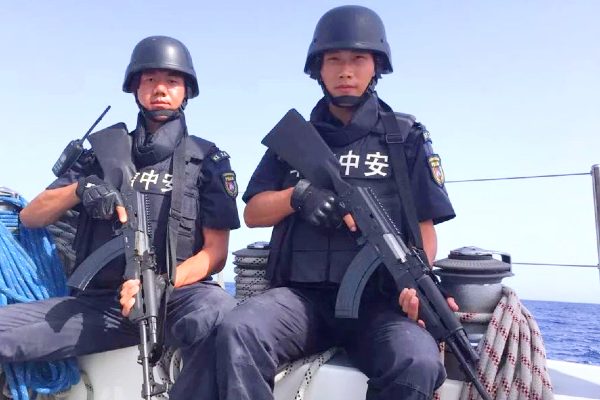
Members of Chinese security firm Hua Xin Zhong An’s maritime protection service.
(Photo: Hua Xin Zhong An/WeChat)
China’s expanding military activity in dual-use ports that serve both commercial and naval purposes could also entangle African countries in geostrategic rivalries and undermine African efforts to diversify their security partnerships. Memories of the Cold War have fostered a deep aversion on the continent to becoming embroiled in international rivalries and military entanglements.
Coastal African countries also face accelerating depletion of fish stocks driven by illegal, unreported, and unregulated (IUU) fishing. Chinese distant-water fishing fleets—the world’s largest—are regularly identified as major offenders, structurally undermining African maritime security and economic development.
Tracing China’s Maritime Engagement in Africa
China’s influence in African maritime networks has evolved in phases. Before the 1990s, China’s maritime engagements were limited and episodic, focused mainly on sporadic investments in ports and occasional port visits.
A more systematic approach emerged with the 1998 “Go Out” strategy (zouchuqu zhanlue, 走出去战略), which encouraged Chinese state-owned firms to expand abroad in search of markets, resources, and strategic footholds. This was followed by the creation of the Forum on China–Africa Cooperation (FOCAC) in 2000, which institutionalized China–Africa relations and provided a framework for economic, political, and security cooperation.
The most significant acceleration occurred after the launch of the One Belt One Road (also called the Belt and Road Initiative) in 2013. It reoriented China’s global strategy around integrated land and sea corridors linking China to global markets through infrastructure and logistics. African ports, rail corridors, and industrial zones became central nodes in this system. Since 2013, China has invested roughly $50 billion in African port infrastructure, which has enabled an 18-percent increase in China–Africa trade since 2024.
Strategic Drivers of China’s Expansion into Africa’s Maritime Networks
China’s expanding engagements in Africa’s maritime systems are driven by economic, technological, and geopolitical objectives.
First, securing African maritime trade routes is essential for China’s global geopolitical strategy. Corridors such as the Gulf of Aden, the Gulf of Guinea, and the Cape of Good Hope are vital for China’s shipping and energy imports. An estimated $350 billion in Chinese trade pass through these maritime gateways annually. The People’s Liberation Army Navy (PLAN) has simultaneously expanded deployments, port calls, and exercises across these regions.
Second, Africa’s resource wealth makes it central to China’s long-term access to oil, gas, minerals, and agricultural commodities.
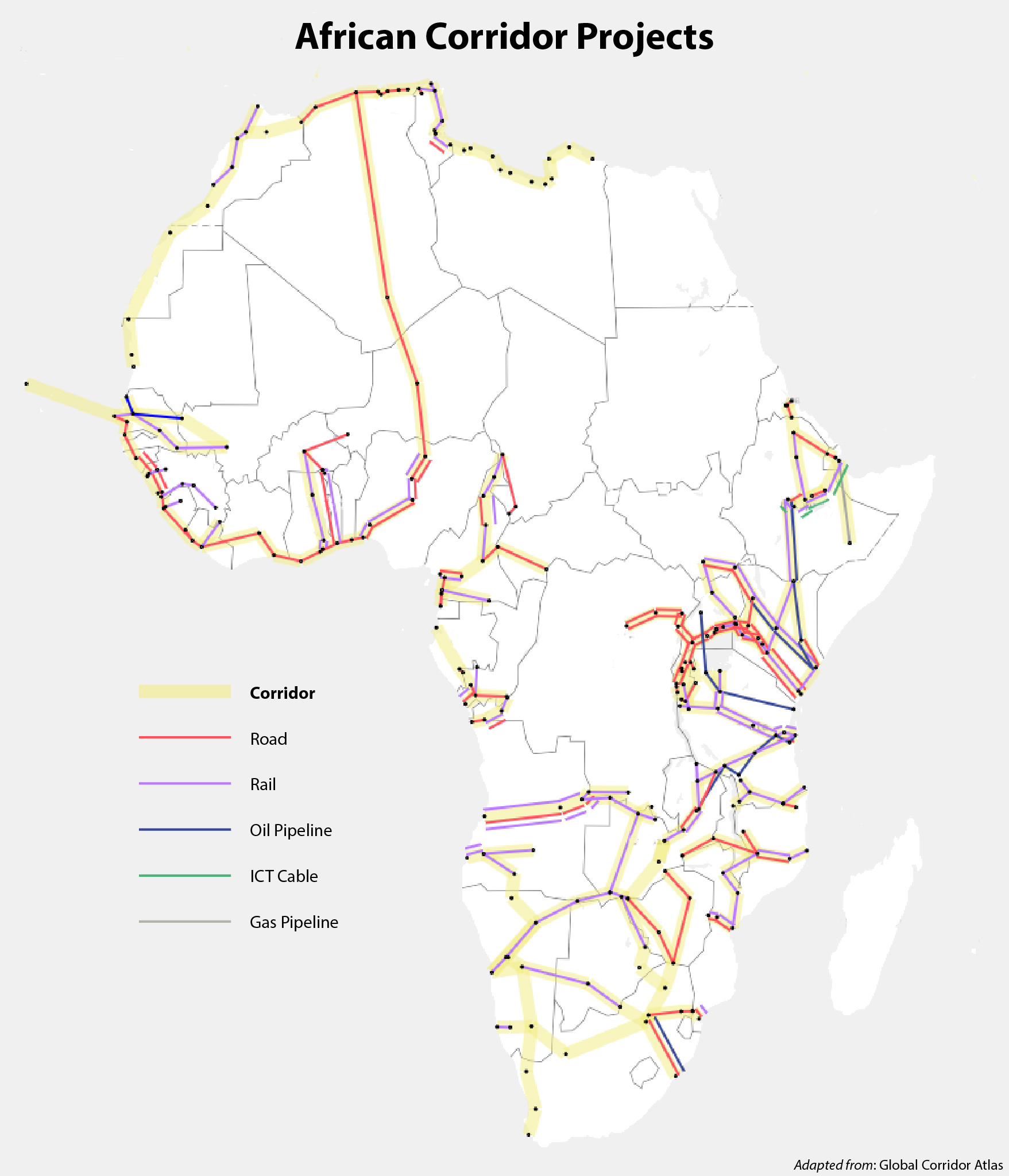
Third, China aims to consolidate its position as Africa’s dominant economic partner. China has been Africa’s largest trading partner since 2008 and now occupies that position for 52 of 54 African states. However, as in other parts of the world, growing imbalances have raised concerns about trade deficits and the dumping of cheap Chinese goods.
Fourth, China is competing to export maritime technologies, including dredging systems, smart-port infrastructure, logistics platforms, and surveillance tools. More than 30 African countries now use China’s BeiDou satellite navigation system either instead of or alongside the American GPS system for primary maritime navigation.
Beijing’s African deployments contribute to China’s preparedness for conflict scenarios in other parts of the world.
Under the Belt and Road Initiative, a growing number of African ports have installed Chinese automation and a range of emerging proprietary AI systems, including sensor perception, smart gates, and autonomous driving to modernize their operations. These systems require ongoing financial commitments to maintain. As a result, continued reliance on Chinese technical support could over time cost African countries more than the physical port assets, running into billions of dollars.
Fifth, China is also promoting aspects of its commercial governance model by encouraging the adoption of Chinese standards, practices, and policy frameworks. These efforts form part of Beijing’s broader approach to “strategic competition” (zhanlue jingzheng, 战略竞争), which seeks to make partner countries more compatible with Chinese systems and less dependent on Western ones.
One example is the “port-park-city” prototype advanced abroad by China Merchants Group (CMG), with projects in Djibouti, Egypt, Morocco, Nigeria, Tanzania, and Togo. CMG’s Shekou Industrial Park in Shenzhen integrates ports, industrial parks, urban development, and energy infrastructure into a single industrial ecosystem. African governments are attracted to this model because it offers large-scale, state-backed investment, flexible financing, and integrated planning. (In practice, replicating this model outside China remains difficult due to differences in economic structure, state involvement in the economy, and supply chains).
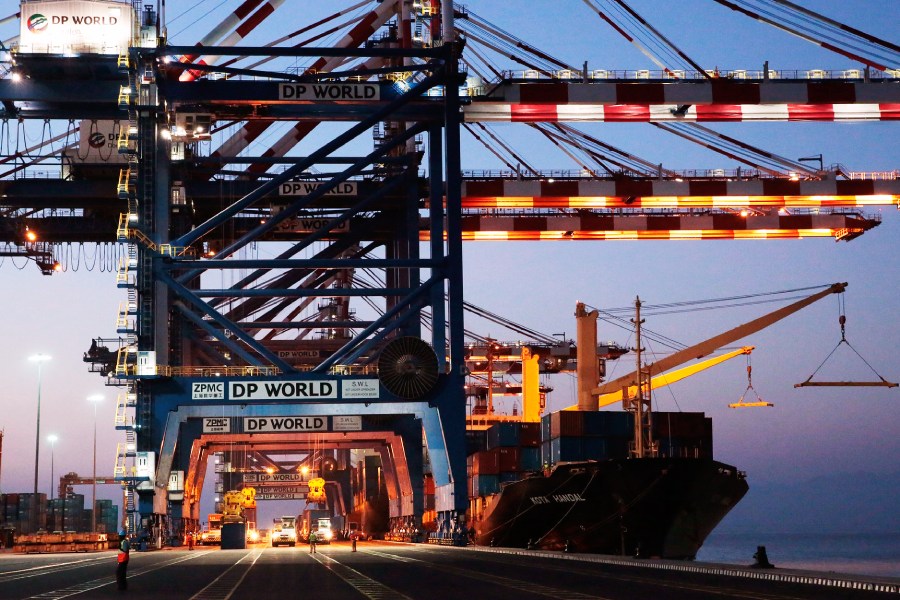
The Port of Doraleh in Djibouti. (Photo: UN/Evan Schneider)
Finally, China is driven by strategic geography, as exemplified by the Doraleh Multipurpose Port in Djibouti. This port project was built and financed by Chinese state-owned firms and is located on the Bab al Mandeb Strait between the Red Sea and the Gulf of Aden. CMG holds a 23.5-percent stake in terminal operations. It was built alongside the adjacent Shekou-like Djibouti International Free Trade Zone and was also vital to planning the nearby PLA Naval Base—despite China repeatedly declining to confirm or deny that it had an interest in developing a naval base in Djibouti. Some observers suggest that Djibouti represents a prospective model for future Chinese overseas basing arrangements.
More broadly, the expanding frequency of the PLA Navy’s (PLAN) port calls and drills have occurred around a recurring set of strategically located commercial ports capable of supporting large Chinese naval vessels, including those in Djibouti, South Africa, Tanzania, Nigeria, Angola, Kenya, Namibia, and Seychelles.
Expanding Chinese Naval Interests in Africa
China’s naval strategy has shifted from “near seas active defense” (jinhai jiji fangyu, 近海积极防御) to “far seas maneuvering operations” (yuanhai jidong zuozhan nengli, 远海机动作战能力), reflecting the PLA’s growing global ambitions. The PLAN’s Gulf of Aden deployments, initially part of an international task force to combat piracy, marked China’s first operations beyond the Western Pacific. There have subsequently been 48 task force rotations since the deployments began in 2008.
Chinese state media claim that Chinese naval vessels have escorted more than 7,000 Chinese and non-Chinese vessels off Somalia’s coast. These deployments have supported joint exercises with African militaries, civilian evacuations, logistics for PLA peacekeepers, and military diplomacy.

PLA Navy soldiers in Chinese waters after completing escort missions off the coast of Somalia, February 2024. (Photo: AFP/Liang Lei)
These extended deployments also serve operational learning objectives. They allow the PLAN to sustain long-distance operations, test logistics chains, gather intelligence, refine doctrine, and evaluate naval platforms under live conditions. These deployments have included 17 rotations from the PLAN’s East Sea Fleet, 16 from the South Sea Fleet, and 14 from the North Sea Fleet. These fleets are under the commands responsible for Taiwan and South China Sea contingencies, meaning African deployments contribute to China’s preparedness for conflict scenarios in other parts of the world.
China’s naval activities in Africa have expanded steadily over the years. Joint exercises evolved from scripted drills between 2009 and 2016 into more frequent and integrated operations after China opened its Djibouti military base in 2017. The 2024 “Amani na Umoja” exercise with Tanzania and Mozambique, the 2025 “Eagles of Civilization” exercise with Egypt, and the 2026 “Will for Peace” exercises with South Africa, Russia, and Iran under the auspices of BRICS reflect this shift toward more complex operational training.
Shaping Maritime Policies and Institutions
Less noticed but equally significant are China’s efforts in institution-building and professional development, focused on shaping African maritime governance architectures and standards.
These initiatives include:
- The Symposium on Gulf of Guinea Maritime Security, hosted by the PLA Navy for naval officers from the region on maritime security
- The China–Indian Ocean Regional Forum, hosted by China International Development Cooperation Agency (CIDCA) for senior policymakers on maritime economy and security
- The China–Africa Training Course on Ocean Governance, hosted by China’s Ministry of Commerce for mid-level officials on marine ecology, disasters, and internships at selected Chinese ports
- The China–Africa Marine Science and Blue Economy Cooperation Center training in early warning, satellite tracking, big data modelling, spatial planning, and internships
- The Shanghai Maritime University undergraduate “Africa cadet” degree program for West African maritime professionals in conjunction with Ghana’s Regional Maritime Institute. (The university also has bilateral memoranda of understanding with other African regional maritime institutes.)
- The Shanghai Ocean University partnership with the African Development Bank on fisheries cooperation and AI-based marine resource monitoring, water quality tracking, and ecosystem management training
Such initiatives support policy convergence by aligning African maritime governance systems more closely with Chinese standards and technologies. Increasingly, these programs are tied to FOCAC and China’s Five-Year Plans. The latest of these Plans emphasizes China’s transition from participation to “leadership in global ocean governance,” signaling China’s strategic intentions.
Risks to Africa’s Strategic Autonomy
African officials are attracted to Chinese engagements in terms of port efficiency, reduced transport costs, trade connectivity, increasing automation, and access to global markets.
In landlocked states, Chinese-financed rail corridors are also seen as improving access to global markets and strengthening regional connectivity. Security cooperation through exercises and training, moreover, is credited by many African officials for improving maritime domain awareness and anti-piracy capacity.
Critics, however, argue that China’s growing role in training, governance, and data systems could entrench long-term influence over African institutions, potentially normalizing Chinese standards and creating structural dependencies.
Overdependence on Chinese-built and financed physical and digital infrastructure can limit domestic competition, divert much-needed revenue, introduce data and security concerns, and could also reduce policy flexibility and bargaining power, especially when countries do not regulate their borrowing habits and tactics.
Relatedly, challenges of debt sustainability further complicate the picture. Djibouti, which the World Bank assesses as being in or near debt distress, illustrates these risks. It borrowed heavily and extensively for massive Chinese-financed infrastructure like the Addis Ababa–Djibouti railway, Doraleh port, and adjacent free trade zone, causing fiscal pressure and reducing its agency. In 2023, China agreed to suspend Djibouti’s debt servicing costs until 2027, though it is unclear what concessions, if any, the Djibouti government made in return, given the lack of public disclosure.
As China considers expanding its naval engagements with African dual-use commercial ports as part of a wider militarization of Chinese policy toward Africa, there are also risks that African countries could be inadvertently pulled into China’s geopolitical orbit at a time when global geopolitical competition is rising.
“China knows what it wants from Africa,” observed Ibrahima Diong, former advisor to the President of Senegal. “But most African countries don’t have a strategy vis-à-vis China.”
In West Africa an estimated 17,000 Chinese industrial trawlers catch roughly $3.8 billion in fish annually.
Illegal, unregulated, and unreported (IUU) fishing remains insufficiently addressed in the broader Africa–China relationship. A groundbreaking report by 12 African environmental experts finds that the problem is particularly acute in West Africa, where an estimated 17,000 Chinese industrial trawlers with annual catches worth $3.8 billion operate.
Backed by state subsidies and advanced technologies, Chinese industrial trawlers often outcompete local fishers, and many exploit weak regulation, corruption, and limited enforcement. Besides depleting fish stocks, their activities also damage local ecosystems and undermine livelihoods.
Some African governments have begun responding. Ghana routinely suspends licenses for Chinese trawlers involved in illegal transshipment and harvesting of juvenile fish. Senegal and The Gambia have strengthened penalties and expanded patrols, while Guinea, Guinea-Bissau, and Sierra Leone have detained vessels through joint operations with international nongovernmental organizations. However, weak institutions and strong disincentives to confront China for fear of losing financing, port construction, and technology limit their bargaining leverage, further highlighting the risks of structural dependency.
Maintaining Africa’s Sovereign Control of Critical Maritime Infrastructure
Africa faces a central tension from China’s deepening engagement in Africa’s port and trade corridors and maritime networks: expanded capacity may result in economic benefits, but it also comes with the risk of reduced autonomy over critical infrastructure as well as altered governance and regulatory norms. To maintain sovereign authority over this hard infrastructure and the software that operates these systems, African governments should enforce existing national laws that maintain sovereign control over their port and trade operations, pass new ones as necessary, and avoid agreements that undermine their policy autonomy or limit their ability to diversify external partnerships.
African partners should also manage their security engagements with China in ways that limit the further militarization of the continent while developing the capacity to respond to security threats.
China’s growing role in training, governance, and data systems could entrench long-term influence over African institutions.
African governments must also more fully mobilize and take advantage of local skills in engineering, construction, digitization, and emerging AI, as well as create laws and standards to empower African firms to compete and provide key services.
The same applies to training, education, and institution building. Africa has roughly 50 maritime education, training, and research institutes. These institutions represent an invaluable resource to develop the continent’s maritime professionals, policies, and standards.
Curbing illegal fishing is a top priority given the depth of exploitation of Africa’s fishing sector by Chinese industrial trawlers—and the implications this holds for African resources, economic growth, jobs, and maritime security. Stronger monitoring, oversight, and enforcement are needed to ensure that Chinese engagements yield measurable, long-term African economic development.
By elevating the strategic management of their relationship with China, African governments can ensure that trade infrastructure cooperation delivers measurable capability, resilience, and advances the public interest.
Additional Resources
- Ebimboere Seiyafa, Awa Niang Fall, Ellis Adjei Adams, Kadidia Kane, Isa Elegbebe Olalekan, Kodjo N’Souvi, and Salamatu Joana Tannor, “Chinese Fishing in West Africa: Responding to the Environmental and Social Impacts,” Issue Brief, Atlantic Council and The University of Notre Dame, October 6, 2025.
- Paul Nantulya, “Mapping China’s Strategic Port Development in Africa,” Spotlight, Africa Center for Strategic Studies, March 10, 2025.
- Paul Nantulya, “The Growing Militarization of China’s Africa Policy,” Spotlight, Africa Center for Strategic Studies, December 2, 2024.
- Zongyuan Zoe Liu, “Tracking China’s Control of Overseas Ports,”Council on Foreign Relations, August 26, 2024.
- Alex Vines, Henry Tugendhat, and Arminda van Rij, “Is China Eyeing a Second Military Base in Africa as the US Struggles to Maintain One in Niger?”Chatham House and United States Institute of Peace, January 30, 2024, updated May 14, 2024.
- Paul Nantulya, “Considerations for a Prospective New Chinese Naval Base in Africa,”Spotlight, Africa Center for Strategic Studies, May 12, 2022.
- Isaac Kardon, “China’s Ports in Africa,”in (In)Roads and Outposts: Critical Infrastructure in China’s Africa Strategy, NRB Special Report No. 98, ed. Nadège Rolland, National Bureau of Asian Research, May 3, 2022.
More on: China in Africa