
Conflict in Eastern Congo Is Escalating with Use of Heavy Weapons and Drones, UN Warns
The United Nations’ acting top envoy for Congo warned the U.N. Security Council on Thursday that the conflict in mineral-rich eastern Congo is escalating and expanding, with increasing use of heavy weapons and offensive drones posing serious risks to civilians. Vivian van de Perre said that despite the withdrawal of Rwanda-backed M23 rebels and their allies from the town of Uvira under international pressure in January, clashes are escalating in the provinces of North Kivu and South Kivu between the M23 and Congolese army forces and their supporters. “The situation in South Kivu remains tense and the renewed hostilities have expanded and shifted the front lines, including toward Burundi’s border, increasing the risk of a regional conflagration,” she warned. … Van de Perre cited two “concerning” emerging elements: the conflict is expanding from North and South Kivu into Tshopo province, and the use of heavy weapons and drones in urban areas poses risks to civilians and civilian infrastructure, which she said includes “recent incidents affecting sites such as Bangoka Airport in Kisangani and in Goma town.” At the same time, she said, M23 is consolidating parallel administrative structures in areas under its control, which include Goma, “further undermining state authority and complicating the delivery of humanitarian assistance.” AP
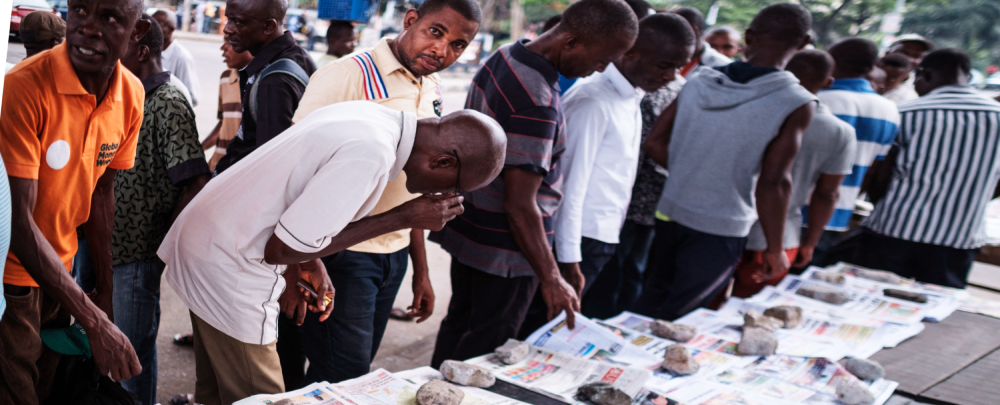
Violence against Journalists Surges in Eastern DR Congo
Journalists in the Democratic Republic of the Congo are facing mounting threats as conflict intensifies in the east, according to Reporters Without Borders (RSF). The group warns the country has become one of the most dangerous places for media workers in Africa’s Great Lakes region. RSF says reporters are increasingly trapped between the M23 rebels and the FARDC, with both sides exerting pressure. Since M23 seized key eastern cities in 2025, journalists report drastic changes in how they work, including fear of reprisals, arrests and forced compliance. Around 500 journalists have been arrested over the past decade, RSF reports, with more than half of cases occurring in the DRC. Many detentions last months or even years. Some journalists have been held in harsh conditions, including overcrowded makeshift prisons controlled by M23. Authorities and armed groups alike are accused of restricting media freedom. RSF says the High Council for Audiovisual and Communication has tightened control over war coverage, while M23 has censored broadcasts and imposed messaging. Meanwhile, nearly 90 journalists have fled violence in eastern provinces since 2023, underscoring a rapidly deteriorating environment for independent reporting. Africanews
Sudan’s Blue Nile Displacement Reaches 73,000 after Kurmuk Attack
The RSF and the Sudan People’s Liberation Movement-North (SPLM-N) led by Abdelaziz al-Hilu seized the border town on March 24. The offensive has sparked accusations that Ethiopia facilitated the attack from its territory. The Blue Nile Humanitarian Emergency Room stated that according to data from the United Nations Office for the Coordination of Humanitarian Affairs (OCHA), 73,406 displaced people have arrived in Ed Damazin and surrounding areas. Most of those fleeing the violence are women and children. The group described the humanitarian situation as extremely harsh, reflecting a deep tragedy for the local population. Displaced families are reportedly facing a fragile reality characterized by acute shortages of food and clean drinking water. Overcrowding in temporary shelters and a lack of adequate housing have further complicated the crisis. The Emergency Room emphasized that the current situation has exceeded the capacity of local response teams. It called for an urgent and coordinated intervention from all humanitarian partners. … The escalation in the Blue Nile region follows Western media reports suggesting Ethiopia is hosting a secret training camp for thousands of RSF fighters. Sudan Tribune
Guterres’ New Sudan Envoy Visits Khartoum
The spokesperson for UN Secretary-General António Guterres on Thursday said Pekka Haavisto, the newly appointed Personal Envoy of the Secretary-General for Sudan, is continuing his visit to Sudan and is presently in Khartoum. Stephane Dujarric, who was briefing the press in New York, said Haavisto has met with a range of Sudanese stakeholders, including the Chair of the Sovereign Council and Commander of the Sudanese Armed Forces, General Abdel Fattah Al-Burhan, as well as civilian and political actors. “He will be heading to Port Sudan in the coming days to continue those discussions, including with civil society representatives and members of the diplomatic corps,” he said. “In his meetings, Mr. Haavisto emphasized the need to safeguard the unity and territorial integrity of Sudan and underscored our commitment to engaging with all relevant stakeholders to advance peace in the country.” “He urged dialogue and urgent de-escalation steps towards a comprehensive ceasefire and has stressed the need to explore confidence-building measures to create an environment for meaningful progress,” Dujarric added. Relatedly, he said that the United Nations Office for the Coordination of Humanitarian Affairs (OCHA) on Thursday revealed that the UN has ramped up health services in El Daein, the capital of east Darfur, following the deadly drone attack on the Teaching Hospital there last Friday. Radio Tamazuj
Somali Cabinet Appoints New Custodial Corps Chief Amid Political Shifts
Somalia’s Council of Ministers on Wednesday approved the appointment of Maj. Gen.Mohamed Sheikh Hassan Hamud was appointed as the new chief of the Somali Custodial Corps, following an extraordinary session chaired by Prime Minister Hamza Abdi Barre. The cabinet’s decision, based on a proposal from the Ministry of Justice, results in the immediate dismissal of the former chief, Gen. Mahad Abdirahman, widely known as “Shub.” The removal of Gen. Mahad follows recent reports of his alignment with regional political interests in South West State, where he is the father-in-law of the regional president, Abdiaziz Laftagareen. Sources suggest his dismissal was prompted by his overt support for the South West administration during recent political friction with the federal government. Maj. Gen. Hamud, a veteran official, brings extensive security experience to the role. He has previously served as a government minister and held the top leadership positions in both the Somali Police Force and the National Intelligence and Security Agency (NISA). Prime Minister Barre emphasized that the leadership change is part of a broader effort to strengthen the administration and transparency of the nation’s correctional services. The move is seen by political analysts as a significant step by the federal government to consolidate authority over national security agencies amid ongoing constitutional and political disputes between Mogadishu and several regional member states. Garowe Online
Somali Children Are ‘on the Edge’ as Hunger Spreads. UNICEF Says Iran War Has Worsened the Crisis
UNICEF says it has $15.7 million worth of lifesaving supplies — including therapeutic food, vaccines, and mosquito nets — in transit or being prepared for delivery to Somalia. But those shipments now are uncertain. Transport costs could rise by 30% to 60%, and even double on some routes, while delays caused by rerouting and backlog become more likely, the U.N. agency says. During a visit to Dollow on Wednesday, Catherine Russell, UNICEF’s executive director, said the Iran war has been a “shock to the system” for the agency’s work on the ground in Somalia. “It means that we can’t get supplies in as easily, and that fuel costs are really high,” she said. “It’s another problem that we have to try to deal with, and it means that more and more children will suffer.” … The latest data from a report by the Integrated Food Security Phase Classification, a global hunger monitoring group, estimates that 1.84 million children under the age of 5 in Somalia are expected to suffer acute malnutrition in 2026. AP
Iran War Spurs Interest in African Energy
Algeria agreed to increase LNG exports to Spain, part of renewed foreign interest in African energy supplies as the war in Iran sends prices soaring. The decision came just days after Italy’s prime minister traveled to Algiers to secure greater gas supplies; Ukraine also said it would increase gas imports from Mozambique. Though African energy producers have seen revenue bolstered by the conflict, many of the continent’s import-dependent economies have been badly hit: Tuktuk drivers in Somalia have stopped working as their margins erode, and African capitals are trying to ease fears that they may soon be running out of supplies, with some moving to punish people hoarding fuel. The “rising prices of fuel could lead to strife on the continent,” Bloomberg said. Semafor
Guinea, Emirates Global Aluminium near Deal to Resolve Asset Dispute, Sources Say
Guinea has reached an agreement with Emirates Global Aluminium (EGA) that will avert a looming arbitration over last year’s seizure of the miner’s local unit, three people with knowledge of the matter have told Reuters. As part of the broader resolution, traders and alternative offtakers have been exploring bauxite offtake deals linked to the seized assets, including structures that would use upfront prepayments on future shipments to help settle EGA’s claims, according to traders and government officials. The deal, which is still being finalised, follows the government’s October takeover of Guinea Alumina Corporation (GAC), EGA’s bauxite subsidiary, over an alumina refinery row. It subsequent transferred GAC’s assets to state‑owned Nimba Mining and discussed potential bauxite supplies to EGA, Reuters previously reported. … A mining consultant familiar with the matter said the deal could still change, as EGA’s priorities may be under review amid the war in the Middle East. Reuters
Africa Sets Out Stall for Cotton at the WTO
African countries are taking a stand at the World Trade Organization to bolster their cotton sector, launching a platform tasked with mobilising investment to transform the cotton, textile and clothing value chain. “The cotton sector represents one of the most promising drivers of industrialisation in Africa, particularly in West and Central Africa,” said Cameroon’s Trade Minister Luc Magloire Mbarga Atangana, at a meeting on cotton ahead of the WTO’s ministerial conference, which opened Thursday in the Cameroonian capital Yaounde. WTO chief Ngozi Okonjo-Iweala explained: “Currently, 98 percent of the region’s cotton is exported as raw fibre; the goal is to change that.” Cotton has been discussed at the WTO for more than 20 years, at the request of the so-called Cotton Four (C-4) group: Benin, Burkina Faso, Chad and Mali. … According to the WTO, the C-4+ countries would need to attract $12 billion in investments over 10 years to unlock the sector’s full potential. It is estimated that, if realised, these investments would generate approximately 500,000 direct jobs, as well as 1.5 million indirect jobs throughout the cotton value chain. On Wednesday, these countries, together with the WTO, launched the Partnership for Cotton Investment Platform, showcasing investment opportunities. AFP
Toumba Diakité, Principal Figure in 2009 Massacre in Guinea, Has Died
One of the principal figures convicted in an infamous 2009 stadium massacre in Guinea died in custody Wednesday in the capital Conakry, the west African country’s prison service said. Aboubakar Sidiki Diakité, known as Toumba Diakité, was serving a 10-year sentence for his role in the September 2009 killing of 156 people and the rape of at least 109 women by pro-junta forces under then-dictator Moussa Dadis Camara. … Diakité was arrested in Dakar in 2016 and extradited to Guinea in 2017, with his 10-year sentence set to expire next year. In December 2009 he tried to murder Camara, accusing the dictator of wanting him to bear sole responsibility for the massacre. Africanews with AFP
Landslides Triggered by Heavy Rainfall Kill at Least 20 People in Tanzania
Landslides triggered by heavy rainfall have killed at least 20 people in southern Tanzania in recent days, authorities said, as the death toll from across the wider East African region continues to rise. Rainfall and high winds caused landslides that destroyed houses early Wednesday in the Mbeya region, said Jaffar Haniu, administrator for the Rungwe district where the landslides happened. “The death toll now stands at 20,” he told reporters. “One victim is a very young child, a year and a half old.” He said meteorologists predict more rainfall in the days ahead, and urged residents of landslide-prone areas to evacuate. In neighboring Kenya, which experiences seasonal flooding each year, at least 88 people have been killed. Flooding events have affected 21 counties and at least two rivers have burst their banks since heavy rains started earlier this month. But the scale and intensity of the current crisis have renewed concerns about disaster preparedness and the vulnerability of communities living near rivers and flood-prone areas. The military was deployed to assist emergency rescue services. AP