
U.S., Nigerian Forces Kill Top Islamic State Leader
U.S. and Nigerian forces killed Islamic State’s alleged No. 2, a man linked to terrorist attacks against religious minorities and the mass kidnapping of schoolchildren, officials said. Abu Bakr ibn Muhammad ibn ‘Ali al-Mainuki guided Islamic State “on matters relating to media operations, economic warfare and the development and manufacturing of weapons, explosives and drones,” Maj. Gen. Samaila Uba, spokesman for Nigeria’s armed forces, said in a release Saturday. Al-Mainuki, born in Nigeria in 1982, had also led Islamic State fundraising operations, according to a United Nations report issued last year. The operation that killed him, which took place in the Lake Chad Basin in northeastern Nigeria, was “a major breakthrough in ongoing efforts to combat terrorism and violent extremism” regionally and globally, Uba said. … Since establishing a short-lived caliphate in Syria and Iraq in the 2010s, Islamic State has increasingly focused operations in Africa, from the arid expanses of Mali, Burkina Faso and Niger in the west to Somalia in the east. Defense officials believe a Somali, Abdul Qadir Mumin, is now the group’s global leader. The U.N. reported last year that there were some 8,000 to 12,000 fighters in Islamic State ranks in West Africa. … Al-Mainuki’s extremist roots could be traced back to Boko Haram, a Nigerian militant group infamous for kidnapping children, and he was linked to a 2018 abduction of more than 100 schoolgirls in Nigeria’s Yobe State. Wall Street Journal
After Killing Top Commander, US Sustains Attacks on Islamic State in Nigeria
The U.S. Africa Command (AFRICOM) and the Nigerian military said on Monday they had carried out additional airstrikes against Islamic State targets in northeastern Nigeria on Sunday, as joint operations against militant groups intensify. The operations in the Lake Chad zone underscore Washington’s readiness to tackle militants directly in Africa, which is now the focus of the group’s global operations. Nigeria’s Defence Headquarters said the latest strikes were conducted in Borno state’s Metele area, following intelligence that fighters had converged there. Multiple airstrikes killed more than 20 Islamic State West Africa Province (ISWAP) militants, according to a Nigerian military statement. … AFRICOM said no U.S. or Nigerian personnel were harmed in the operation. Sunday’s strikes came a day after a joint U.S.-Nigerian mission involving airstrikes and a ground operation that killed Abu-Bilal al-Minuki, described by both governments as the second-in-command of Islamic State globally. Reuters
Ebola May Be Spreading Faster than First Thought, WHO Doctor Warns
An Ebola outbreak which has killed at least 131 people in the Democratic Republic of Congo may be spreading faster than originally thought, a World Health Organization (WHO) representative has warned. Dr Anne Ancia told the BBC that the more the agency investigates, the clearer it becomes that cases have spread to other areas. Officials said more than 513 cases were suspected in DR Congo as of Tuesday, while one person has died in neighbouring Uganda. … It is feared the outbreak may have been ongoing for several weeks before it was first detected on 24 April. There is no vaccine for the strain of Ebola virus fuelling the latest rise in cases, but the WHO is evaluating whether other drugs may provide protection. Speaking to the BBC World Service, Ancia said DR Congo’s Ituri province, the epicentre of the outbreak, was a “very unsecured area with lots of movement of population”, making it difficult for the agency to investigate and help control the disease. … The outbreak has spread to the province of South Kivu, where the population has been affected by a humanitarian crisis for many years, she added. There has also been a case in eastern DR Congo’s biggest city, Goma, which has a population of around 850,000 people and under the control of Rwandan-backed rebels. High levels of insecurity in several provinces mean people move around often, increasing the risk and spread of the virus, she said. BBC
International Health Experts Meet in Search for Ebola Bundibugyo Vaccine Options
A panel of experts led by the World Health Organization will meet on Tuesday to discuss if there are any vaccine options to help tackle a major Ebola outbreak in eastern Democratic Republic of Congo. There have been 131 suspected deaths and 500 cases linked to the outbreak of the Bundibugyo strain of Ebola, according to the WHO. The WHO and Africa Centers for Disease Control and Prevention have both declared it a public health emergency. There are no approved vaccines or treatments for the Bundibugyo strain of Ebola, which has a fatality rate of up to 40%. However, there is a vaccine named Ervebo, manufactured by Merck, that is used for the Ebola Zaire strain but has shown evidence of providing some protection against Bundibugyo in animal studies. The potential for testing this and other options will be on the agenda. Reuters
Malians Tell of Torture and Killings by Army, Russian Fighters
Cherifa, who is in her sixties, was one of about 10 Malian refugees who spoke to AFP from neighbouring Mauritania about the brutal violence meted out against civilians. … Last summer, her son left to sell goods in Mali but just a few kilometres across the border, he and four others ran into a joint patrol of Malian troops and paramilitaries from the Moscow-controlled Africa Corps. Herders hiding nearby later described what followed. “They tied them up and cut off their heads… they set fire to the goods they were carrying,” Cherifa said. … Since taking power in a 2020 coup, Mali’s ruling junta has relied on Russian mercenaries — first Wagner, now rebranded as Africa Corps. Their operations have been widely criticised by rights groups. According to data analysed by AFP from conflict monitor ACLED, Malian government operations since 2020 have caused more than 8,500 deaths, about half of them civilians. When the Russians accompany government forces, up to 60 percent of those killed are civilians. When the Russians act on their own, it jumps to 90 percent. … Nedoune, a Tuareg herder in his fifties, said he was fetching water two years ago in the northern Timbuktu region when a convoy spotted him. … “They always asked about jihadists: Do you know them? Who are they? Where are they?” … “They pour water on your body, then put wires in your ears and send an electric current until you pass out,” he told AFP. AFP
Sudan Army Recaptures Two Areas in Blue Nile
The Sudanese Armed Forces announced on Monday that they had retaken two areas in the Blue Nile region following intense combat operations against a joint alliance of the Rapid Support Forces (RSF) and the Sudan People’s Liberation Movement-North (SPLM-N) led by Abdelaziz al-Hilu. The Fourth Infantry Division — the army’s main formation in Blue Nile — said in a statement that its forces, alongside allied units, had recaptured the areas of Kern Kern and Doukan in the southeastern part of the region “after violent clashes with RSF militia and the forces of Joseph Tuka,” inflicting heavy casualties and destroying a number of enemy positions and military equipment. … The Blue Nile region has seen a marked escalation in fighting since March, when the RSF and SPLM-N launched intensified military operations that enabled them to seize the town of Kurmuk and a number of surrounding areas. The region holds significant strategic value due to its border with both Ethiopia and South Sudan. Sudan Tribune
Commander Who Was Filmed Killing Civilians in Sudan Is Back in Combat, Sources Say
A Sudanese paramilitary commander who was arrested late last year following global outrage over videos of him executing unarmed people in al-Fashir has been released from prison and returned to active duty on the battlefield, nine sources told Reuters. Two of the sources – a Sudanese intelligence official and a commander with the paramilitary Rapid Support Forces – said they personally saw RSF Brigadier General al-Fateh Abdullah Idris, known as Abu Lulu, on the battlefield in Kordofan in March. RSF officers had pleaded for Abu Lulu to be returned to the field to boost the morale of forces engulfed in heavy fighting there, a Chadian military officer told Reuters. In total, Reuters spoke with 13 sources who said they knew of Abu Lulu’s release. … Abu Lulu is from the same clan as Hemedti, the RSF leader. Hemedti’s brother, Abdelrahim Dagalo, the deputy commander of the RSF, personally ordered Abu Lulu’s release from prison, according to three sources. … Reuters spoke with six survivors in refugee camps in Chad who said they witnessed Abu Lulu killing civilians in al-Fashir before they fled in October 2025. Reuters
Libyan Ex-Prison Boss Faces ICC War Crimes Hearing
A former boss of a notorious Libyan prison faces three days of hearings at the International Criminal Court from Tuesday, accused of war crimes including murder, rape and torture. Khaled Mohamed Ali El Hishri, 47, is suspected of 17 counts of crimes against humanity and war crimes allegedly committed at Mitiga prison near Tripoli between February 2015 and early 2020. ICC judges say there are “reasonable grounds to believe” El Hishri was involved in “personally torturing, mistreating, sexually abusing, and killing detainees” at the prison. … The proceedings at the ICC headquarters in The Hague, which run until Thursday, are not a trial but “confirmation of charges” hearings. Judges will assess whether the charges against El Hishri are credible enough to proceed to a full trial. They have 60 days to decide. They can either confirm the charges, in which case a full trial takes place, throw out the case and free El Hishri, or change the charges he faces. … El Hishri is the first suspect to appear at the ICC as part of the court’s UN-mandated investigation into Libya which began in 2011. AFP
Cape Verde Ruling Party Unseated in Election, Partial Results Show
Cape Verde’s PAICV party won Sunday’s parliamentary election, unseating the Movement for Democracy (MpD) and positioning itself to return to power after a decade in opposition, partial results and party statements indicated on Monday. The Atlantic archipelago of 10 islands has a long tradition of power alternating between its two main parties: the MpD, which has governed since 2016, and the African Party for the Independence of Cape Verde (PAICV). Partial official results from the National Election Commission based on 98.2% of polling stations showed the PAICV with 46.7% of the vote, equivalent to 37 of the 72 seats, ahead of the MpD with 43.6%. PAICV leader Francisco Carvalho looked set to become prime minister after the incumbent, Ulisses Correia e Silva, conceded defeat in his first remarks after the vote. But Correia e Silva said it remained unclear whether the PAICV had secured an outright majority as votes were still being counted. … Carvalho, who is in his second term as mayor of the capital, Praia, is now set to share power with President Jose Maria Neves, also of the PAICV. Reuters
M23 Tax Drive in DR Congo Puts Squeeze on Aid Groups
The M23 rebel group in eastern Democratic Republic of the Congo is trying to extract money from relief organisations by demanding taxes on staff income, rent on properties, and entry visas, nearly a dozen aid officials told The New Humanitarian. Although aid groups have carve-outs permitting them to make payments to rebel-linked institutions, conceding to the taxes means financing – even if indirectly – an internationally sanctioned armed group that has committed massacres and other abuses. … The tax drive – which appears to target NGOs rather than UN agencies – is seen as part of an effort to finance the group’s parallel government, and is being driven by a rebel tax authority called the Directorate General of Finances. According to interviews with nine officials – from NGOs, donor organisations, and international embassies – rebel tax agents regularly show up at NGO premises seeking payment, which some organisations have capitulated to. … The tax push comes amid an economic crisis in occupied eastern DRC. The Congolese government closed banks in the east after the M23 takeover of Goma and Bukavu, leading to cash shortages and a broader economic contraction. While the M23 earns revenue from taxing the mineral trade, and other local businesses and trade flows, it also has a large force to sustain. NGOs appear to be seen as significant resources that have not been fully tapped. The New Humanitarian
France and Algeria Seek Judicial Reset amid Journalist Case
French Justice Minister Gérald Darmanin travelled to Algeria on Monday as Paris and Algiers attempt to rebuild diplomatic and judicial ties following months of tensions linked to Western Sahara and several high-profile legal cases. Darmanin’s visit aims to open what French officials described as a “new chapter” in judicial cooperation between the two countries. Talks with Algerian Justice Minister Lotfi Boudjemaa focused on reviving collaboration on extradition requests, organised crime investigations, and broader security cooperation that had slowed during the diplomatic dispute. The French minister also discussed efforts to prevent criminal figures linked to the Marseille-based DZ Mafia network from seeking refuge in Algeria. The case of detained French sports journalist Christophe Gleizes was expected to be one of the major issues raised during the visit. Gleizes, 37, was arrested in Algeria in May 2024 while reporting on the Jeunesse Sportive de Kabylie football club in the Kabylia region. … [R]ecent visits by senior French officials suggest relations are gradually improving. French Interior Minister Laurent Nuñez visited Algiers in February to restart security cooperation, while French Deputy Defence Minister Alice Rufo met Algerian President Abdelmadjid Tebboune last week to discuss defence ties. Africanews with AFP
Zambia’s Media Freedom under Scrutiny Ahead of 2026 Election
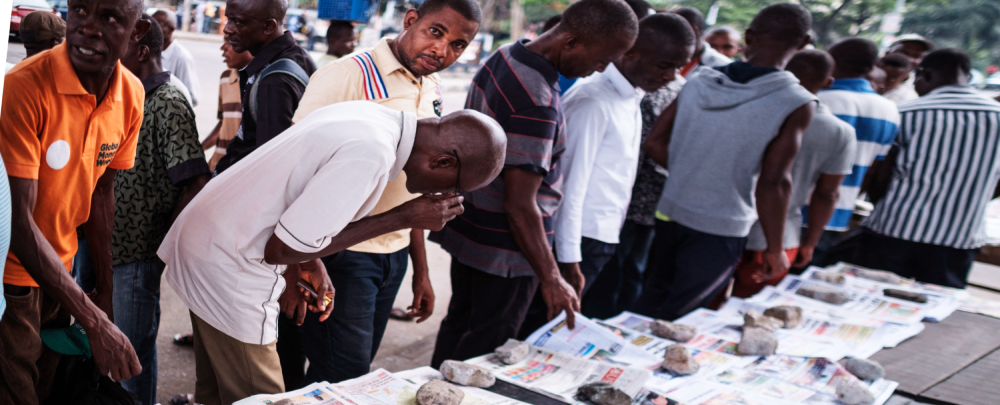
Zambia’s media freedom advocates say the country’s democratic progress will be tested by how freely journalists can report during the campaign period. While media rights groups acknowledge improvements since President Hakainde Hichilema took office in 2021, they say structural, legal, and economic pressures continue to threaten independent journalism ahead of what is expected to be a highly contested vote. Opposition parties and media freedom groups say unequal access to public media remains one of the biggest concerns ahead of the elections. … The Media Institute of Southern Africa (MISA) Zambia says the media environment has improved compared to previous years, but remains vulnerable. … “We still have a number of punitive laws that negatively affect journalism, including provisions on sedition in the Penal Code, the State Security Act, and cyber laws,” said Joan Chirwa, the executive director of the Free Press Initiative. … Even legislation introduced to protect citizens from malicious online activity, such as Zambia’s cyber laws, have been criticized for infringing on individual rights. DW