
Sudanese Army Drone Strike Kills Civilians in Blue Nile, Rights Group Says
A Sudanese army drone strike killed several people on Thursday after targeting a gathering of displaced people in the Blue Nile region, a rights group said. The region in southeastern Sudan has seen months of clashes between the Sudanese army and an alliance of the Rapid Support Forces and the Sudan People’s Liberation Movement-North led by Abdel Aziz al-Hilu. The fighting has triggered widespread waves of displacement toward the city of Ed Damazin. Emergency Lawyers, a legal rights group, said an army drone bombed displaced civilians early Thursday in the southern Badia area of Blue Nile state. Preliminary information indicates dozens of people were killed or injured, mostly women and children, the group said in a statement. … The rights group said the victims were fleeing clashes between the army and the RSF that have displaced thousands of civilians, depriving them of shelter, grazing land, and livelihoods amid a severe lack of humanitarian relief. Sudan Tribune
Inside the Battle that Could Lead to Sudan’s Next Catastrophe
The city of El Obeid has come under intensifying drone attack as paramilitaries battle to prise control of central Sudan from the army, in what international officials warn could mark a grim next chapter of the civil war. The Rapid Support Forces have targeted water, electricity and fuel supplies in and around El Obeid, a major commercial centre in Sudan’s Kordofan provinces and trading hub for livestock and gum arabic, which is used in products from make-up to Coca-Cola. The city, which has a population of half a million and an additional 100,000 internally displaced people, lies six hours by road from the capital Khartoum. … The United Nations and western countries have repeatedly warned of the threat of massacres on a par with those in the city of El Fasher in Darfur — which the RSF over-ran last October — should the paramilitaries seek to capture El Obeid. … El Obeid was under a prolonged siege that was only broken by the SAF in February last year and is now cut off again from three sides. … Experts on Sudan, however, say there are important differences between [El Fasher and El Obeid]. Residents of El Fasher had already been living in famine conditions by the time the RSF captured it last October. The city was also the last redoubt for Black African Zaghawa and Fur ethnic groups that had been driven from other parts of Darfur during years of ethnic cleansing by the RSF, which grew out of the primarily Arab Janjaweed militia. El Obeid, though strategically important in the war, did not have that ethnic dimension, said Khair. Financial Times
In Congo, Ebola Responders Fear WhatsApp Voice Notes are Spreading Fake News
Outbreaks and pandemics are often accompanied by misinformation. … But voice notes broadcast over WhatsApp add a new dimension to the problem, supercharging rumors and falsehoods and spreading them to people who might not competently read or write, if they are literate at all. … For the doctors trying to tame the [current Ebola] outbreak, the worst in years , it is an unwelcome distraction. They have to take breaks in hospital wards to debunk the claims circulating in the WhatsApp groups, some of which have thousands of members, when they could be working to contain the rapidly spreading Bundibugyo Ebola strain, for which there are no approved vaccines or drugs. … Already, the wave of rumors is converting into attacks on Ebola treatment centers and assaults of health workers and volunteers, driving the spread of the virus. Wall Street Journal
Tinubu Expands Nigerian Army to 12 Divisions, Approves Recruitment of 28,000 Personnel
President Bola Ahmed Tinubu has approved the expansion of the Nigerian Army from eight to 12 divisions and authorised the recruitment of 28,000 additional personnel in a major move aimed at strengthening Nigeria’s security architecture and enhancing the military’s operational effectiveness. The approval, announced in a State House statement issued on Thursday by the President’s Special Adviser on Information and Strategy, Bayo Onanuga, forms part of the administration’s broader efforts to bolster the Armed Forces’ capacity to tackle the country’s evolving security challenges. According to the statement, the expansion is expected to improve command and control, decentralise operational decision-making, strengthen border security, enhance the protection of critical national infrastructure, improve counter-insurgency and internal security operations, and ensure faster military responses to emerging threats across the country. PR Nigeria
Nigeria: SSS Rescues Remaining Abducted Zamfara Polytechnic Students
The State Security Service (SSS) has rescued the four remaining students of the Federal Polytechnic, Kaura Namoda, who were abducted by suspected armed bandits in Zamfara State. The security agency said the students were freed during a coordinated, intelligence-led operation conducted without paying a ransom. … The students were abducted during an attack that began on the night of 2 June and continued into the early hours of 3 June. … The students’ abduction was among a series of attacks that prompted the House of Representatives to summon Nigeria’s service chiefs and the National Security Adviser, Nuhu Ribadu, in June. … They specifically cited the abduction of the Federal Polytechnic students and called for additional personnel and operational equipment to be deployed to affected states. The House also urged the government to strengthen intelligence gathering, surveillance, and other technology-supported security measures while addressing the economic and social conditions that enable armed groups to operate across the region. Premium Times
Merchant Ship Hijacked off Yemen now Held by Somali Pirates, Residents Say
A merchant ship hijacked in Yemeni waters in the Gulf of Aden last week is now being held by Somali pirates, two residents of Somalia’s semi-autonomous Puntland region told Reuters on Thursday. The ship, the MT Asana, is a Tanzanian-flagged fuel and chemical tanker. One of the residents who spoke to Reuters described himself as a former pirate. He said there were 20 crew members on board the MT Asana, including eight from Germany and 10 from the Philippines. The other resident of Caluula in Puntland saw pirates transporting food to the hijacked ship. The United Kingdom Maritime Trade Operations said last week that a vessel boarded by unauthorised personnel in the Gulf of Aden had been manoeuvred into Somali waters, classifying it as a hijack. Somali pirates caused havoc in the waters off the Horn of Africa nation’s long coastline between 2008 and 2018. After a lull, pirate activity started to pick up again in late 2023. Reuters
Kenya Delays UK Defence Deal over Troop Immunity Row
Kenya has delayed ratifying a defence cooperation agreement signed with Britain in 2021 as a dispute over legal jurisdiction and accountability for British soldiers threatens to strain decades of military cooperation between the two countries. At the heart of the standoff is Britain’s push to retain primary jurisdiction over its troops deployed in Kenya, even in cases involving serious offences committed while on official duty. Kenya, however, is demanding the right to prosecute British soldiers in Kenyan courts for crimes committed on its territory. … The deadlock over the agreement, which underpins counter-terrorism cooperation and the continued presence of the British Army Training Unit Kenya (Batuk), has now reached the highest levels of government in both countries. The agreement, approved by Kenya’s Cabinet in 2021 and subsequently forwarded to Parliament, was intended to replace the previous defence cooperation agreement signed in 2015, which expired on October 6, 2021. Five years later, however, the treaty remains unratified because of concerns over provisions that appear to shield British soldiers from prosecution in Kenya, including for alleged human rights violations. The amount Britain pays Kenya for the use of military training facilities has also emerged as a point of contention. Daily Nation
Why Young Africans Still Listen to the Radio
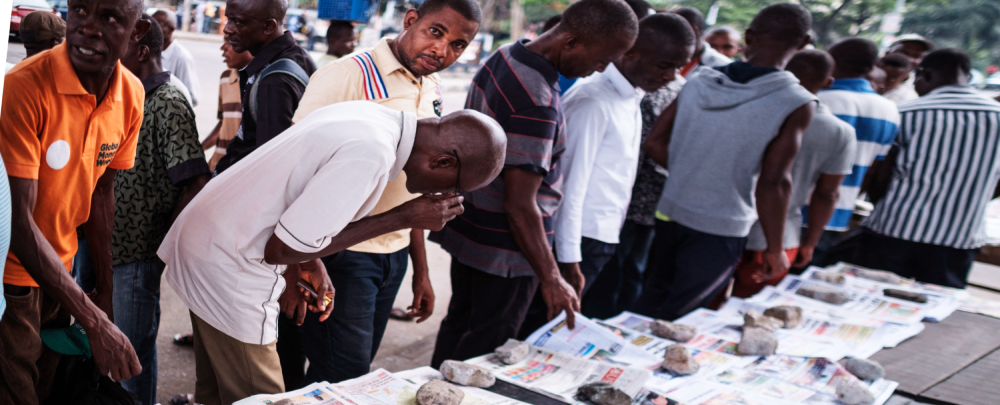
As social media and smartphones proliferate, you might expect them to have triumphed in the battle for attention. Yet, according to a survey published in April by Afrobarometer, a pollster, the hold of radio news on the continent remains strong. … Some 55% of Africans aged between 18 and 35 say they regularly get their news from the radio, just a little less than the 58% who cite social media as their main source. What explains the enduring appeal? Radio is low-cost and easy to access. FM radios are embedded in even the cheapest phones and don’t require pricey mobile data to tune into. Many listeners call in to shows while stuck in traffic in Africa’s megacities. Rather than hurt radio, the internet may be helping its stars. Big-name presenters have become social-media celebrities. … Kenya is also harnessing the internet to solve its frequency shortage. Following Ghana and Senegal, it is trialling DAB radio, which compresses radio waves into digital data to make room for more stations. The Economist
Even Camels Can’t Cope: Africa’s Ships of the Desert Hit by Rising Temperatures
Camels are famously known as the ships of the desert, but even these hardy animals are not being spared from the extremes of rising temperatures in Africa. … [S]cientists, animal welfare workers and various studies all mention stress, fatigue, dehydration, disease prevalence as direct impacts of extreme heat. … North Africa and the Horn of Africa host around 80% of the world’s largest population of dromedary camels – those with one hump. Over the years, farmers and cattle herders in these regions have switched to these animals because of their resilience to harsh heat and drought conditions. … Veterinarians say they are treating more sick camels and are seeing more deaths due to extreme heat and drought. “We are seeing significant increase in cases of hyperthermia in camels as a result of which they get multiple infections,” Hassan Nuya Guyo, a veterinary officer in Marsabit county in north-eastern Kenya bordering Ethiopia, told the BBC. “In the last two years, we have seen a more than 15% increase in camel deaths in our county due to extreme heat.” … Professor Mohammed el Khasmi, animal hydrobiology expert at the University of Casablanca in Morocco, has a long list of effects of heat stress he and his team have observed on camels. Weight loss, inflammation, muscle and bone related illnesses, chemical imbalance due to kidney malfunction, infectious diseases caused by parasites were a few among them, he said. BBC
Africa Prepares for Historic Olympic Moment at Dakar 2026
When the Youth Olympics begin in Senegal in 100 days’ time, it will mark a first on African soil. For all the global icons and champions the continent has provided across events such as athletics, football and boxing, it has never hosted an Olympic competition. Dakar 2026, which gets under way on 31 October, is set to change that. … Dakar was chosen as host city in October 2018 and the Games, initially planned for 2022, were postponed until this year because of the Covid-19 pandemic, allowing more time for planning. It will be held at venues across the Senegalese capital, as well as in the towns of Diamniadio and Saly. … The Youth Olympics are smaller in scale compared to its senior counterpart, but will still feature around 2,700 athletes competing in 25 sports. Ten non-competitive engagement sports, aimed at encouraging participation among local youngsters, will also be staged. Rather than building venues with limited post-Games use, organisers have focused on restoring and preserving existing sites. … While organisers are eager to frame Dakar 2026 as a continental moment rather than a purely national one, the presence of African leadership at the highest level of the IOC also reinforces the sense that it has the potential to shift how the continent is viewed globally. Last year, Kirsty Coventry became the first female – and African – president of the IOC, and the Zimbabwean’s tenure will include overseeing the landmark event. BBC