
DR Congo City Residents Forced to Adapt During Year of M23 Rule
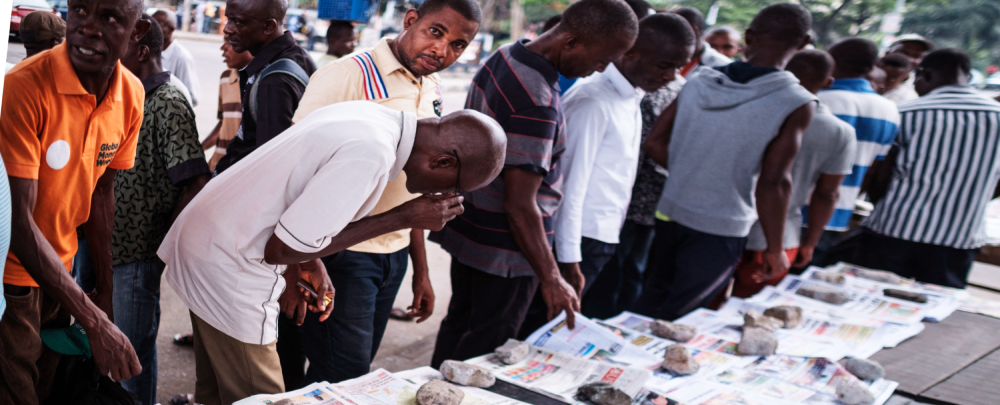
A year on, Goma residents endure “constant oppression” by the M23 group, government spokesman Patrick Muyaya told AFP. In the weeks that followed its capture, the streets emptied out at nightfall and the buzz evaporated from the bars that had once offered some respite in a region scarred by three decades of conflict. Escaped prisoners, militia fighters and soldiers who had evaded capture roamed the city after dark, breaking into homes and threatening residents. … With no independent justice system in place, opponents of the M23 faced repression, some accused of being in cahoots with the pro-government militia. … Civilians and former government combatants were forcibly recruited by the M23, which announced it had 7,000 new members in its ranks in September. At the same time, the group began to impose taxes to finance its war effort but the city, already on its knees, has had no functioning banks for a year after the government ordered their closure to cut off the rebellion’s funding. The airport remains inaccessible and trade between Goma and areas under government control has dwindled. … In the absence of cash, Rwanda’s currency is now used at Goma’s markets. AFP
Uganda: Judge Rejects Plea for Besigye’s Transfer from Prison to Private Hospital
A High Court judge in Uganda has declined a request by lawyers representing opposition figure Dr Kizza Besigye to have him transferred from Luzira Prison to a medical facility of his choice. Instead, Justice Emmanuel granted a longer adjournment to allow Dr Besigye to appear physically in court. The decision followed heated arguments over whether proceedings should be conducted via Zoom due to Dr Besigye’s reported ill health. Justice Baguma said he had received a letter from the Deputy Registrar of the Criminal Division of High Court relaying a request from Luzira Upper Prison authorities for the hearing to be conducted online. … However, defence lawyers strongly objected to the proposal. … [One of the defence lawyers, Erias Lukwago,] told court that Dr Besigye was seriously unwell and that efforts by his family, including his spouse, to have him transferred to a better medical facility had been unsuccessful. “Instead of proceeding on Zoom, we pray that Dr Besigye be transferred to a health facility of his choice to get the treatment he deserves. The State would also want to prosecute a person in good health,” he submitted. Monitor
Uganda: Activist Bireete Remains in Custody as Bail Application Deferred
Buganda Road Chief Magistrate’s Court has further remanded Kampala lawyer Sarah Bireete, director of the Centre for Constitutional Governance, as it deferred ruling on her bail application to January 28, 2026. Bireete has been in custody for over three weeks. She faces charges of unlawfully obtaining or disclosing voters’ data belonging to the Electoral Commission, an offence she denies. … Prosecution, led by Chief State Attorney Joan Keko, opposed the bail application, arguing that the medical grounds presented by the defence had not met the legal threshold for release. … Prosecution also argued that Bireete’s position as director of a large organisation could allow her to influence witnesses, and challenged the financial capacity of the four sureties presented by the defence. … Defence lawyer Jude Byamukama argued that bail is anchored in the presumption of innocence under the Constitution. Monitor
Slashed Incomes and Gamers Go Cold Turkey—Fallout from Uganda’s Internet Shutdown
[The Ugandan government shut down the internet during last week’s fiercely contested general election.] The opposition said it was a move to cover up voter fraud and stop its agents from sharing the results from polling stations. Either way, it brought many aspects of modern life to a halt. Online businesses that rely on mobile money transactions were most affected by the blackout, with some coming to a standstill while others reverted to cash-based transactions. … Journalist Ngabo Amon says his smartphone, a work tool for him, became largely useless. “You have a phone, but there is nothing to do with it,” he tells the BBC. He could no longer research stories, follow election developments or send material to his newsroom. … Ngabo explains that the situation was especially frustrating for journalists covering the election, as the blackout made it impossible to get a real picture of what was unfolding on the ground. … For many, the shutdown was not just a temporary inconvenience but a stark reminder of how deeply digital access shapes their everyday life. BBC
Nigeria Church Attackers Demand Ransoms as Search Intensifies for Over 150 Hostages
Gunmen who abducted more than 150 church worshippers in Nigeria’s conflict-hit northwest are demanding 17 motorcycles as ransom from families of hostages, residents told The Associated Press on Thursday. In one of the largest mass abductions targeting religious worship centers in the West African nation in recent months, the attackers on Sunday raided three different churches in Kaduna state’s Kajuru council area, seizing 177 people before 11 managed to escape. Nigerian security forces have deployed tactical teams in search of the kidnappers, believed to be among the rogue gangs who often carry out kidnappings for ransoms in remote communities with limited state and security presence. In interviews on Thursday, residents said the attackers contacted families demanding 17 motorcycles — estimated at around $1,000 each or $17,000 in total — to begin negotiations for their release. AP
Nigerian Government Unveils New Macro-Strategy to Tackle Food Insecurity
The federal government has announced the commencement of a multi-dimensional agricultural drive, tagged the “Back to the Farm” initiative, as part of broader efforts to address persistent food insecurity across the country. Vice President Kashim Shettima disclosed this on Thursday while speaking on a panel titled “When Food Becomes Security” at the Congress Centre during the 56th World Economic Forum (WEF) meeting in Davos, Switzerland. … Mr Shettima said the “Back to the Farm” initiative is designed to curb inflation, reduce foreign exchange spending on food imports, insulate Nigeria from global shocks, and restore productivity in the country’s key food basket regions. … During the discussion, the Vice President said Nigeria no longer views food security through a narrow agricultural lens, but as a core macroeconomic, security, and governance issue. … Mr Shettima said Nigeria’s food security strategy is anchored on three pillars: increased food production, environmental sustainability, and deeper regional integration within the West African sub-region. Premium Times
Sudan: UN Warns Thousands Trapped in North Darfur, Confirms Famine in Kordofan
The United Nations warned on Wednesday that thousands of civilians are trapped without humanitarian aid in North Darfur as fighting intensifies, and confirmed famine conditions in parts of the Kordofan region. U.N. deputy spokesman Farhan Haq said the Office for the Coordination of Humanitarian Affairs (OCHA) is deeply concerned about at least 2,000 families stranded in the valleys of Wadi Qardi and Um Saad. These families, located in the Karnoi and Um Baru localities, are cut off from essential supplies due to escalating conflict in the north-western part of the state, which has severely restricted the movement of aid workers and local partners. The humanitarian crisis is also deepening in the Kordofan region, where siege conditions and active combat continue to drive mass displacement. According to the International Organization for Migration, nearly 3,000 people fled the cities of Kadugli and Dilling between January 15 and 19. Many of those displaced are attempting to reach White Nile State to escape the violence. The U.N. confirmed that famine conditions are now present in Kadugli, while Dilling is experiencing similarly extreme levels of food insecurity. Both cities remain under siege, leaving the population with little to no access to food or basic services. Sudan Tribune
Jihadist Attack Claims Lives of Eleven Police Officers in Burkina Faso
At least eleven police officers were killed in a major jihadist assault in eastern Burkina Faso over the weekend, security sources confirmed, highlighting the persistent and deadly violence plaguing the country despite military claims of progress. Security sources told AFP that “several hundred jihadists” attacked a police detachment in Balga, located in the Gourma province of the East Region. The assault left seven officers dead at the scene, with four others later succumbing to their wounds. The Group for the Support of Islam and Muslims (JNIM) claimed responsibility for the attack on the same day. … Despite the junta’s claims, Burkina Faso remains caught in a devastating conflict that began in 2015. … According to the ACLED conflict monitoring group, the violence has claimed tens of thousands of civilian and military lives, with more than half of those fatalities occurring in the last three years alone. Africanews
EAC Launches First Regional Framework to Strengthen Pandemic Preparedness
The East African Community (EAC) has officially launched its inaugural Regional Pandemic Prevention, Preparedness, and Response (PPPR) Policy Framework. The instrument is designed to strengthen collective action against public health emergencies across the eight EAC Partner States. The policy comes after the Covid-19 pandemic in 2020 to 2022 caught many countries in Africa and East Africa unawares, straining its healthcare systems. Approved by the 25th EAC Sectoral Council of Ministers of Health in May 2025, the policy framework provides a harmonised roadmap that reflects EAC’s commitment to strengthening surveillance systems through collaboration with partner states and prioritising the most vulnerable members of the community, putting them at the centre of equitable public health systems. … The framework addresses long-standing challenges, including fragmented coordination, limited resources, weak surveillance and information systems, and insufficient community and gender-responsive approaches. The Standard
Malawi Rolls Out Cholera Vaccines as Rains and Floods Raise the Threat of Deadly Outbreaks
The southern African nation of Malawi began a cholera vaccination rollout this week in a bid to stem the threat of the disease that kills tens of thousands of people globally each year. … Malawi is one of several countries in Africa that face the perennial threat of cholera, and that’s been exacerbated this year by unusually heavy rains and flooding in the southern African region, the kind of weather that often prompts cholera outbreaks. Cholera is an acute diarrhea disease caused by a bacteria typically spread through contaminated food or water. The continent suffered a major setback in its battle against cholera last year when cases surpassed 300,000, according to the Africa Centers for Disease Control — the worst toll in 25 years. … The global cholera vaccine stockpile was severely depleted by 2022 because of demand and limited suppliers, and that left poorer countries scrambling to contain outbreaks. … Africa has sought to invest in its own vaccine production given that cholera has become resurgent. In November, a South African pharmaceutical firm launched trials on what it hopes will be the first African-produced cholera vaccine. AP
Two Popular Tunisian Journalists Handed Three-Year Jail Terms
A Tunisian court has handed new prison terms to two well-known media figures in what critics say is the government’s latest attempt to punish dissent. The criminal chamber of the Tunis Court of First Instance sentenced radio journalists Bohran Bssaies and Mourad Zghidi to three and a half years in prison on Thursday for “money laundering”, a judicial source told Tunisia’s state TAP news agency. The conviction adds to a growing list of cases against opposition figures, journalists, and other perceived critics of President Kais Saied, who rights groups say has overseen a wide-reaching rollback on freedoms since taking office in 2019. Bssaies and Zghidi were first jailed in May 2024 on charges of “spreading false news” under Tunisia’s controversial Decree Law 54 against cybercrime. Press rights group Reporters Without Borders (RSF) said the journalists’ “only ‘crime’ was to comment on and criticise political decisions” by Saied. … RSF described the case as “legal persecution” and urged Tunisian authorities to immediately release Bssaies and Zghidi. Al Jazeera
Namibia, Japan Eye Deeper Bilateral Ties
Namibia’s International Relations and Trade Minister Selma Ashipala‑Musavyi met Japanese Foreign Minister Motegi Toshimitsu in Tokyo on Wednesday for talks aimed at deepening the strategic partnership between the two countries. The meeting focused on expanding economic cooperation, strengthening political ties and advancing shared priorities in regional and global governance. Motegi welcomed Ashipala‑Musavyi’s visit and highlighted Namibia’s strategic importance as a gateway linking Indian Ocean trade routes to southern Africa through its port and logistics infrastructure. Ashipala‑Musavyi expressed appreciation for Japan’s long‑standing development support and said Namibia was eager to attract more Japanese investment, particularly in mineral and energy sectors where Japanese companies have shown growing interest. … Both ministers agreed to accelerate cooperation following commitments made at TICAD 9 and to strengthen bilateral engagement across economic and diplomatic spheres. APA