

The idea of an “Africa Center for Strategic Studies” first emerged from bipartisan consultations in the U.S. House of Representatives’ National Security Committee in the mid-1990s. In June 1995, the Committee requested that the Department of Defense develop a plan for the creation of such a center that would “encourage a broader understanding on the African continent of military matters compatible with democratic principles and civilian control.”
In March 1998, during a major trip to sub-Saharan Africa, President Bill Clinton promoted a U.S.-Africa partnership for the 21st century based on mutual respect and mutual interest. On April 1, 1998, the White House announced the establishment of the Africa Center for Strategic Studies:
“The Africa Center for Strategic Studies will be a regional center modeled after the George C. Marshall Center in Germany designed in consultation with African nations and intended to promote the exchange of ideas and information tailored specifically for African concerns.”
In March 1999, the Africa Center was formally established.
The Center’s first event was a Senior Leaders Seminar, held in Dakar, Senegal, in November 1999. The program brought together 115 senior-level civilian government officials, flag-level military officers, and representatives of civil society from Africa, Europe, and the United States for two weeks of intense academic work. Fifty African nations were represented.
In subsequent years, other programs were added to the Africa Center’s curricula on topics such as regional security cooperation, conflict management, health and security, energy and security, and counterterrorism. These programs adopted an interactive, seminar-style educational model where participants were recognized for their rich practical experience, which was infused with empirical analysis and framing by Africa Center experts based on security trends on the continent.
Africa Center academic programs have typically been transcontinental or regional in scope, at times hosted in collaboration with one of Africa’s regional economic communities. In the interest of facilitating cross-regional exchanges and relationship-building, the Africa Center has from the beginning hosted multilingual academic events with simultaneous translations in English, French, and Portuguese, and occasionally Arabic.
Recognizing that Africa’s security challenges are often societally based involving non-state actors, the Africa Center adopted an approach that engages a wide range of security sector actors—military, police, and gendarmerie, as well as civilian, legislative, and civil society security sector actors. This has facilitated a cross-sectoral dialogue over the respective roles of each set of contributors in African security contexts.
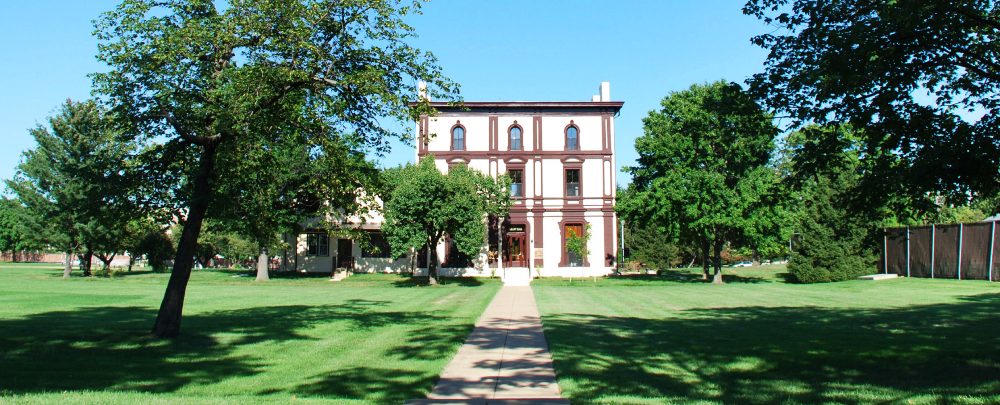
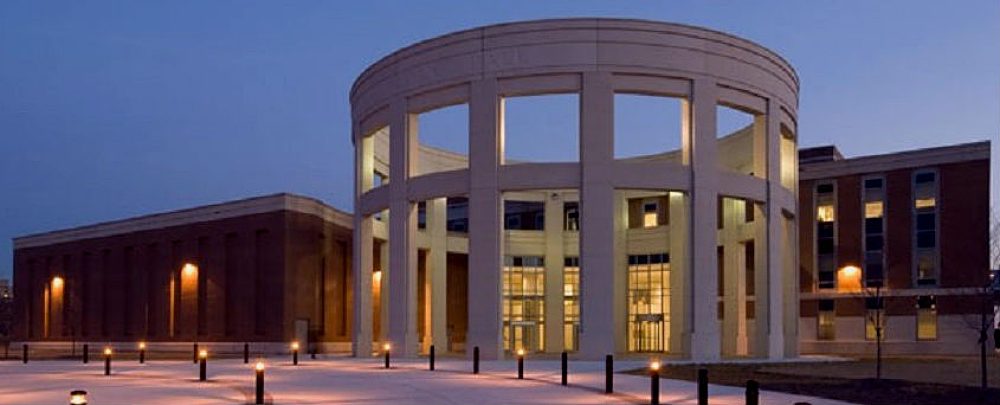
In 2004, the Africa Center moved to its current location at the National Defense University, situated at historic Fort Lesley J. McNair in Washington, DC.
In 2005, the Africa Center introduced its Next Generation of African Military Leaders Course, a program focused on enhancing professionalism, ethics, and leadership among mid-level African military officers. The aim of this program was to enhance these officers’ professional education by helping them transition from tactical level to strategic level planning. The program has gone on to become one of the Africa Center’s most popular seminars and has been conducted annually ever since.
Over the years a range of topics have been added to the Center’s program offerings, reflecting interests of African partners and the changing nature of Africa’s security challenges. These have included issues such as managing security resources, maritime safety and security, small arms and light weapons, democratic civil military relations, combating narcotics and illicit trafficking, gender mainstreaming, the role of legislatures in the security sector, security sector reform, environment and security, preventing youth radicalization, enhancing peacekeeping operations, and defense institution-strengthening.
In total, the Africa Center has held more than 150 multilateral programs since its inception—half of them in Africa—involving some 15,000 participants, including representatives from every country on the continent.
With the growing number of academic programs and program alumni, the Center recognized the need to establish a structure to maintain ties to the growing number of former participants. This led to the creation of voluntary Africa Center Community Chapters, the first of which was formed in Mali on October 18, 2003.
These chapters are independent, nongovernmental, apolitical organizations whose members seek to continue a dialogue on security issues with peers in their countries and across the continent using the platform, networking opportunities, and educational benefits of an ongoing relationship with the Africa Center. Each Community Chapter is unique and organized along the specific interests of its members with many holding topical meetings, hosting lectures, and organizing conferences. Today there are 33 Community Chapters on the continent comprising 6,000 members. The Africa Center has supported approximately 100 Community Chapter events since 2010.
In addition to its outreach initiatives in Africa, the Africa Center regularly engages the Washington policy community on Africa security issues through public roundtables, conferences, working groups, and congressional hearings. Members of the African diplomatic community are central participants in these events, with African ambassadors and defense attachés regularly featured as panelists, commentators, and participants.
In 2009, the Africa Center established a research section with the aim of better capturing insights and lessons of Africa’s security landscape. The intent of the Center’s research has been to provide practical, evidence-based strategic analysis that can fill gaps in understanding on Africa’s diverse security challenges. These products are regularly used by African and U.S. policymakers and practitioners on themes ranging from Africa-wide security trends to topical issues such as combating piracy, countering violent extremism, and narcotics trafficking to governance and institution-building priorities such as security sector reform, military professionalism, and optimizing force structures to address non-state security threats. Drawing from the expertise of program alumni, Africa Center research products also facilitate an exchange of views on African security challenges and responses. These products are widely used as part of the curricula for Africa Center programs, Community Chapter dialogues, and African and international professional military education programs.
As the Africa Center’s networks and reputation on the continent have grown over the years, requests from African governments for Africa Center assistance to put into practice concepts discussed at Africa Center programs or research products have also steadily increased. This has resulted in a variety of initiatives on issues such as maritime security strategy development, national security strategy processes, security sector reform, and the stabilization of fragile states. At times, relationships established through the Africa Center have been drawn on to mitigate potential conflicts.
In recent years, the Africa Center has reinforced its efforts to be a public resource on African security issues. Mirroring the Africa’s rapidly transforming information environment, the Africa Center has markedly expanded its digital presence to facilitate the sharing of information and analysis to these new audiences. The Center also produces a daily media review in English and French, culling leading stories of Africa security concerns from roughly 80 news sources for subscribers on 5 continents.
In its more than 20 years of existence, the Africa Center has realized many accomplishments. Perhaps most enduring are the relationships built and ideas shared—processes that continue to propagate and generate benefits over time. Nelson Mandela once said, “Education is the most powerful weapon that you can use to change the world.” This philosophy will continue to drive the work of the Africa Center moving forward as it seeks to fulfill its mission of advancing African security by expanding understanding, providing a trusted platform for dialogue, building enduring partnerships, and catalyzing strategic solutions.