
Seven Things to Know about Guinea’s Constitutional Referendum
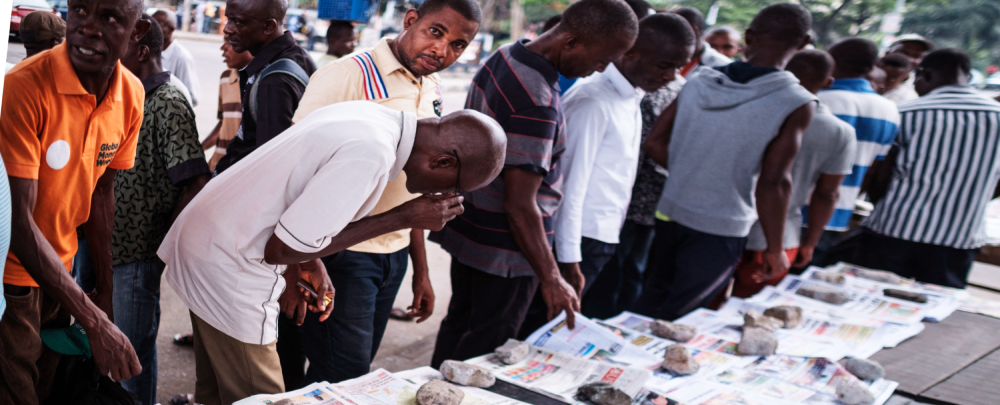
A constitutional referendum in Guinea on September 21, 2025, seeks to shape the governance trajectory of this West African country of 14.8 million people. Administered by the military junta led by Mamadi Doumbouya, the referendum aims to validate and perpetuate the junta’s rule following its seizure of power in a coup against Guinea’s civilian and democratically elected government on September 5, 2021. … In its 2021 transitional charter, the junta promised to revert to civilian democratic rule and that junta leaders would not run in subsequent elections. However, the proposed constitution does not prohibit junta members from running—seemingly providing a pathway for Doumbouya and other junta leaders to perpetuate their rule. … The junta has consistently delayed taking steps to return power to elected civilian leaders. In the ten-point transition timetable agreed to with the Economic Community of West African States (ECOWAS) in December 2022—15 months after seizing power—the junta committed to ending the transition at the end of 2024. Yet, it failed to abide by this deadline. … In addition to removing the prohibition against junta members running for political office, the proposed constitution provides the junta amnesty under terms it can define for itself (Article 198). … Given Guinea’s history of violence, turbulent governance, and underdevelopment under previous extended periods of military governments, the implications from this constitutional referendum are likely to profoundly impact Guinea’s political, economic, and security landscape for years to come. The Africa Center for Strategic Studies
Malawi Votes amid Economic Downturn and Leadership Discontent
Malawi started voting on Tuesday in an election pitting President Lazarus Chakwera against his predecessor Peter Mutharika, with sky-high inflation and food prices at the top of voters’ minds. Another 15 candidates, including former president Joyce Banda, are also contesting the presidency, but analysts expect a two-horse race between Chakwera, 70, and Mutharika, 85. If no one secures over 50% of the vote, there will be a second round. Malawi has faced economic stagnation since former pastor Chakwera was elected in 2020, with a devastating cyclone and a regional drought wiping out crops and worsening hardship. Inflation has been over 20% for more than three years. … Corruption scandals have contributed to disillusionment with both Chakwera’s Malawi Congress Party and Mutharika’s Democratic Progressive Party. … The two main candidates have already faced off three times, with a dramatic turn in the last election when the Constitutional Court annulled Mutharika’s 2019 victory due to irregularities and ordered a rerun which Chakwera won in 2020. Reuters
Starving Children Eat Animal Feed in Besieged Sudanese City
El Fasher is the worst battleground of Sudan’s brutal civil war. For nearly 18 months the city, in the western region of Darfur, has been under siege by paramilitaries trying to starve it into submission. Fighters have erected a 20-mile earthen wall around its boundaries. That leaves residents with a dire set of choices. Stay, and risk being bombed or starved. Run, and risk being killed, robbed or sexually assaulted. … An estimated 260,000 people are left in El Fasher, trapped by the tightening siege. … Food convoys from the United Nations, which has not been able to deliver food to El Fasher in over a year, have been attacked by drones as they approached the city. … Rape is commonplace. The hospital treats about 40 sexual assault victims every week, but anecdotal evidence suggests “that is nothing compared to the true rate,” [Sylvain Penicaud, head of the Doctors Without Borders hospital in Tawila] said. … The animal feed, known locally as ambaz, is a desperate solution, because it is prone to fungal contamination, especially in the rainy season. At least 18 residents have died in recent weeks after eating ambaz, local responders said. The New York Times
Sudan’s RSF Clears North Darfur Village for Military Base
Sudan’s Rapid Support Forces (RSF) on Monday forcibly displaced residents from the village of Tura, north of El Fasher, to convert it into a military post, a military source said. The source told Sudan Tribune the base is intended to secure the movements of the paramilitary group’s commanders. This development occurs amid escalating military operations in El Fasher and a sharp deterioration in humanitarian conditions, including severe shortages of food and shelter. Witnesses who fled to the nearby town of Mellit told Sudan Tribune that a large RSF force stormed Tura and ordered residents to leave immediately, triggering a mass displacement of thousands. Some of the displaced have opted to flee towards Libya to escape the worsening security and humanitarian crisis, witnesses said. Tura had been a key commercial hub since the war began in April 2023. Its market was a vital economic lifeline for nearby villages and El Fasher, providing essential goods as supply chains collapsed. … RSF forces gave no reason for the expulsion, witnesses said. However, the military source indicated the group aims to deploy new reinforcements and install jamming and communications systems to protect its senior commanders. Sudan Tribune
At Least 40 Fuel Tankers Burned in JNIM Attack in Mali, Sources Say
At least 40 fuel tankers were destroyed in Mali on Sunday when insurgents who had declared a blockade on fuel imports to the country attacked a convoy of more than 100 vehicles under military escort, two sources said on Monday. After the insurgent group, Jama’at Nusrat al-Islam wal-Muslimin (JNIM), announced the blockade last week, a source close to Mali’s chamber of commerce said the country would run out of fuel within two weeks if supplies were completely cut off. A truckers’ union official told Reuters around 40 fuel tankers were destroyed in the incident on Sunday, while a source close to JNIM said they had destroyed 80. In a video message, the group’s spokesperson took credit for the attack in the Kayes region in the west of the country, and said the Malian soldiers escorting the convoy had fled the scene. … The country’s military government, which took power after coups in 2020 and 2021, is facing growing pressure from militant groups who analysts say are trying to encircle cities and towns in the Sahel region. Reuters
About 50 Killed in Jihadist Attacks in Burkina Faso Since May: HRW
Three jihadist attacks in northern Burkina Faso since May have killed around 50 people, Human Rights Watch said Monday, urging the military regime to improve the protection of civilians. Burkina Faso has been ruled by a junta for almost three years and regularly suffers deadly attacks conducted by armed jihadist groups. “The Group for the Support of Islam and Muslims (GSIM, or JNIM in Arabic) attacked the town of Djibo, Sahel region, on May 11, and the village of Youba, North region, on August 3, altogether killing at least 40 civilians,” HRW said in a press release. “The Islamic State in the Sahel Province (IS Sahel) attacked a civilian convoy bringing humanitarian aid to the besieged town of Gorom Gorom, Sahel region, on July 28, killing at least nine civilians,” it added. Youba residents told HRW that the jihadists wanted to “punish the community for not complying with GSIM’s orders not to cultivate certain tall-growing crops that fighters said hindered their operations”. … Junta chief Captain Ibrahim Traoré promised to restore security within months when he seized power in late September 2022. But attacks targeting both soldiers and civilians have not subsided. … According to the NGO, “The government has increasingly targeted civilians during counterinsurgency operations”. The Burkinabe army and its auxiliary force the Volunteers for the Defence of the Fatherland (VDP) are regularly accused of massacring civilians by NGOs, including HRW. AFP
UN Report Details ‘systematic Looting’ by South Sudan’s Rulers as Citizens Went Hungry
U.N. investigators on Tuesday accused South Sudanese authorities of plundering their country’s wealth, including by paying $1.7 billion to companies affiliated with Vice President Benjamin Bol Mel for road construction work that was never done. The payments from 2021 to 2024 were just one example of “grand corruption” in the impoverished nation, according to the report by the U.N. Commission on Human Rights in South Sudan, where average gross domestic product per capita is now a quarter of what it was at independence in 2011. “The country has been captured by a predatory elite that has institutionalised the systematic looting of the nation’s wealth for private gain,” said the commission, which was created in 2016 by the U.N. Human Rights Council. … More broadly, the report said public spending priorities did not reflect the government’s obligations to its citizens. Little of the more than $23 billion raised from oil exports since independence has gone to address pressing needs like education, healthcare and food security, it said. Reuters
South Sudan: Kiir Promotes Ally Bol Mel to Full General in Intelligence Service
South Sudanese President Salva Kiir has promoted Vice President Dr. Benjamin Bol Mel to the rank of full general in the Internal Bureau of the National Security Service, state media reported on Monday. The promotion, confirmed during a ceremony at the presidential palace in Juba, marks Mel’s third major elevation in less than a year, fueling speculation over his growing influence. Mel was appointed vice president and head of the government’s economic cluster in February, replacing veteran politician Dr. James Wani Igga. In May, he was named first deputy chairman of the ruling Sudan People’s Liberation Movement (SPLM) party. A close ally of Kiir, Mel is widely seen by analysts as a potential successor. In 2017, the United States sanctioned him over allegations that his construction firm received preferential treatment in state contracts. The promotion comes amid political uncertainty after authorities placed First Vice President Riek Machar under house arrest, accusing him of attempting to instigate a rebellion. Radio Tamazuj
Chad Lawmakers Back Seven-year Unlimited Presidential Terms
Chad lawmakers on Monday approved a constitutional amendment extending presidential terms from five to seven years and for unlimited terms. The bill, presented by the Patriotic Salvation Movement (MPS) of the ruling majority, making a number of amendments to the December 2023 constitution, was passed by 171 votes to just one against with no abstentions. It now heads to the Senate for formal adoption scheduled for October 13 provided that three fifths of the upper chamber back it. “This vote constitutes a consideration and not an immediate amendment to the constitution,” said the speaker of the lower house, Ali Kolotou. The text allows the president to be elected for an unlimited number of seven-year terms, in contrast to the current constitutional limit of five years, renewable once. The draft constitutional reform also provides for the creation of a deputy prime minister. It extends the term of office of members of parliament by one year, from five to six years. It also removes immunity from government members to make them “accountable before ordinary courts for economic and financial crimes and offences committed by them in the exercise of their duties”. AFP
Nigeria: Bandits Abduct 40 in Zamfara Mosque as Peace Deal Collapses
Bandits in the early hours of yesterday attacked a mosque at Gidan Turbe village in Tsafe Local Government Area of Zamfara State, abducting no fewer than 40 worshippers. The attack came barely hours after a similar one at Godai village in Bukkuyum LGA of the state, kidnapping over 10 persons. … The attack, according to critical stakeholders, signalled collapse of the peace deal both Katsina and Zamfara states had with the bandits terrorising the North-West. Recall that community leaders and bandits in Kurfi Local Government Area of Katsina State, on August 28, 2025 signed a peace agreement. The pact, according to all the attendees, marked a significant step towards ending years of violence, kidnapping and cattle rustling in the North-West and by extension, Northern region. The agreement, brokered by the Maradin Katsina and district head of Kurfi, Alhaji Mansur Amadu Kurfi, and the local government chairman, Babangida Abdullahi Kurfi, took place at Wurma forest, a hotspot for insecurity. … The attack pointed at the fragility of ongoing peace arrangements in the region, where heavily-armed groups continue to operate with impunity, despite dialogue initiatives. Vanguard
Tanzania Opposition Presidential Candidate Banned from Running, Again
Tanzanian opposition presidential candidate Luhaga Mpina has been banned from running in next month’s election for the second time, reversing a decision made last week approving his nomination. Tanzania’s electoral commission said Monday it had disqualified Mpina, the candidate for the Alliance for change and transparency (ACT-Wazalendo), the country’s second opposition party. … The decision comes four days after Mpina successfully challenged a first decision in court to disqualify him by the Office of registrar of political parties, which cited complaints that his party had failed to comply with nomination procedures. ACT Wazalendo dismissed the disqualification as “baseless” and politically-motivated. … [Incumbent President Samia Suluhu Hassan] came to power without being directly elected after taking over from John Magufuli when he died in March 2021, and she has taken no chances in the run-up to the presidential and parliamentary votes. Opposition parties face an uphill battle trying to dislodge Hassan and her ruling Party of Revolution (Chama cha Mapinduzi) (CCM) party, amid a government crackdown on rivals. Mpina’s disqualification means Hassan would potentially face opposition only from smaller parties in the 29 October election. The leading opposition party, Chadema, was disqualified in April after it refused to sign the electoral code of conduct. RFI
Tanzania Opposition Face Fresh Blocks Ahead of Election
A Tanzanian court on Monday confirmed that a treason trial would go ahead against opposition leader Tundu Lissu, while authorities renewed a ban on another candidate for next month’s election. The government of President Samia Suluhu Hassan has increasingly cracked down on the opposition ahead of the vote on October 29, drawing criticism from international rights groups and monitors. Lissu, head of the main opposition party Chadema, was arrested in April and charged with treason after calling for electoral reforms, and his party was banned from the election. An appeal to dismiss his case over procedural flaws was rejected by judges on Monday. Meanwhile, another presidential candidate Luhaga Mpina of the Alliance for Change and Transparency (ACT Wazalendo), the country’s third-largest party, was disqualified for a second time by the attorney general. AFP
Uganda: Dr Besigye’s 300 Days in Jail Lock Him Out of Race
The Opposition People’s Front for Freedom (PFF), a party associated with Dr Kizza Besigye, has announced it will not field a presidential candidate in the upcoming 2026 General Election. The call comes 300 days after Dr Besigye, the chairperson of the Council of Eminent Persons in the party and possible presidential contender, was together with his aide Obeid Lutale abducted from Nairobi, Kenya, on November 16, 2024, and repatriated to Kampala. They now face charges of illegal possession of firearms, ammunition, and treachery. They remain remanded to Luzira prison on treason charges. Speaking to reporters on September 15, the party’s secretary general and spokesperson, Mr Ibrahim Ssemujju Nganda, said the decision aims to support a unified Opposition front against incumbent President Museveni of the National Resistance Movement party. … Mr Ssemujju revealed that PFF is currently in talks with the Alliance for National Transformation (ANT) party, led by Maj Gen (Rtd) Mugisha Muntu, and the National Unity Platform (NUP) party, headed by popstar-turned-politician Robert Kyagulanyi, also known as Bobi Wine. Monitor
Uganda Law Society Decries Deteriorating Respect for Rule of Law by State Agencies
The Vice President of the Uganda Law Society (ULS), Mr Anthony Asiimwe, has decried the escalating and deteriorating respect for the Rule of Law by the State through security agencies. Speaking during the official opening of the ULS’s 16th annual Rule of Law Week on September 15, Mr Asiimwe warned that the continuous disrespect of the rule of law and court orders, if not tamed, could lead to chaotic situations and a return to the dark days of the past. “The moment the public loses trust in this process, we shall all be affected,” Mr Asiimwe emphasized, highlighting the importance of an independent judiciary. He called upon all institutions, security organs, government officials, and forces to respect court orders and urged the judiciary to take strong action against those who disobey court orders. … This year’s annual Rule of Law week comes at a time when the ULS president, Mr. Isaac Ssemakadde, is in exile for over a year. Monitor
Zimbabwe: Harare to Host Intra-African Trade Fair Head Office
Zimbabwe will host the permanent headquarters of the Intra-African Trade Fair (IATF), marking a major milestone for the continental marketplace that has already facilitated more than $120 billion in trade and investment deals since its launch in 2018. This was confirmed by former Nigeria president Olusegun Obasanjo, who chairs the IATF Advisory Council, at the 4th IATF in Algiers, Algeria. For the Southern African country, hosting the IATF headquarters is expected to boost its profile as a regional trade hub and reinforce its role in advancing intra-African commerce. The IATF was established by the African Export-Import Bank (Afreximbank), the African Union Commission (AUC), and the African Continental Free Trade Area (AfCFTA) Secretariat to accelerate trade integration across Africa. Conceived as a multi-dimensional marketplace, the fair brings together governments, businesses and investors to promote goods, attract financing and unlock new markets. Each edition runs for seven days and features exhibitions, business-to-business meetings, investment forums and policy dialogues. The East African