

 Algeria: September 7
Algeria’s presidential selection is shaping up to be a tightly managed electoral event. Algeria’s military has been the dominant political actor in this strategically important North African country for decades, ensuring the continuation in power of the ruling National Liberation Front (FLN). President Abdelmadjid Tebboune, the former prime minister under longtime ruler Abdelaziz Bouteflika, represents a perpetuation of this power structure. A new term would represent his second and final constitutionally mandated term in office.
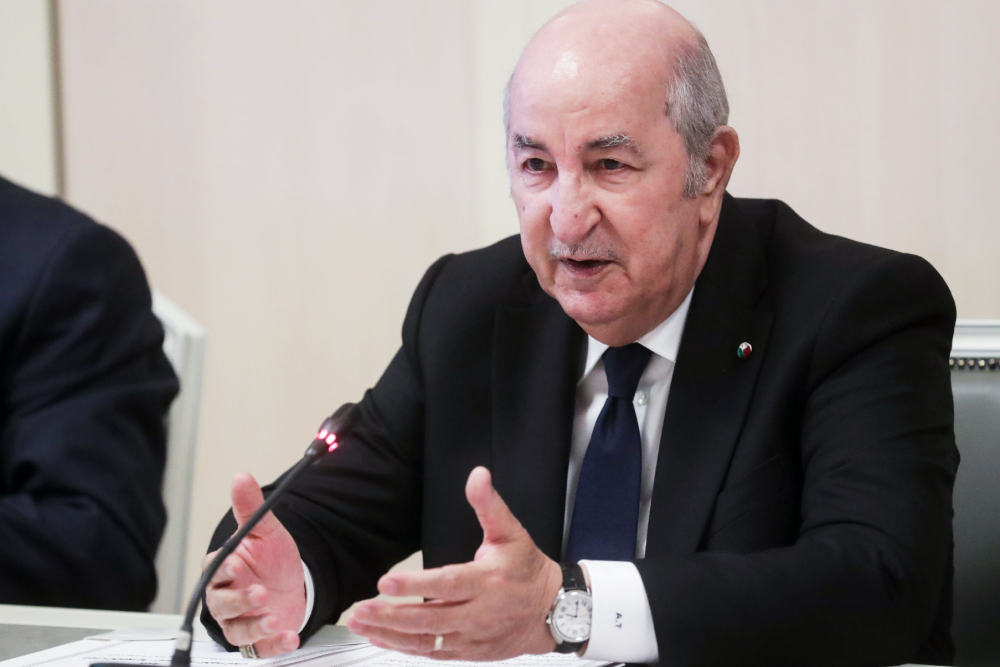
Abdelmadjid Tebboune. (Photo: Duma)
Power remains tightly consolidated within the executive in this country of 45 million people. The president appoints a third of the upper chamber of the legislature and can veto any legislation, requiring a three-fourths majority to override. Accordingly, only legislation supported by the president can proceed. As chair of the Superior Council of Magistracy, Tebboune appoints and dismisses judges. The presidency is also in control of all regulatory bodies, including those responsible for overseeing government expenditures. The executive, thus, effectively controls all three branches of government as well as the state bureaucracy.
The president also appoints all members of the electoral commission, the Independent National Authority for Elections, which is seen to be supportive of the ruling party.
The electoral environment is typified by active suppression of independent media. Despite a new media reform law adopted in 2023, prominent journalists remain jailed for their criticism of the government on charges of inciting protests and attacking national unity. This has fostered a climate of fear, surveillance, and self-censorship contributing to the shuttering of independent media outlets, like Liberté and Radio M, in recent years.
Algeria’s military has been the dominant political actor for decades. President Tebboune represents a perpetuation of this power structure.
Despite these pressures, there remains strong demand for democracy in Algeria. Widespread, months-long peaceful demonstrations calling for basic political reforms like freedom of speech and assembly were joined by a cross section of secularists, Islamists, professionals, and a diversity of ethnic groups known as the Hirak protests of 2019. While these were successful in forcing the ailing Bouteflika to step down, the military was able to facilitate a transition to Tebboune.
With the onset of COVID, the protests were subsequently called off. As attention shifted, the government has arrested political opposition and civil society leaders believed to be behind the protest movement. This includes Mohamed Benhalima, a former army officer who fled the country in 2019 after participating in the Hirak protests but was subsequently extradited to Algeria from Spain. Benhalima had publicly exposed corruption within the military and was sentenced to 12 years in prison on an initial set of three charges and may also be sentenced to death by a military court on charges of “espionage and desertion.”
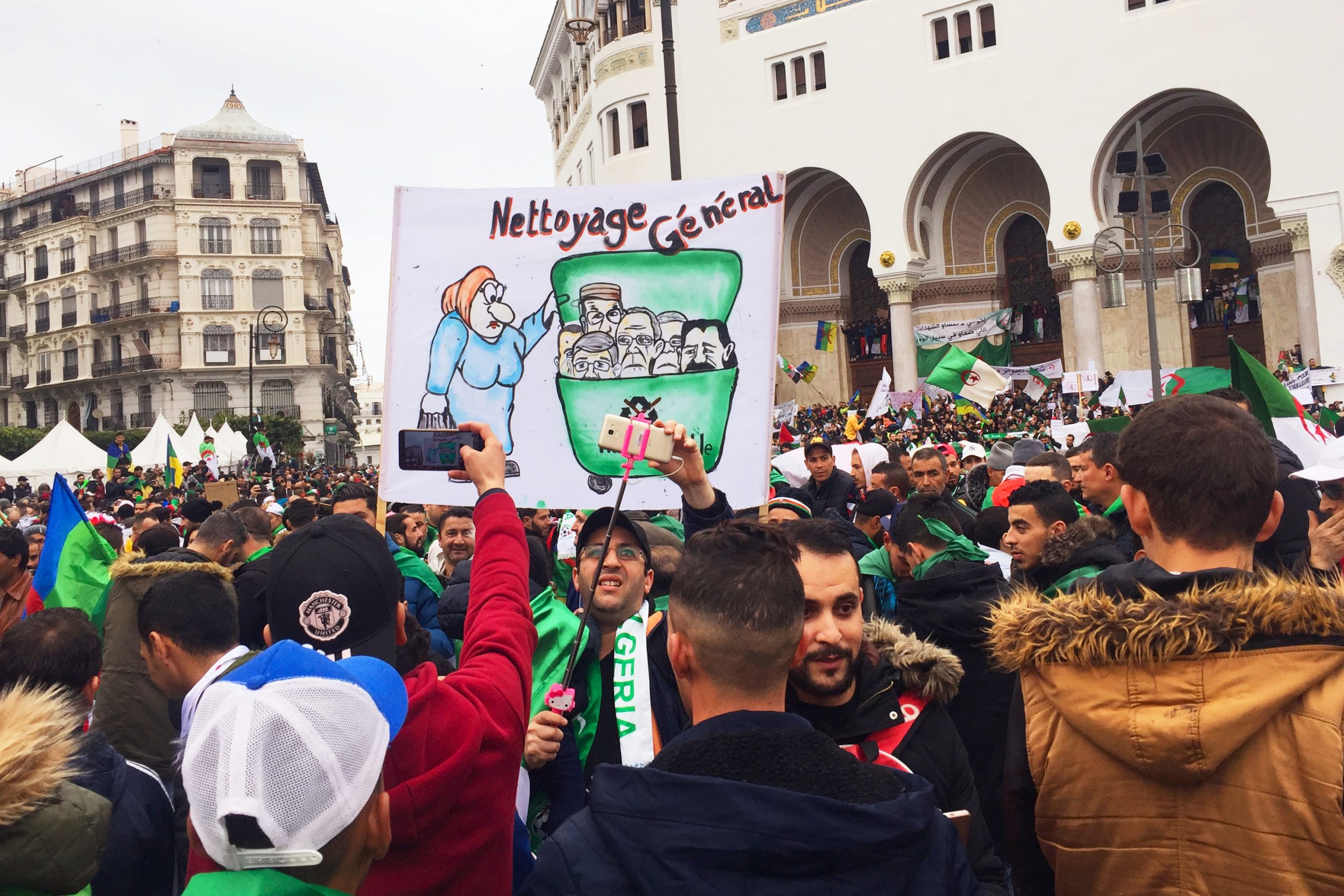
Hirak demonstrations against military rule in Algiers, Algeria. (Photo: Anistmz)

In response to the tightly managed political environment, many Algerians boycotted the December 2019 presidential elections, a 2020 referendum, and 2021 parliamentary elections. Tebboune captured the political tone in the aftermath of the parliamentary elections, which saw a record low 30-percent turnout, by stating that turnout does not matter as much as the results.
Algeria was an early adopter of multiparty politics in North Africa with the holding of competitive national elections in 1991, which were won by the Islamic Salvation Front (FIS). Unwilling to tolerate this outcome, the military blocked the FIS from taking office, setting off Algeria’s brutal civil war that resulted in an estimated 100,000 to 200,000 deaths and the ushering in of the Bouteflika government in 1999.
Algeria is Africa’s second largest oil producer, with hydrocarbons generating 60 percent of government revenues. It maintains three primary routes to transport oil and natural gas supplies to Europe. Meanwhile, Algeria relies on Russia for over 70 percent of its arms imports.
These geostrategic crosscurrents and the pent up demands for more popular political participation highlight the ongoing tensions and dynamism in Algeria, even though this may only be apparent beneath the surface.