Countering Extremism

  • Pakistan’s Civil Society: Alternative Channels to Countering Violent Extremism

    WORDE-AlternativeChannelsToCVEBy Hedieh Mirahmadi, Mehreen Farooq, Waleed Ziad. World Organization for Resource Development and Education, November 2012. Pakistan has for years struggled against violent extremist ideologies that underlay several intrastate conflicts and transnational terrorist threats, problems now emerging in Mali, Nigeria, Kenya, and other regions of Africa. With weak legitimacy, the Pakistani government’s counter-extremism strategy has achieved little, but religious and secular civil society outfits have initiated their own successful community engagement efforts. They have been limited mostly by a lack of organizational management, inter-group connectivity, and personal security. Government efforts to compensate for these shortcomings could produce further counter extremism successes. Download the Article: [PDF]
  • Islamic Militancy in Africa

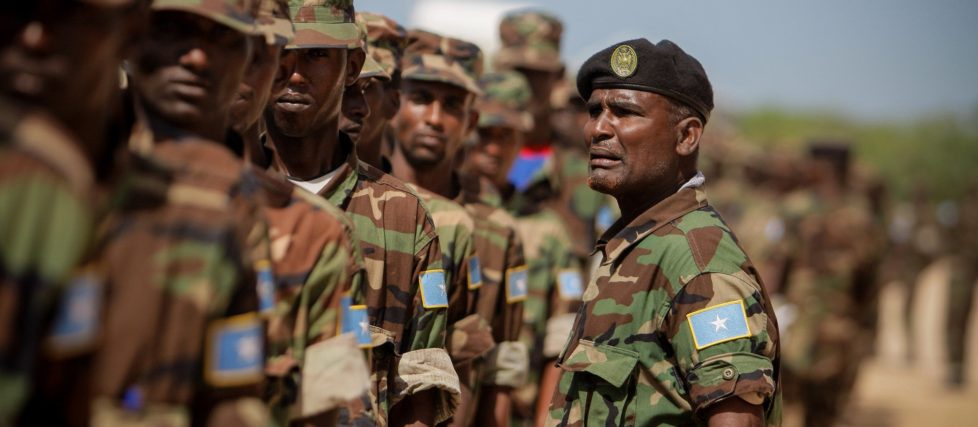
    Suspected Shabaab Members Captured in Somali Capital By Terje Østebø. Africa Center for Strategic Studies, November 2012.

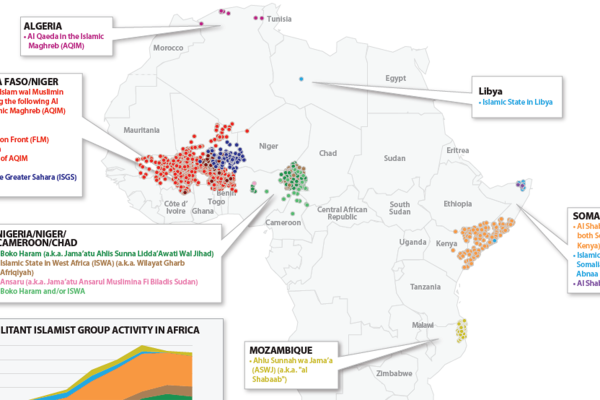
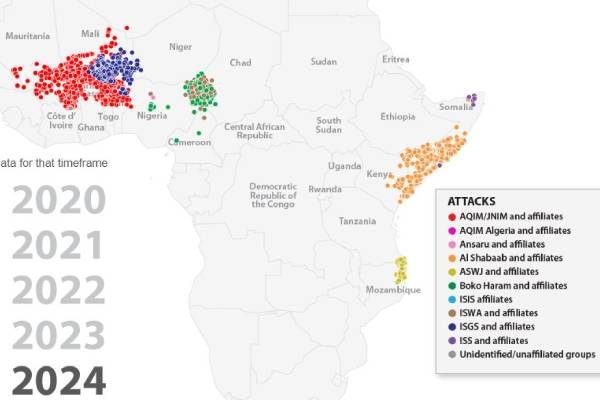
    The rise in Islamic militancy in the Sahel, northern Nigeria, and the Horn of Africa has elevated attention to this evolving security concern. Hopes that Africa's historically moderate interpretations of Islam would suffice to filter extremist views from gaining meaningful traction seem increasingly misplaced. More generally, understanding of this unconventional security challenge is often based more on speculation than informed assessment. Responses must avoid conflating distinct Islamist actors while addressing local level perceptions of disaffection and under-representation that underpin support for militants.

    Download the Brief:[ENGLISH][FRANÇAIS][PORTUGUESE]

  • Purist Salafism in the Sahel and Its Position on the Jihadist Map

    Reading Qur'an TextBy Mohamed Salem Ould Mohamed. Al Jazeera Center for Studies, July 2012. Mali, Mauritania, Nigeria, Niger and other states in the Sahel appear to be experiencing a new “Salafist era.” Since the introduction of Saudi Wahhabist institutions in the 1970s Salafism has expanded gradually in the Sahel, though with varying success as it interacted with differing political contexts and contrasted sharply with prevailing Islamic institutions. However, states in the Sahel may be able to leverage their religious and ethnic diversity to temper and reverse extremism’s rise. Download the article: [PDF]
  • Islamism in the Horn of Africa: Assessing Ideology, Actors, and Objectives

    Islamism-in-HornBy Terje Østebø. International Law and Policy Institute, June 2010. Islamism has been present in the Horn of Africa for decades and is currently making significant impacts across the region. Encompassing a variety of actors and ideological traits, it is a heterogeneous phenomenon with political and reformists groups as well as violent extremist elements. Stability in the region, from the community to the national level, will hinge on engagement strategies that incorporate the non-violent elements of this diversity into the public sphere. Download the Article:[PDF]
  • Playing Ostrich: Lessons Learned from South Africa’s Response to Terrorism

    sapoliceBy Hussein Solomon. Africa Center for Strategic Studies, 2011.

    While not often considered a hub in global terrorist networks, South Africa has seen a steady and growing pattern of domestic and al-Qaeda-linked terrorist activity over the past decade. Coinciding with the creeping expansion of terrorist threats in other parts of the continent, this Security Brief examines lessons learned from South Africa's experience and their potential relevance to other African countries and their security sectors."

    Download the Article: [ENGLISH][FRENCH][PORTUGUESE]

    A Chronology of Terrorism in South Africa: [ENGLISH][FRENCH][PORTUGUESE]

  • Africa's Fragile States: Empowering Extremists, Exporting Terrorism

    FragileStatesBy Zachary Devlin-Foltz. Africa Center for Strategic Studies, 2010.

    Persistent reports of extremist activity from across Africa have deepened concern over the spread of radicalism on the continent. Extremists capitalize on political and security vacuums within Africa’s fragile states to grow their support base and consolidate their strength. Stable states that provide opportunities for political participation empower moderates while delegitimating extremists’ use of violence.

    Download the Article: [ENGLISH][FRENCH][PORTUGUESE]
  • Islamists in Politics: The Dynamics of Participation

    pjd_morocco By Marina Ottaway and Amr Hamzawy, Carnegie Endowment for International Peace, 2008.

    On-going ideological debates within Islamic parties often pit hard-line elements against reformers. When allowed to operate openly, most Islamist parties gradually moderate their agendas in order to widen their base of support. In contrast, politically constricted environments provide few opportunities to win new supporters, leaving Islamist parties to appeal to their base. Download the Article: [PDF]

  • African Counterterrorism Cooperation: Assessing Regional and Sub-regional Initiatives.

    Le-Sage-CoverAfrican Counterterrorism Cooperation: Assessing Regional and Sub-regional Initiatives. Edited by Andre Le Sage, Potomac Books, 2007. As transnational terrorism expands in several regions of Africa, it has yielded distinctive threats and vulnerabilities, demanding tailored responses. This compendium of works analyzing terrorism in Africa and efforts to confront it provides valuable insights to evolving counterterrorism policies. Link to Publisher

Other Reads